Inshore Fishing Report
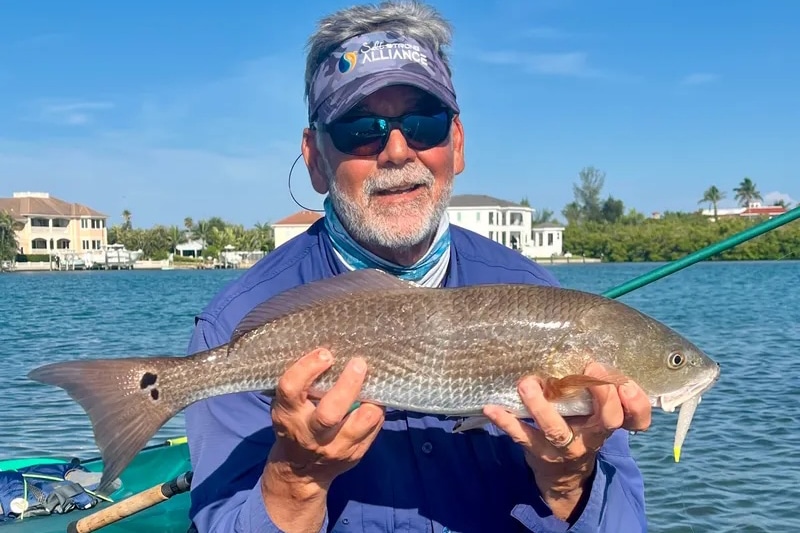
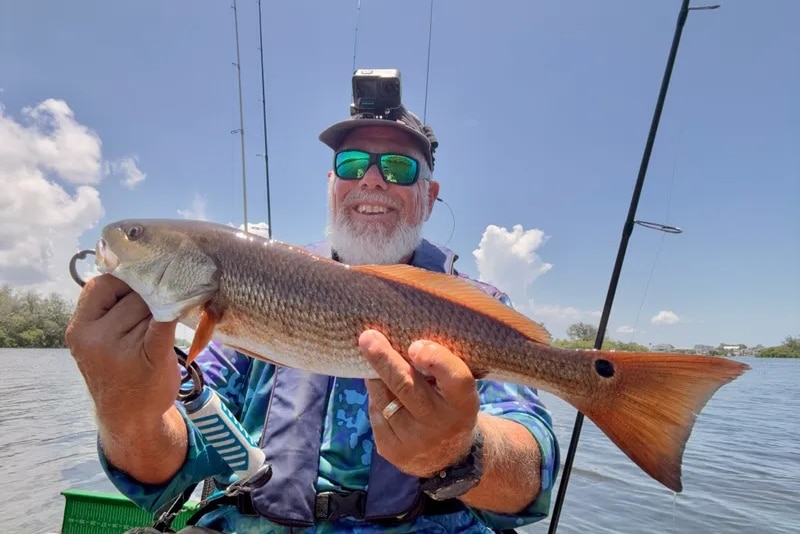
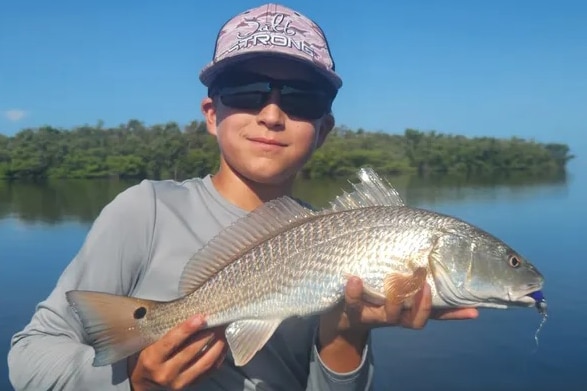
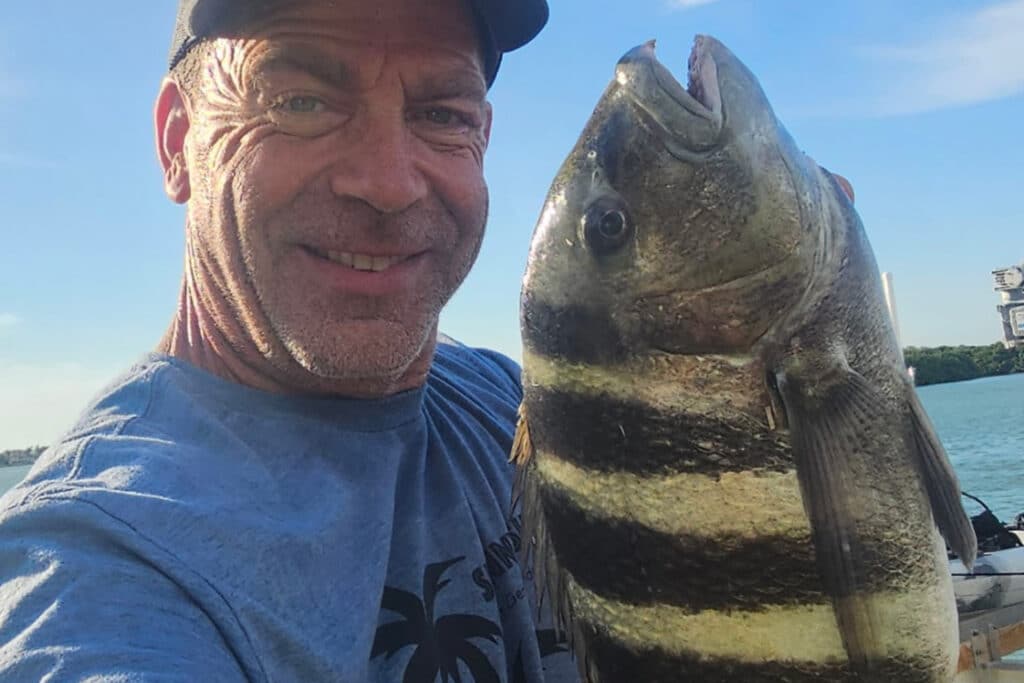
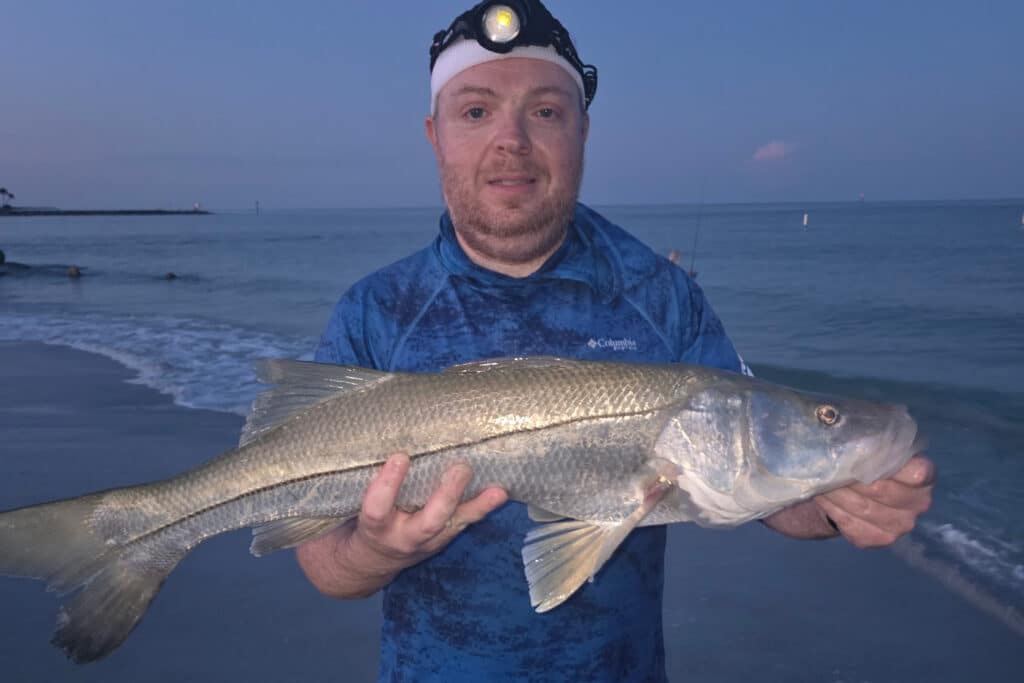
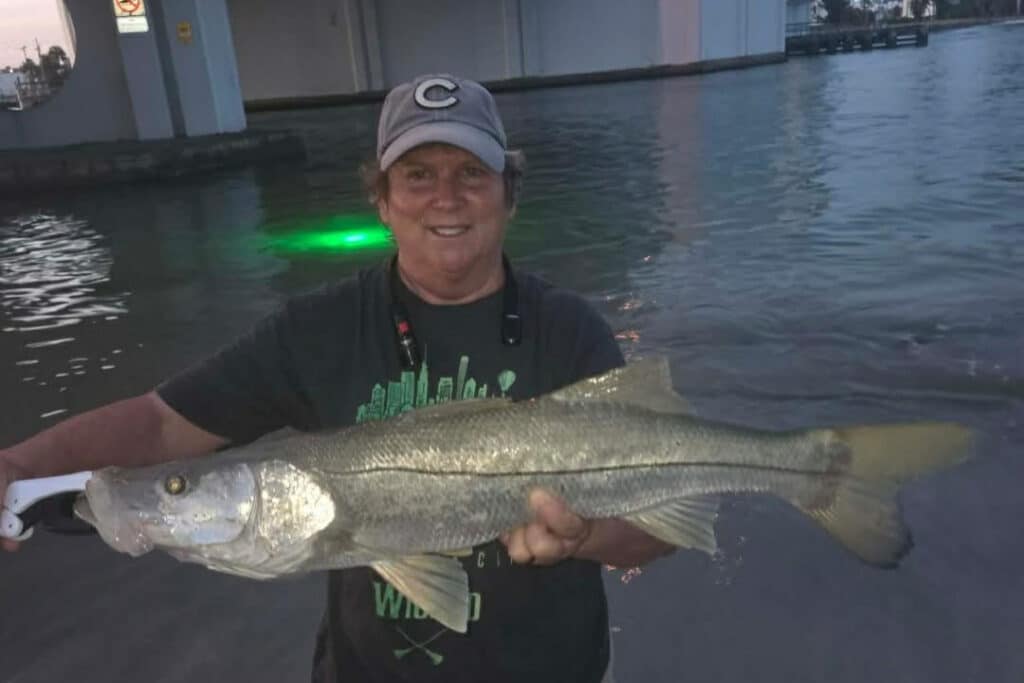
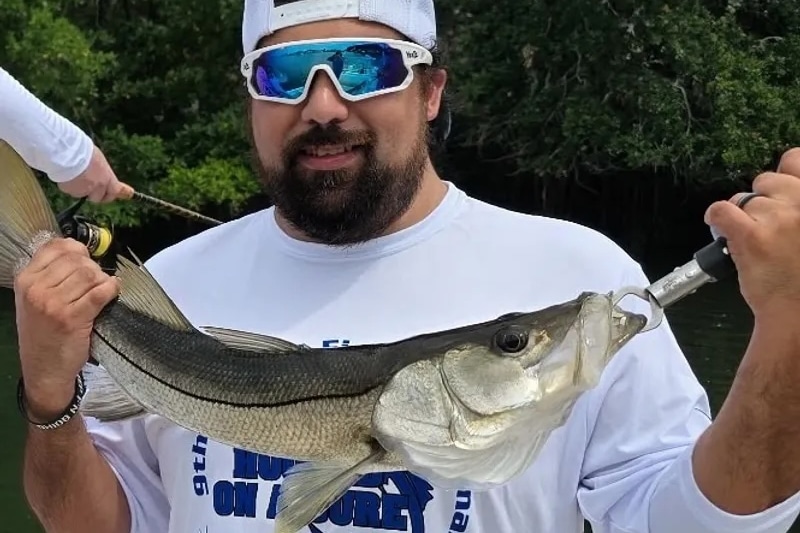
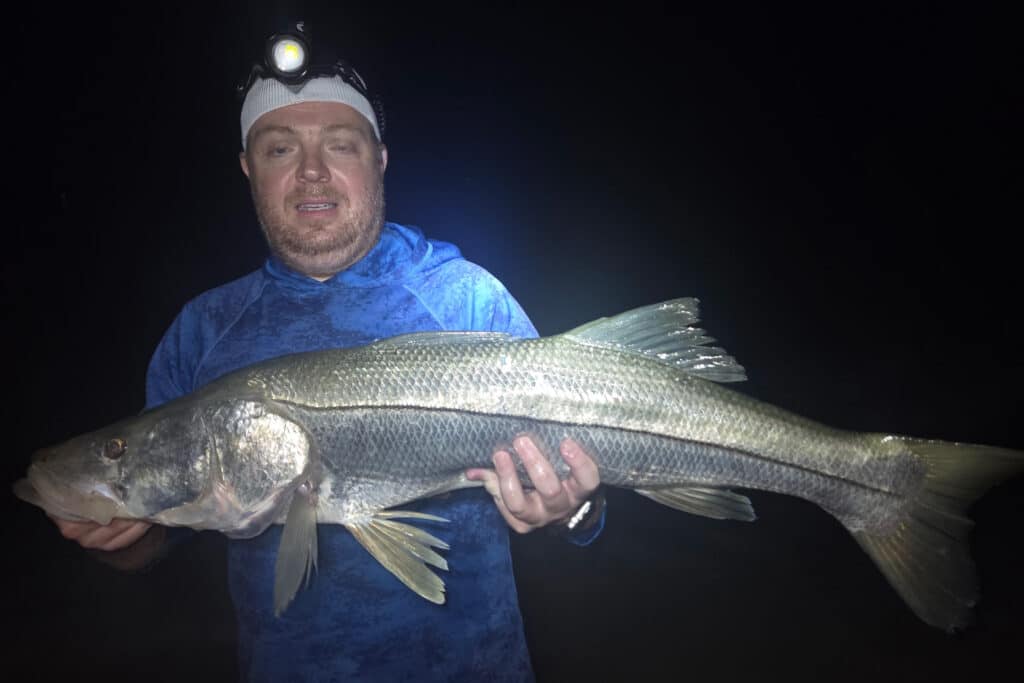
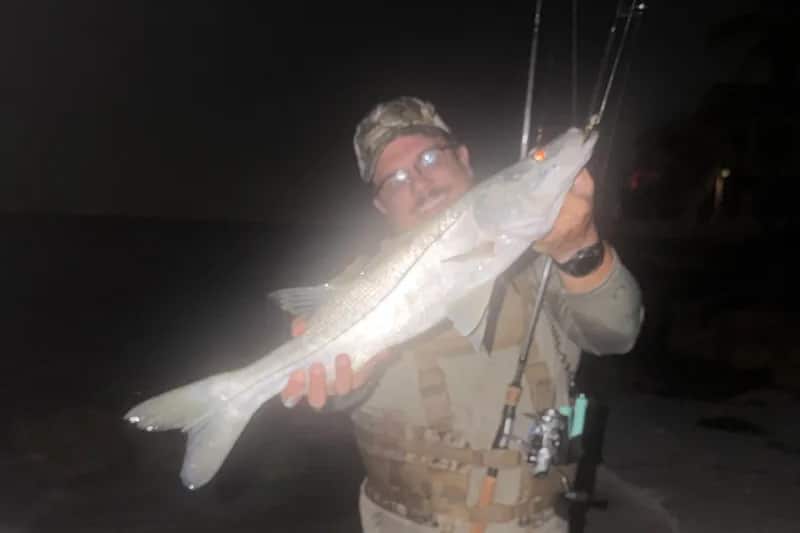
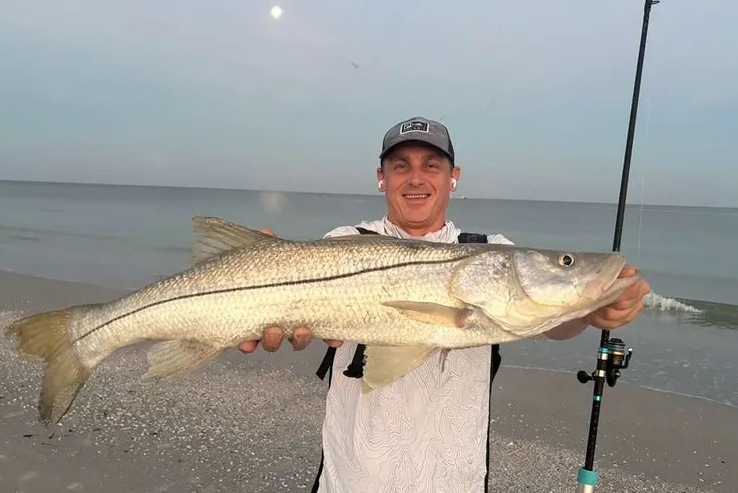
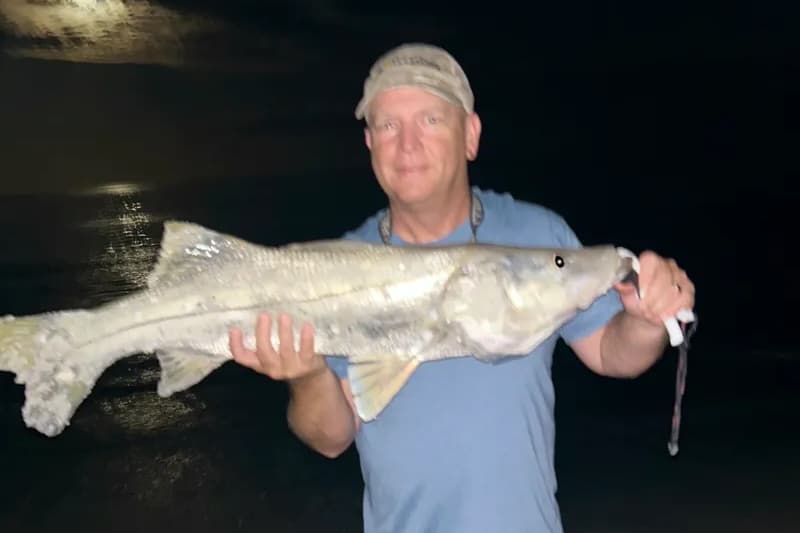
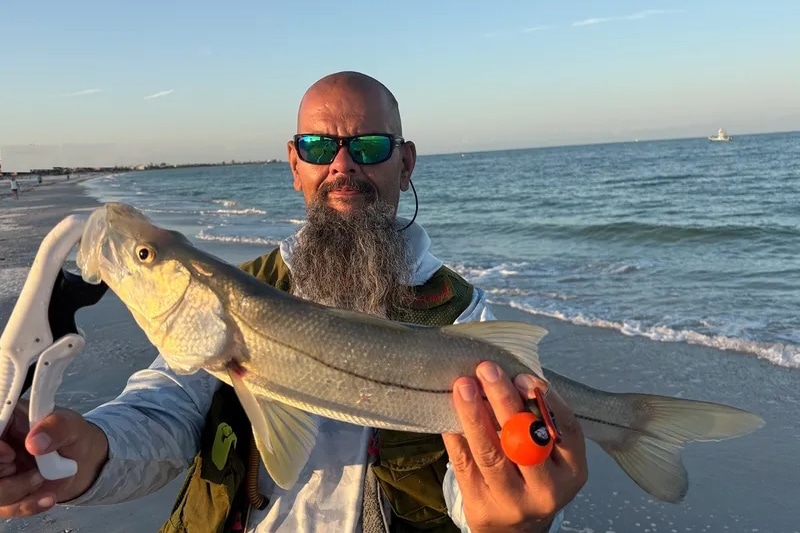
Inshore fishing around Johns Pass, Madeira Beach, Tampa Bay, and the surrounding beaches has been very productive, especially for snook and mangrove snapper. Those are really the two big focuses right now on the inshore side. We are deep in that warm water summer pattern, so the fish are reacting to heat, bait, tide, and oxygen. The bite is good, but you have to think like a fish. Find shade, find moving water, find bait, and find places where predators can feed without wasting energy in overheated water.
Snook have been a major highlight. We are seeing good snook action around the passes, along the beaches, around bridge lines, dock lights, and areas with lots of bait. The fish have really moved into those summertime areas, and we are seeing them staged where you would expect them: pass edges, beach troughs, jetties, bridge shadow lines, deeper cuts, and areas with ambush points. Around Johns Pass and other passes, they will often sit just outside the heaviest current and wait for bait to sweep past them.
Whitebait remains a major key for the snook bite. These fish are very keyed in on bait right now, and when whitebait is thick, live bait can be hard to beat. However, when there is too much natural bait in the water, snook can become selective. Your bait has to look right, swim naturally, and match what they are eating. Smaller whitebait, frisky live baits, shrimp, small pinfish, and natural presentations are all important. If the fish are blowing up on tiny bait and ignoring larger offerings, downsize. Smaller soft plastics, whitebait imitation lures, jerkbaits, paddletails, and lightly weighted live baits can help match the hatch.
Beach snook fishing is also going well. Walk quietly, look for troughs, sandbar cuts, bait schools, and fish cruising just off the shoreline. Long casts and stealthy approaches are critical in clear shallow water. Do not walk right up to the water’s edge and cast directly on top of fish. Stay back, move slowly, and cast ahead of where the fish are traveling. Live bait, small soft plastics, and shrimp can all work. Early morning is the best window, especially before the beach traffic and sunlight get too intense.
Mangrove snapper are dominating much of the inshore hard structure right now. Bridges, docks, piers, jetties, seawalls, rock piles, and any hard structure with shade, barnacles, and bait can hold mangrove snapper. These areas that were once loaded with sheepshead during the cooler months are now giving way to mangroves as the water continues to warm. We are seeing lots of aggressive fish and some really respectable inshore sizes too.
Inshore mangrove snapper are a fantastic summer target because they provide steady action, they are great eating, and they can be targeted by boat, dock, bridge, pier, or jetty anglers. Small baits are the name of the game. Small chunks of shrimp, tiny pieces of threadfin, small whitebait pieces, pilchard chunks, and small live shrimp all work well. Use a small hook and enough weight to keep the bait near the structure. If the water is clear or the fish are pressured, lighten the leader and downsize the bait. If you are fishing heavy structure, be ready to pull hard because mangroves will run directly back into the rocks, pilings, or dock lines.
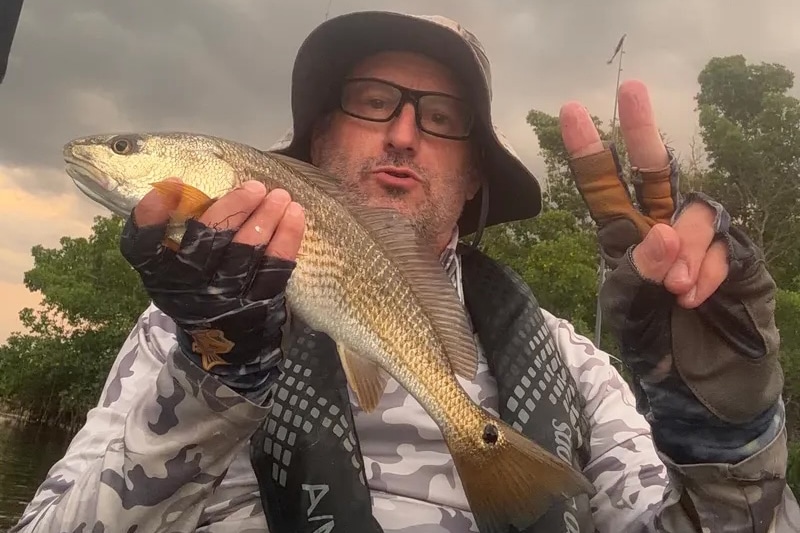
Redfish action is still present, though the big schools have been less consistent than earlier. We are still seeing fish around mangrove shorelines, oyster bars, grass flats, and areas with big mullet. Finding mullet remains one of the best ways to find redfish. Mullet stir up the bottom, disturb shrimp, crabs, and small forage, and redfish often follow them to take advantage of that activity. If you find big mullet pushing water along a mangrove edge or oyster bar, slow down and fish the area thoroughly.
Cut bait is a strong option for redfish in hot water, especially when fish are spread out or tucked into mangroves. Cut pinfish has been a good trick, along with cut mullet, ladyfish, and threadfin. On higher water, fish tight to the mangrove roots and openings. On lower water, look for fish to slide back to potholes, troughs, oyster edges, and deeper drains. Artificial anglers can still do well with weedless paddletails, soft jerkbaits, gold spoons, and small swimbaits, especially when covering water.
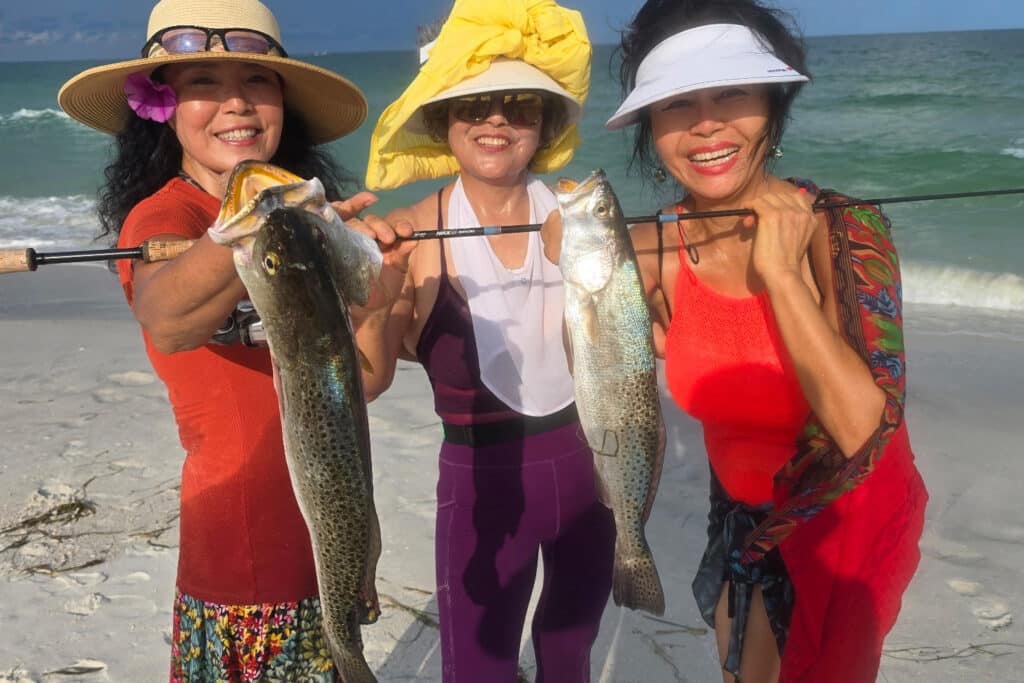
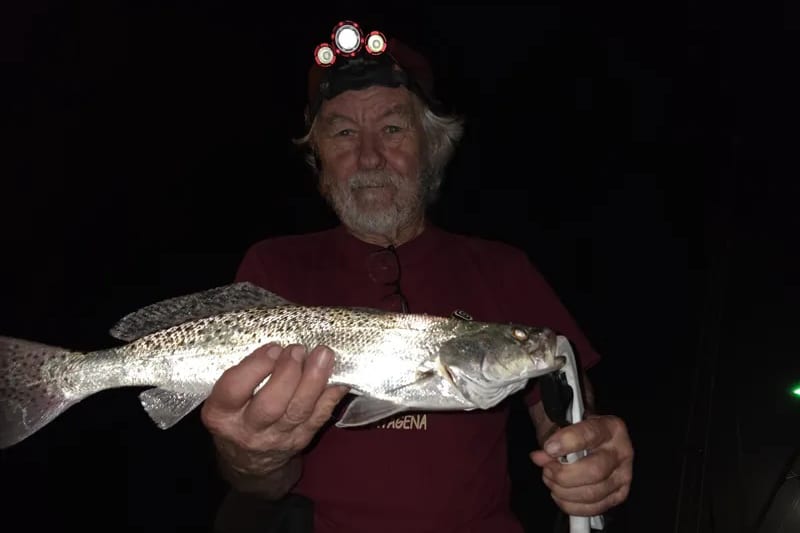
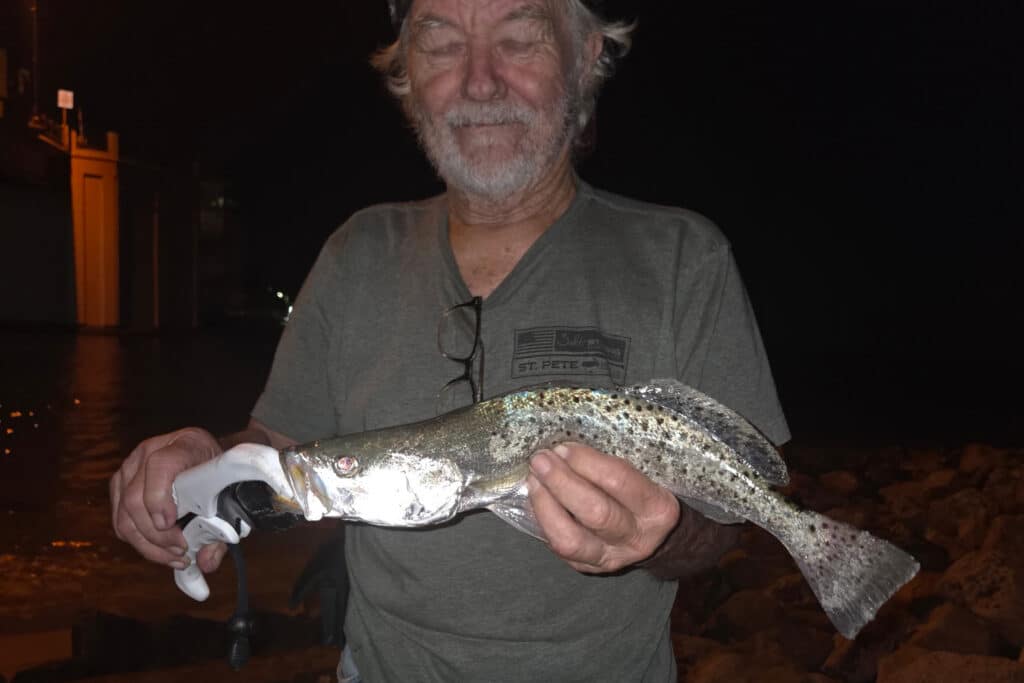
Trout action is still happening, but the summer heat has pushed many fish deeper. With water temperatures climbing, trout are less likely to stay in super shallow flats during the middle of the day. Focus on deeper grass flats, edges, sandy potholes, troughs, channels, and areas with better oxygen and moving water. Four to eight feet of water or more can be productive, especially around the edges of shallower flats where bait is being pushed into deeper pockets.
Live shrimp under a popping cork remains a classic trout tactic, but free-lined shrimp, soft plastics on light jig heads, shrimp imitation lures, and suspending twitchbaits can all work. In the heat, slow down your retrieve. Let the bait stay in the strike zone and work it near the bottom or through the edges. Early morning and late evening are the best times, and dock lights can still produce, although quarter moon tides mean you need to find lights with the best water movement.
Mackerel are still around here and there inshore, particularly around bait schools, passes, deeper bridges, and faster moving water. They are not always the main event, but when you find them, they can provide fast action. Watch for birds, bait spraying, and surface flashes. Spoons, Gotcha-style lures, small plugs, jigs, and free-lined whitebait are all productive. If you are seeing bait nervous near a bridge or pass edge, keep a fast-moving lure ready.
Tarpon are still a major summer attraction around the beaches, passes, mouth of Tampa Bay, and big bay area bridges. Early morning, tide changes, and areas with big bait concentrations are the best places to focus. Live threadfins, pass crabs on the right tide, pinfish, and large shrimp can all produce. Boat positioning is everything with tarpon. Get ahead of the fish, present naturally, and avoid running through rolling fish. Around bridges, use heavy enough tackle to manage the fish around structure. Along the beaches, stealth and presentation are the priority.
Shark action is very heavy inshore right now, which is typical as the water gets hot and bait is abundant. Bonnetheads, blacktips, bull sharks, and other sharks are common around passes, beaches, flats, channels, and areas with mackerel, tarpon, or bait schools. Fresh cut bait is best. Ladyfish, mullet, threadfin, bonita, and other oily baits are all good options. Shark fishing can be a fun way to bend a rod, especially for families and anglers looking for action, but always use appropriate tackle and handle fish carefully for a clean release.
Overall, inshore fishing is very strong if you adjust to the quarter moon and hot weather. Snook and mangroves are the headline, redfish are still around the right shorelines and mullet schools, trout are deeper, tarpon are active, mackerel are scattered around bait, and sharks are thick. Fish early, fish moving water, fish structure, and fish shade. That is the summer formula.
Fishing Tips
- Snook: Use live baits like greenbacks, threadfins, and shrimp, or try flair hawks and soft plastics at night.
- Redfish: Look for them around mangroves, oyster bars, and flats, and use dead baits during higher tides.
- Trout: Target them with soft plastics, white bait, and shrimp around deeper flats and potholes.
- Tarpon: Target them during the full moon with crab flushes, making it an ideal time to target them.
- Flounder: Find them near sandy bottoms and structures, biting on bottom baits.
- Pompano: Be prepared to move frequently to stay on their bite.
- Sharks: Use big dead baits in areas with moving water.
Help spread the word about what to do if you hook or entangle a bird. Never cut the line; instead, reel in the bird carefully to dehook and release it. If you accidentally hook a dock, break the line at the hook to avoid leaving any line in the water. Seabirds with fishing lines hanging from them are becoming more common, and this could lead to the closure of fishing areas.
Rising concerns about bird entanglements might result in closing fishing spots, impacting the few available locations around Tampa Bay from shorelines, docks, bridges, or piers. Learn more in our podcast with Salt Strong: https://www.saltstrong.com/articles/shutting-down-fishing-at-busy-pier/.
NEarshore Fishing Report
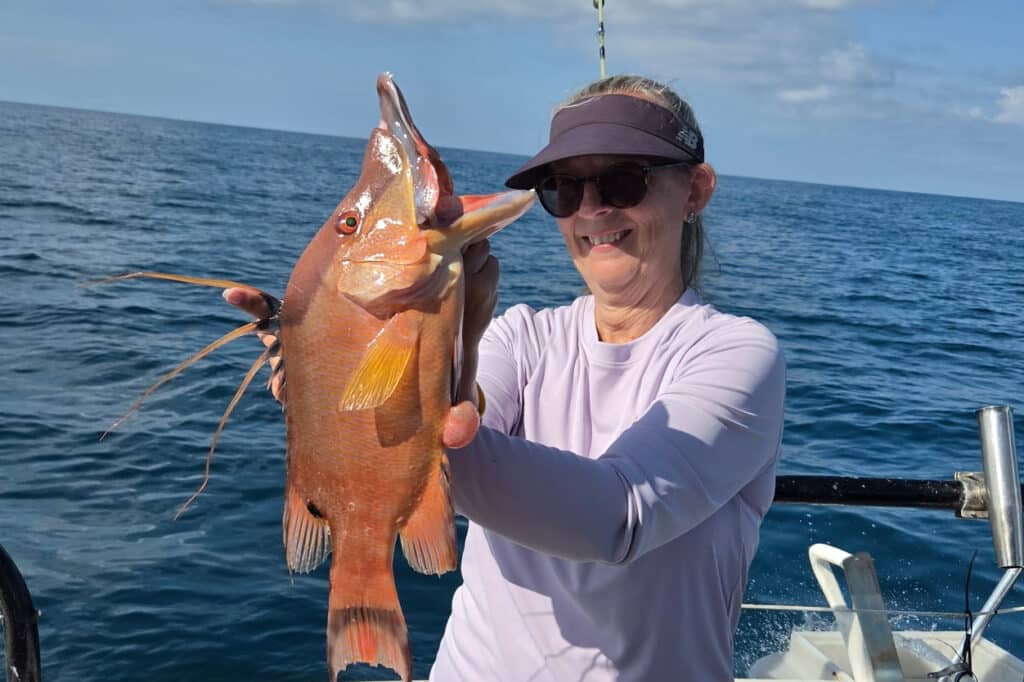
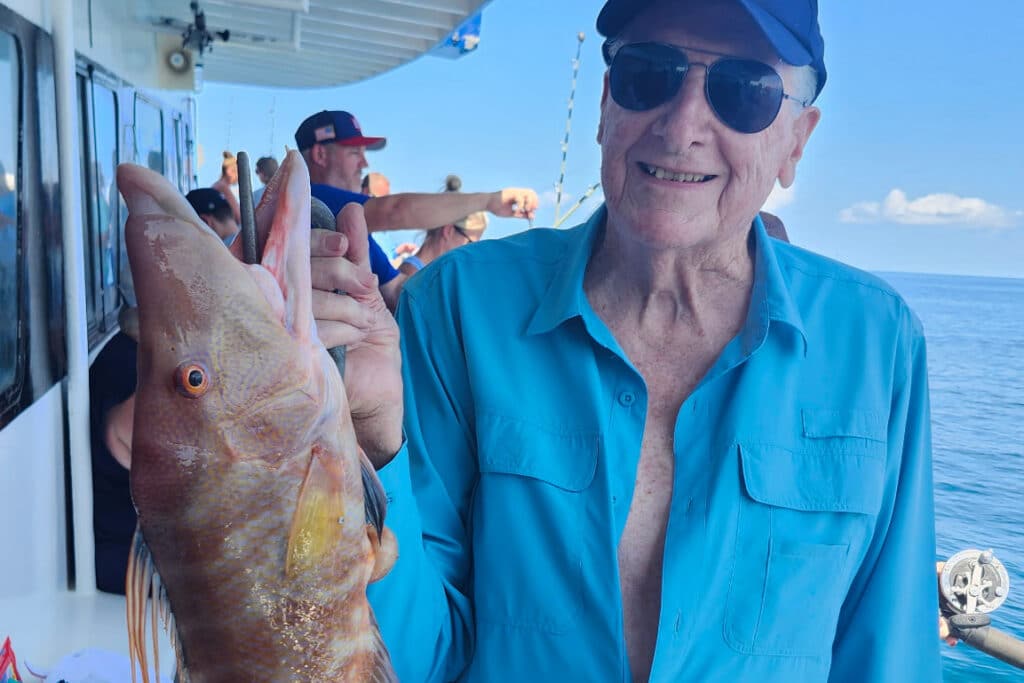
Near shore fishing off Johns Pass and Madeira Beach has been producing a great summer mixed bag, with lane snapper as one of the top focuses right now. We are seeing good lane snapper action, a few nice mangrove snapper, some red grouper, and plenty of heads and tails species in the mix. The warmer water has shifted the pattern, and as expected, the hogfish bite has softened while the snapper species have become more active.
Lane snapper have really picked up with the warmer water, and they are a perfect near shore target right now. These fish are aggressive, colorful, excellent eating, and willing to bite a variety of baits. We are finding them around hard bottom, ledges, shell bottom, and mixed structure, especially as we get into deeper near shore water. Squid, shrimp, and small chunks of threadfin are all great choices. Squid stays on the hook well and catches numbers. Shrimp can produce quality bites. Fresh cut threadfin can be a great option to produce bigger lanes while giving you a chance for mangrove snapper too. If you are missing bites, downsize your hook and bait.
Mangrove snapper are also showing near shore, and we are seeing some nice fish on the 10 hour all day trips. Some really quality mangroves are coming off the near shore bottom from time to time, which is exciting to see. Near shore mangrove snapper are smarter and more cautious than lane snapper, so lighter tackle and cleaner presentation often make the difference. You wont catch mangroves on chicken rigs or funky set ups with extra beads or crimps typically. Small chunks of threadfin are one of the best baits, especially on a light double-snell rig with smaller hooks. We do see them on live shrimp and a great option is a small pinfish.
Mangroves like structure, but they do not like unnatural presentations. If your bait spins, drags, or looks out of place, the bigger fish may ignore it. Start with 30 to 40 pound fluorocarbon and adjust based on water clarity and bite quality. If they are leader shy, lighten up. If they are biting well, stick to heavier leader to give you the opportunity to land larger fish that may bite.
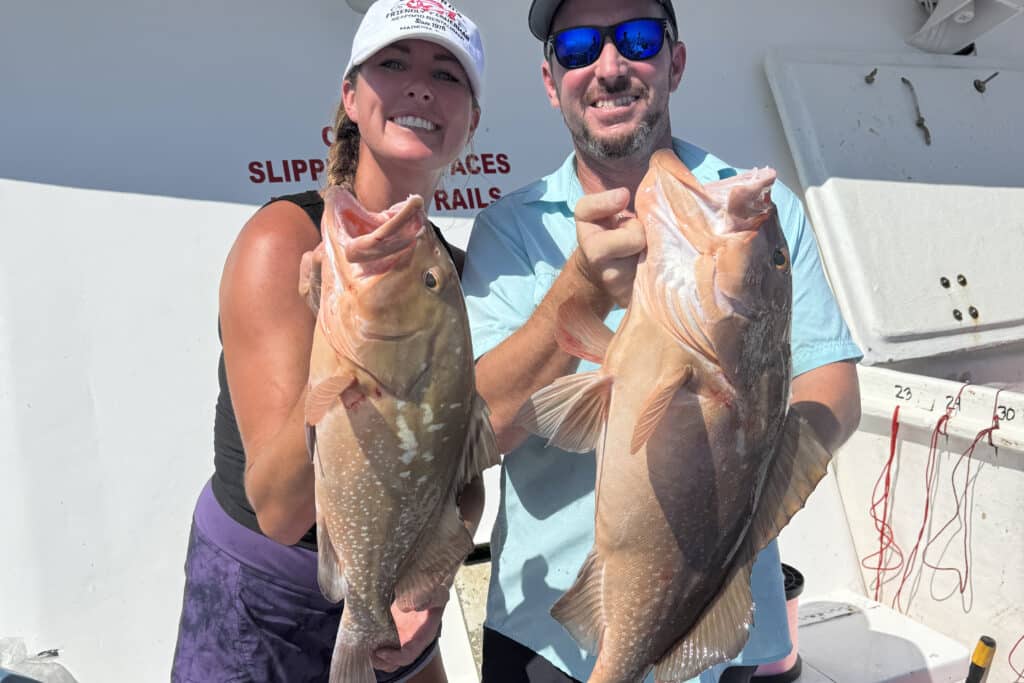
Red grouper have been a nice part of the near shore action lately. On our 10 hour trips, we have been seeing two, three, four, and sometimes five keeper sized red grouper caught, which is great action for that trip. Also, we always see tons of the smaller ones too. The 10 hour is our first trip with a realistic chance at red grouper because we are able to reach deeper water and better hard bottom than the half day. Red grouper near shore are often found around potholes, ledges, cracks, and scattered hard bottom rather than giant structure.
Whole squid, larger chunks of threadfin, cut bait, and live pinfish are all good red grouper baits. If you are targeting keeper fish, use a larger bait to avoid some of the smaller pickers. Be ready to work through short fish and move around. Red grouper fishing is often about finding the right piece of bottom, and sometimes small moves make a big difference.
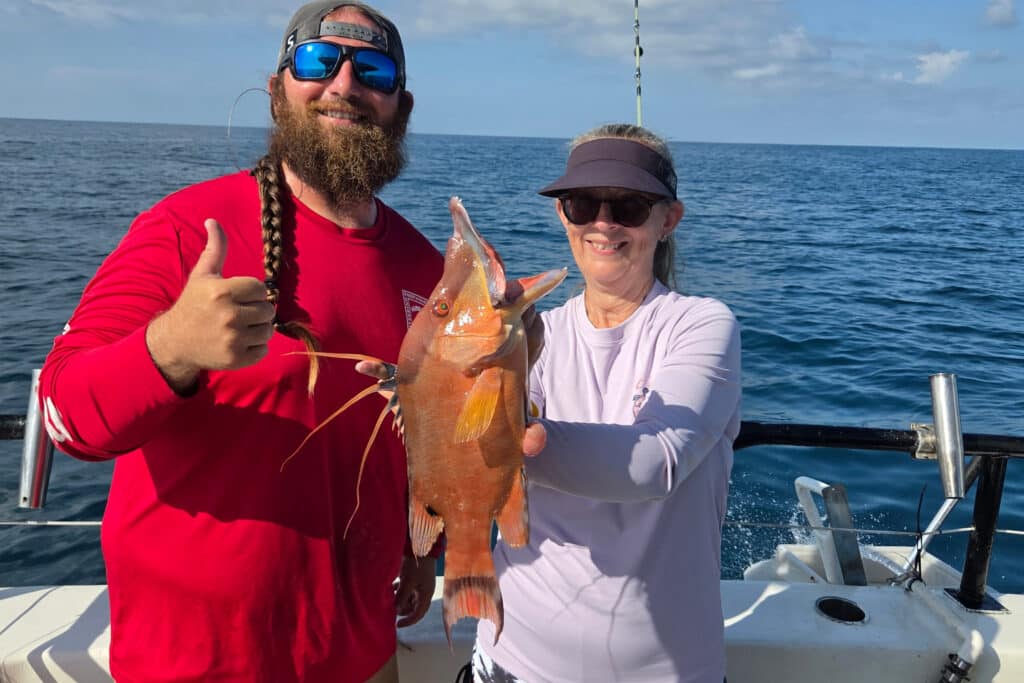
Hogfish are still possible, but the bite has softened considerably with the warm water. They have spread out, and that makes them harder to target with hook and line. Earlier in the year, they were more concentrated on certain near shore hard bottom areas, but now they are much less predictable. Live shrimp remains the top bait if you want to try for them. Use lighter tackle, long fluorocarbon leaders, small hooks, and a natural presentation around shell bottom, small ledges, and low-profile structure. At this point, hogfish are more of a bonus than a dependable main target.
Half day trips remain focused primarily on heads and tails action, especially white grunts, also called grey snapper around here. These trips are fun for the whole family and are a great starting point for beginner anglers, kids, visitors, and anyone who wants a shorter, easier introduction to party boat fishing from Johns Pass. White grunts, porgies, smaller snapper, and other mixed bottom fish keep rods bending and provide excellent eating opportunities.
The 10 hour all day trip is a step up from the half day and gives anglers a chance to fish deeper water with more variety, including lane snapper, mangrove snapper, red grouper, and more mixed bottom species. It is a great intermediate trip for guests who have done a few half days and want to try something a little more productive and more involved without jumping straight into the longest advanced trips.
Pelagic action near shore has been a little quieter than offshore, but mackerel are always possible where bait is stacked. Spanish mackerel can pop up around bait schools, tide lines, wrecks, reefs, and faster moving water. Spoons, small plugs, jigs, and free-lined bait work well when you see birds or bait showers.
Overall, near shore fishing is producing strong action for guests who want a mix of eating fish and opportunity. Lanes are the big highlight, mangroves are showing, red grouper are a real possibility on the 10 hour trips, hogfish are a bonus, and heads and tails are keeping the half day trips fun and productive. It is a great time to step up gradually from half days to 10 hours and then eventually into the 12 hour night snapper, 12 hour extreme, 39 hour, or 44 hour trips as your offshore confidence grows.
Fishing Tips
- Red Grouper: Target the deepest near shore waters with big dead baits or solid live baits. Use 60 lb test and 7/0 hooks for best results.
- Red Snapper: Use big dead baits like whole squid and bonita strips with heavy tackle to focus on larger fish. Prime trips include the 12-hour extreme, 39-hour, and 44-hour trips.
- Scamp Grouper: Use small to medium pinfish and cut threadfin, especially while targeting mangrove snapper.
- Mangrove Snapper: Near shore, use live shrimp and small chunks of threadfin on 30-40 lb test with 3-4/0 hooks. Offshore, use bigger chunks of cut threadfin or medium pinfish on 40-60 lb test with 5-7/0 hooks.
- Vermillion Snapper: Start around 100 feet of water using cut squid or threadfin. These fish are aggressive and not leader-shy.
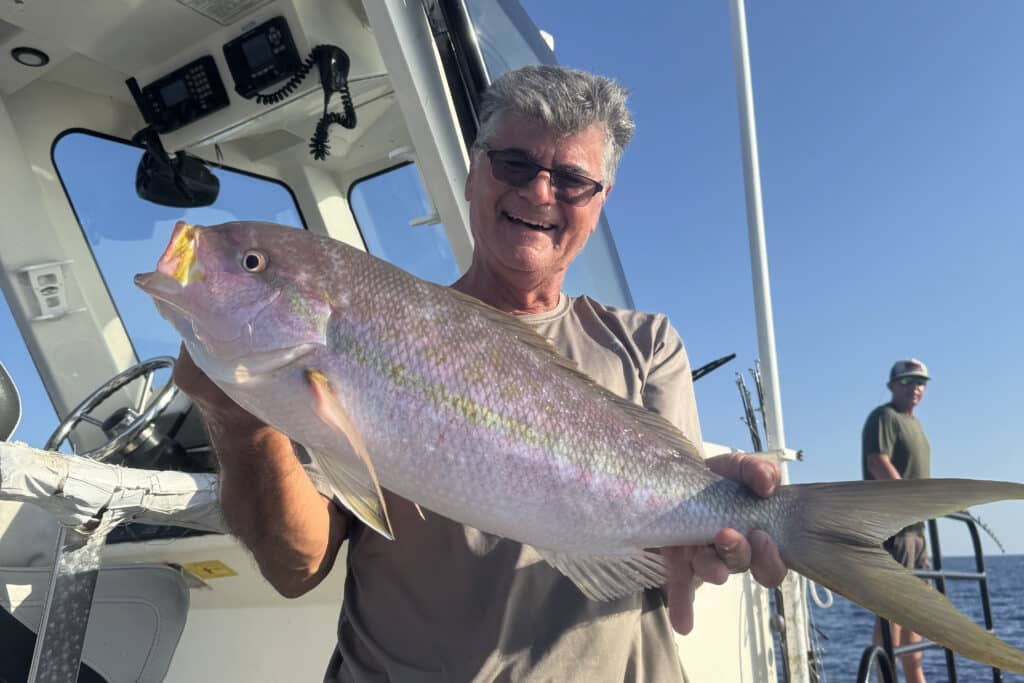
- Yellowtail Snapper: Use shrimp, cut squid, and threadfin.
- Pelagic Species: Keep flat lines and pitch rods ready for sailfish, kingfish, wahoo, tuna, and mahi mahi.
Offshore Fishing Report
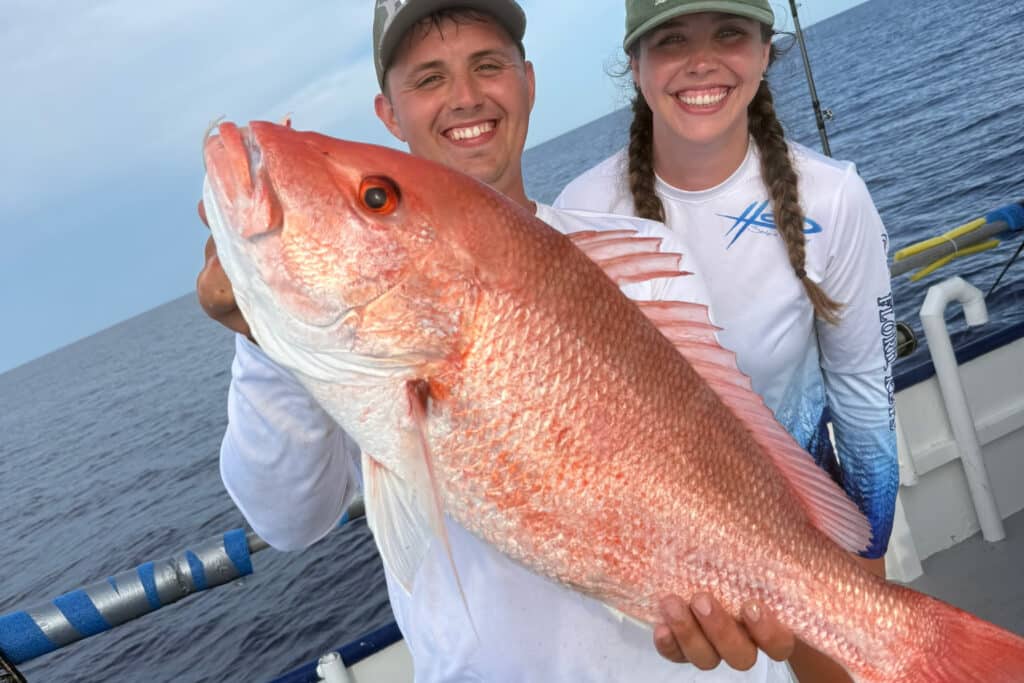
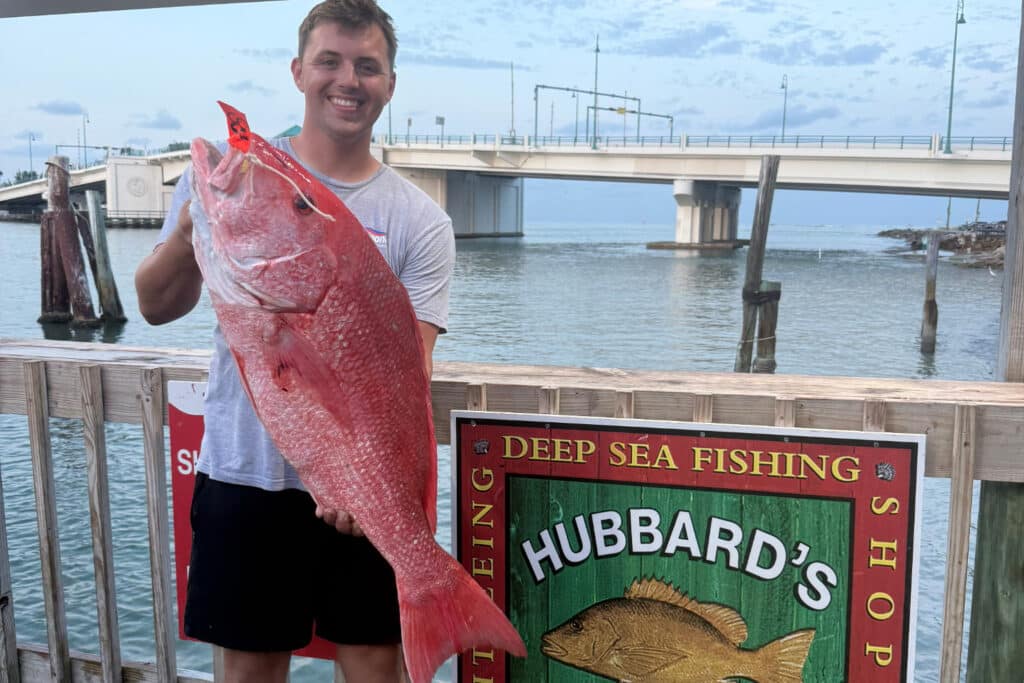
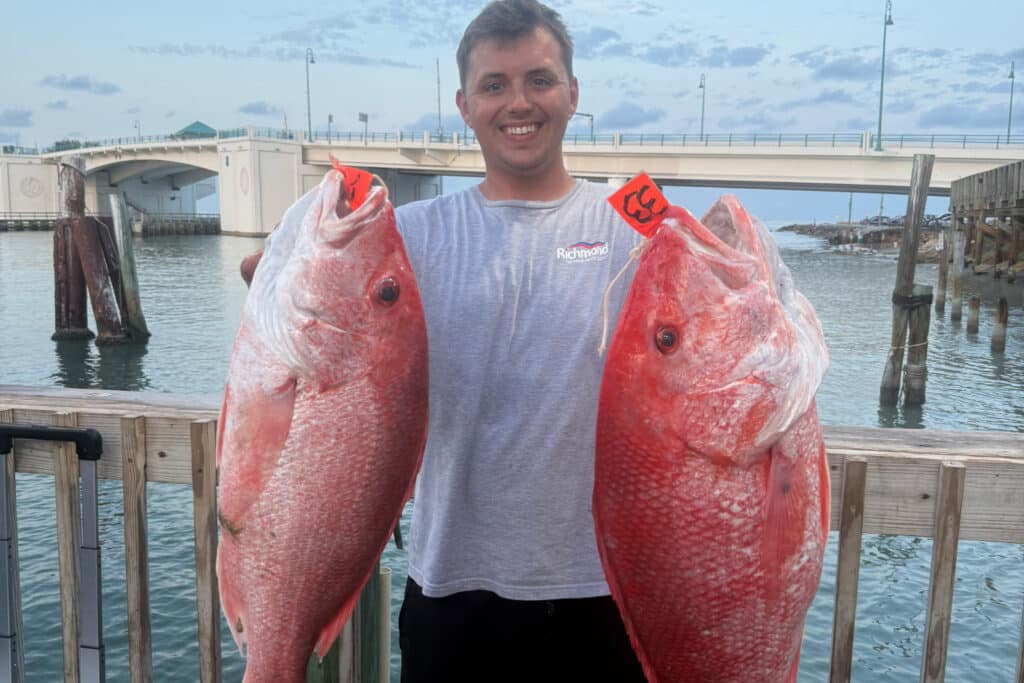
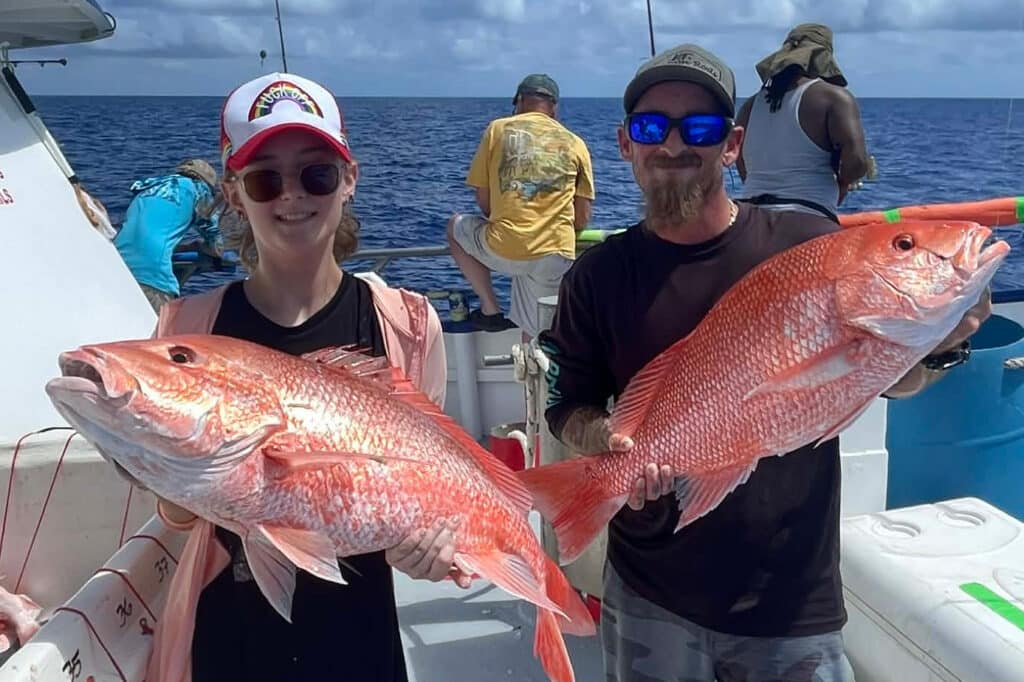
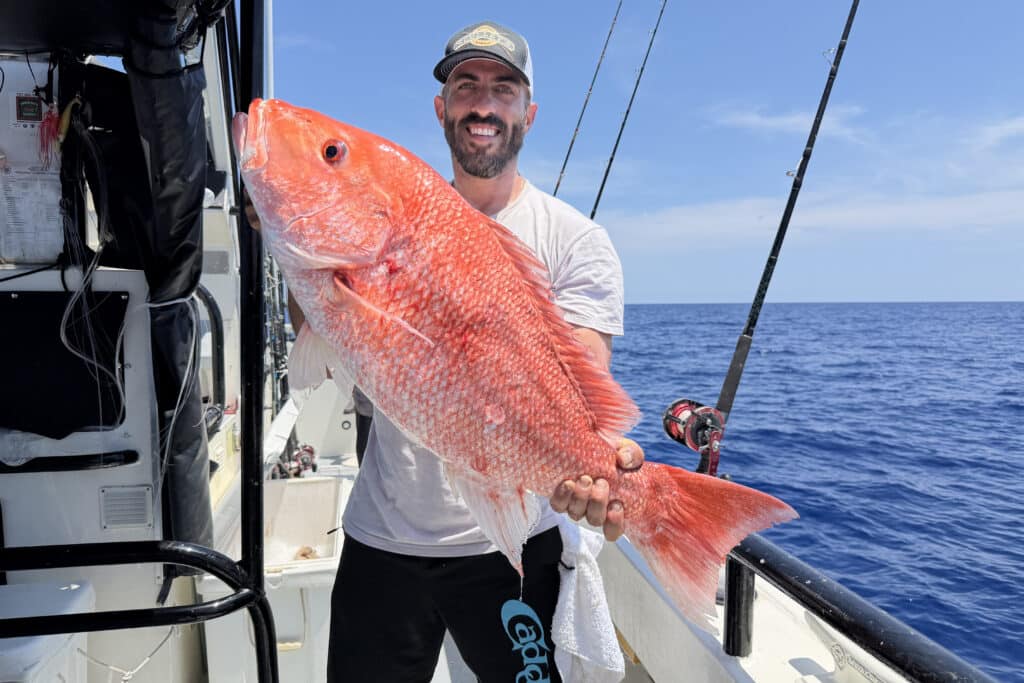
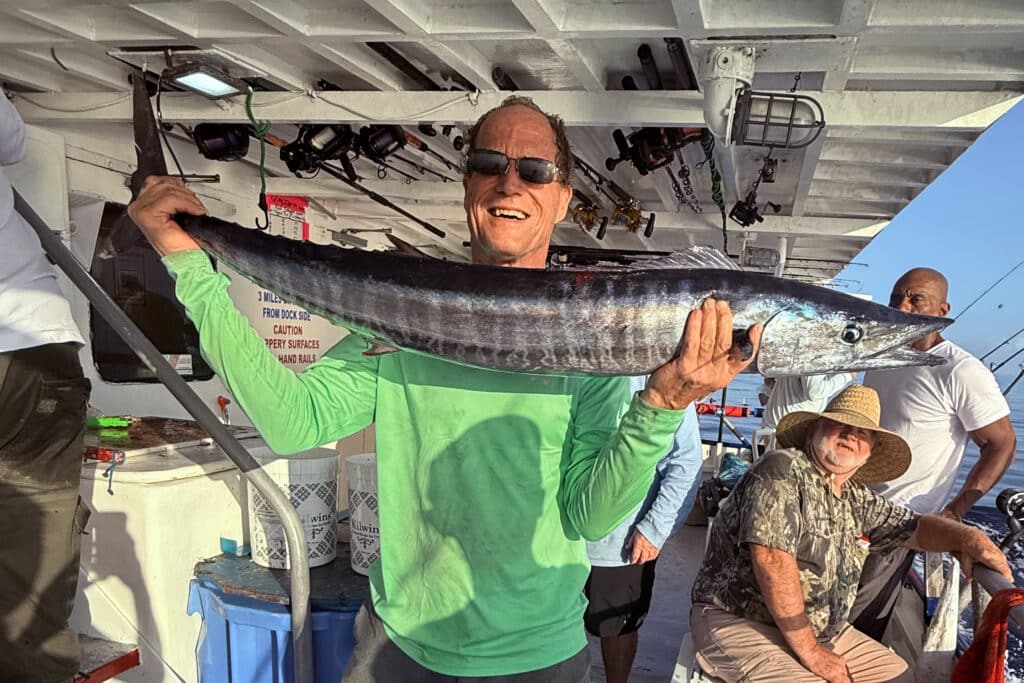
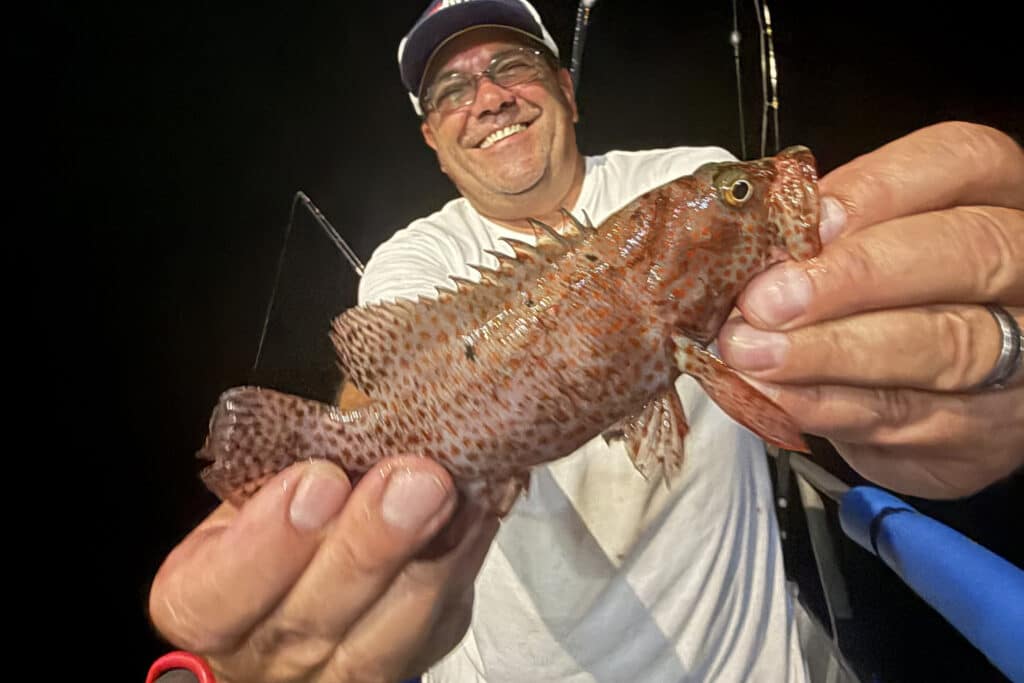
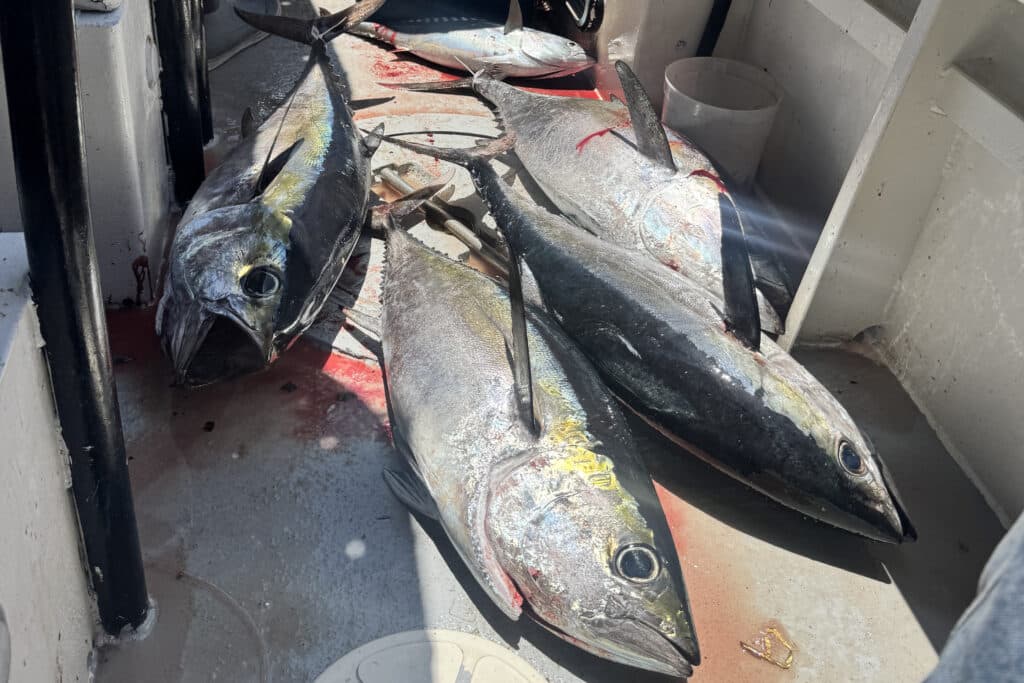
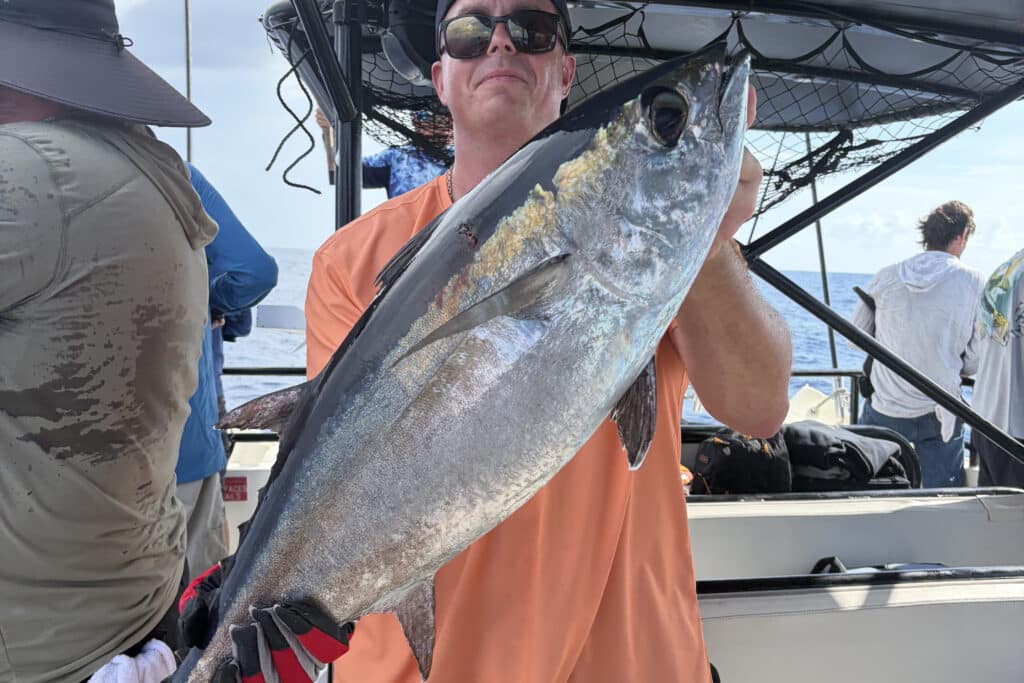
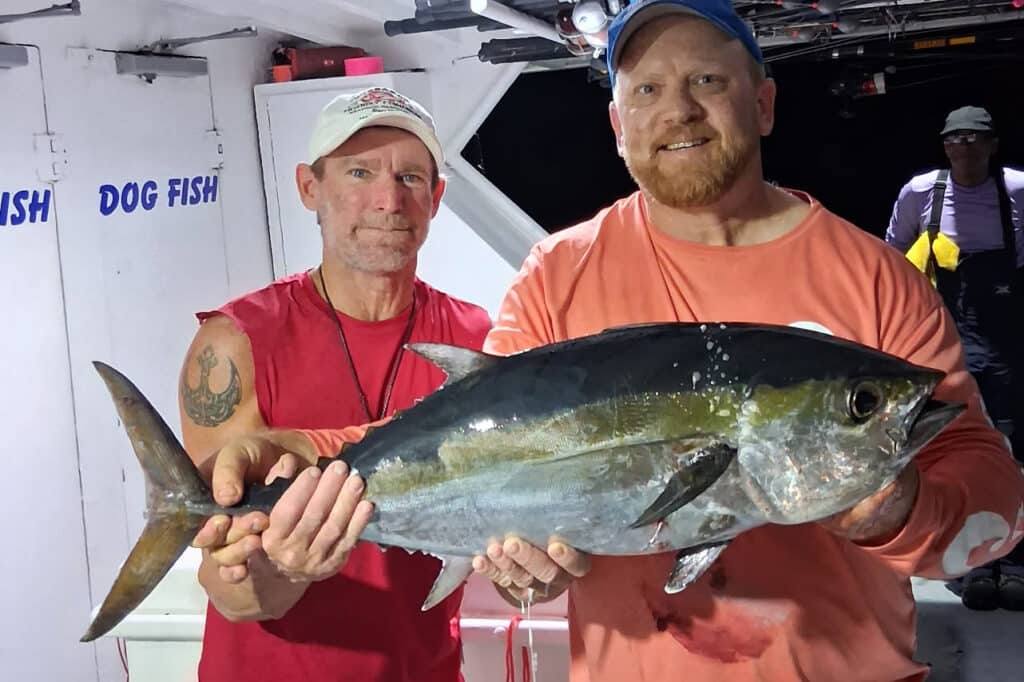
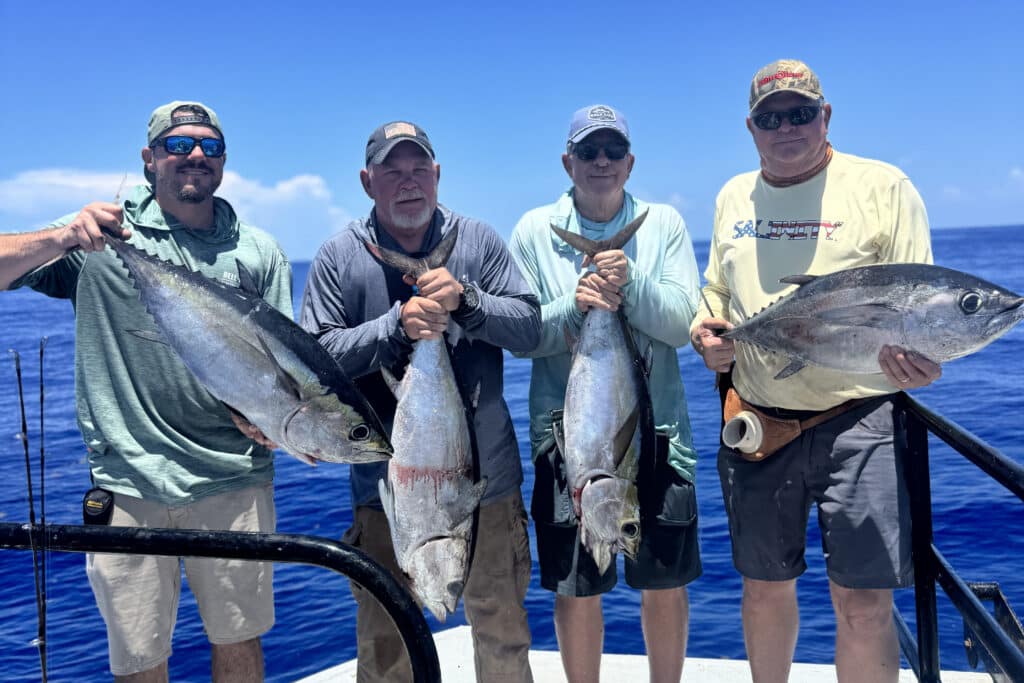
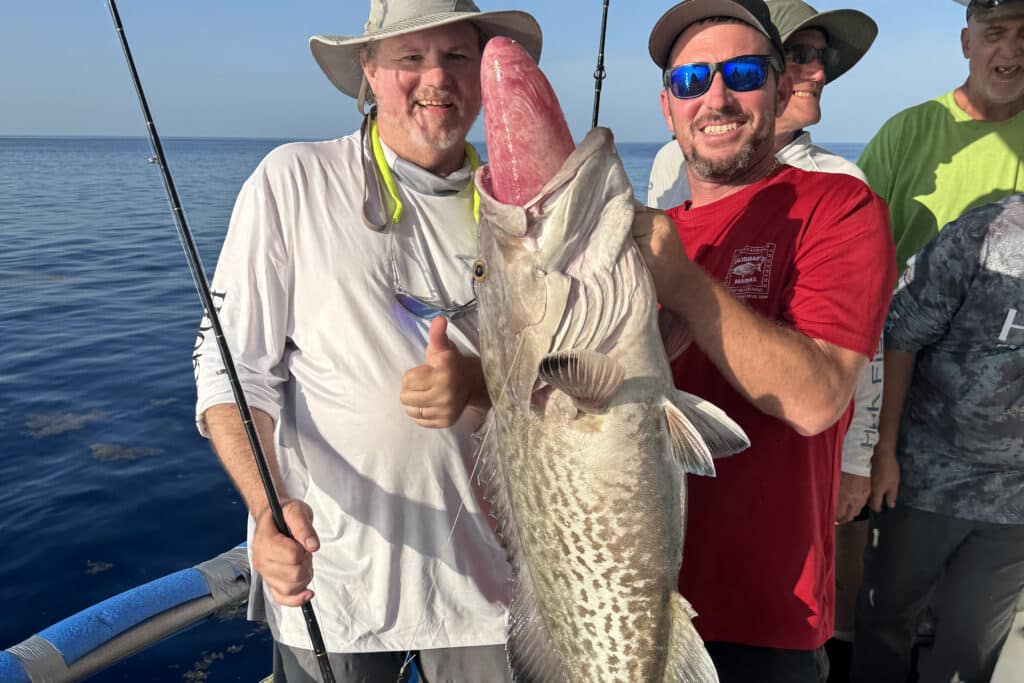
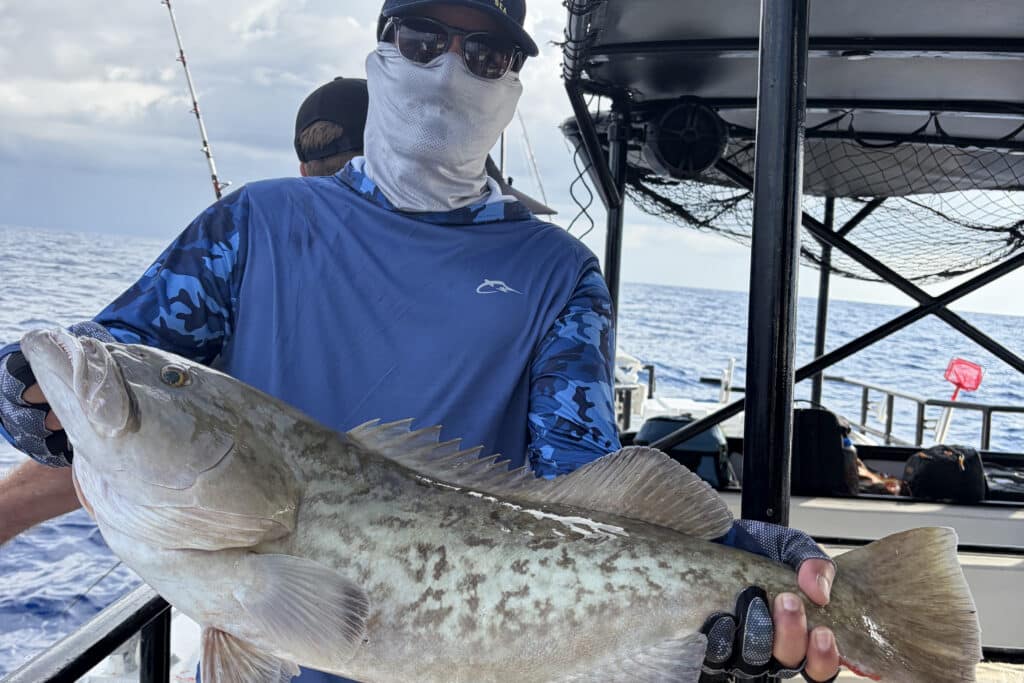
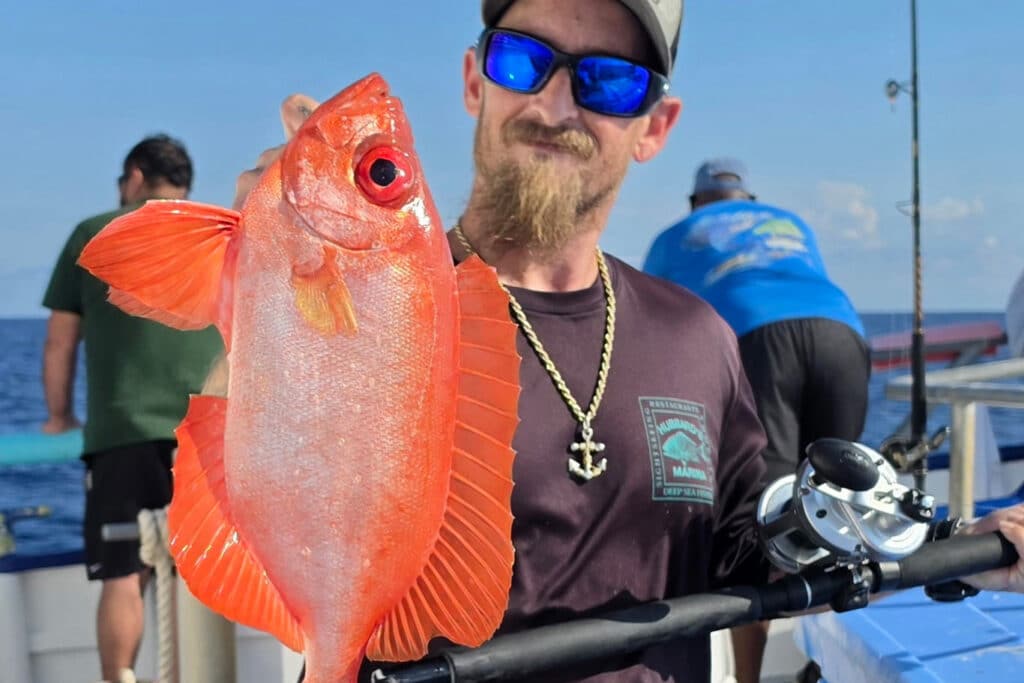
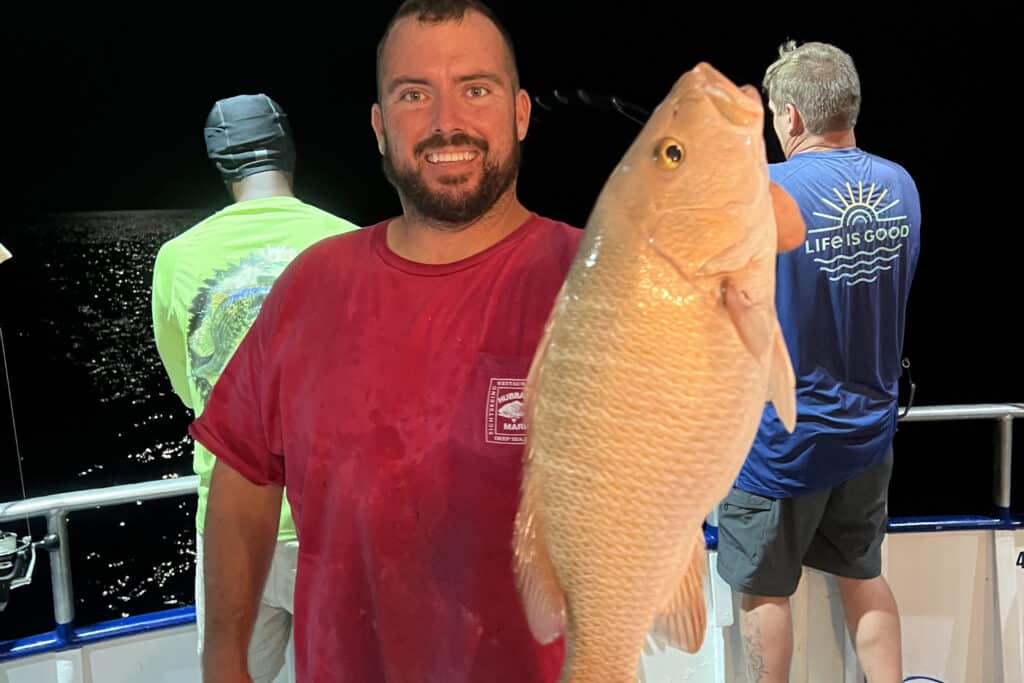
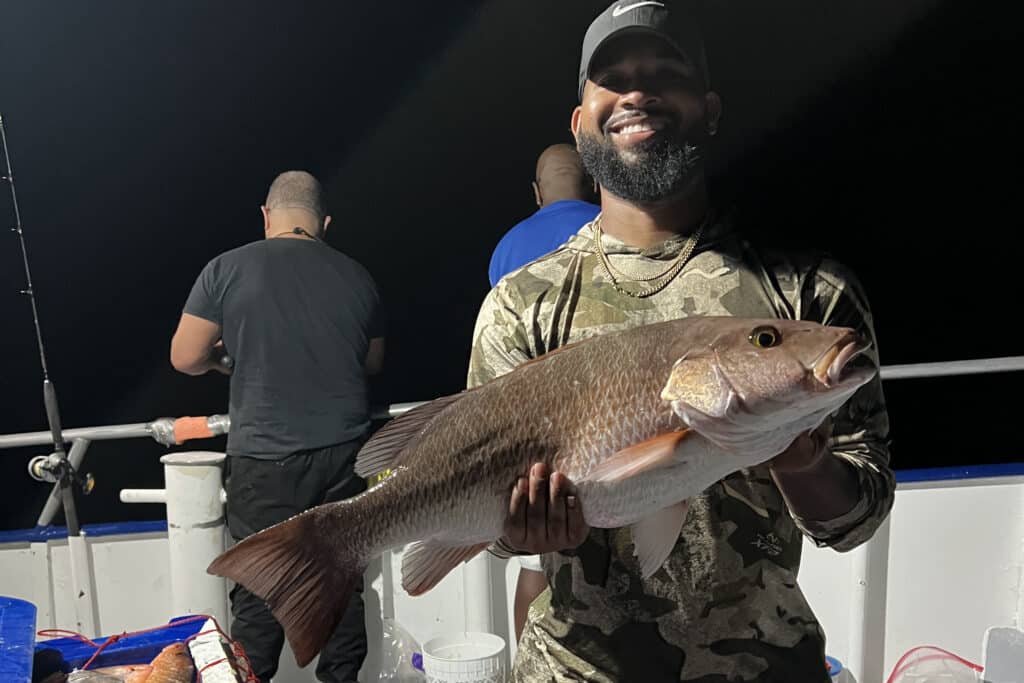
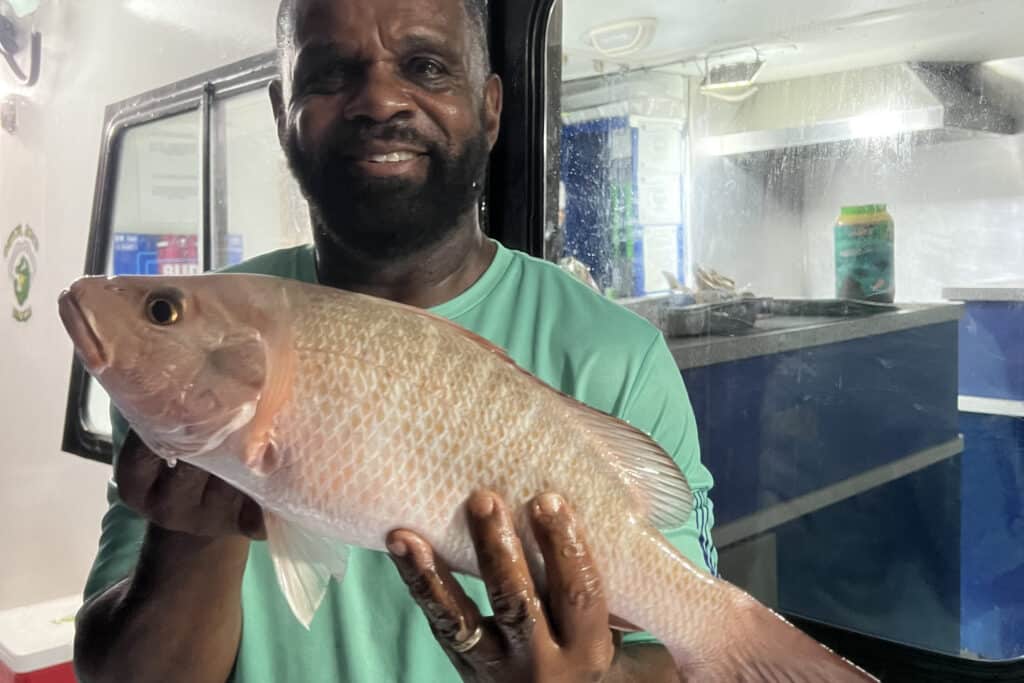
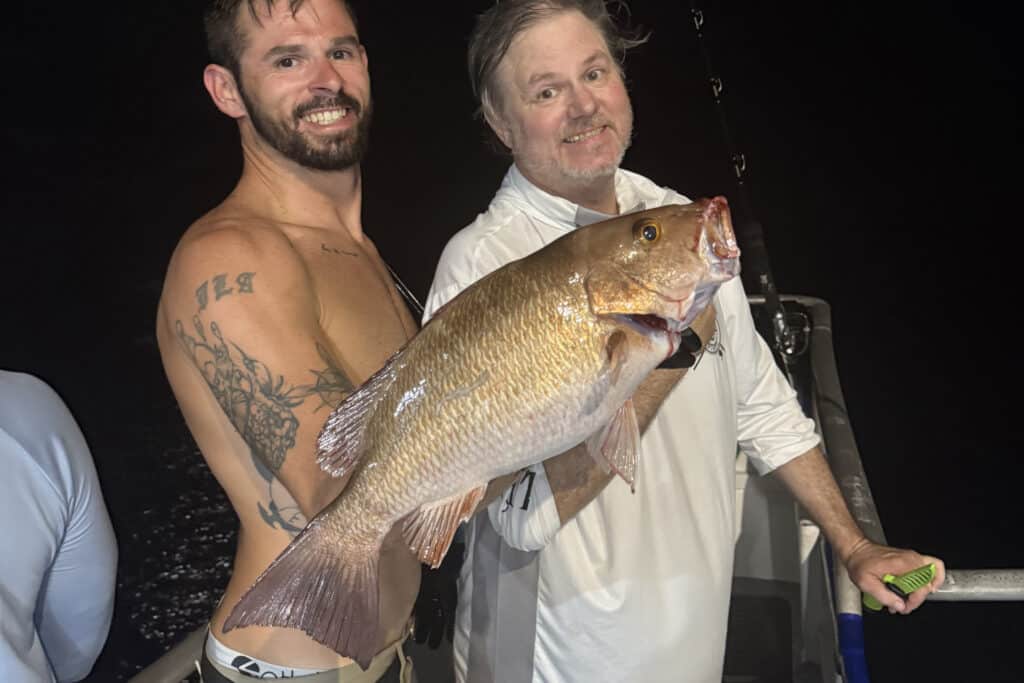
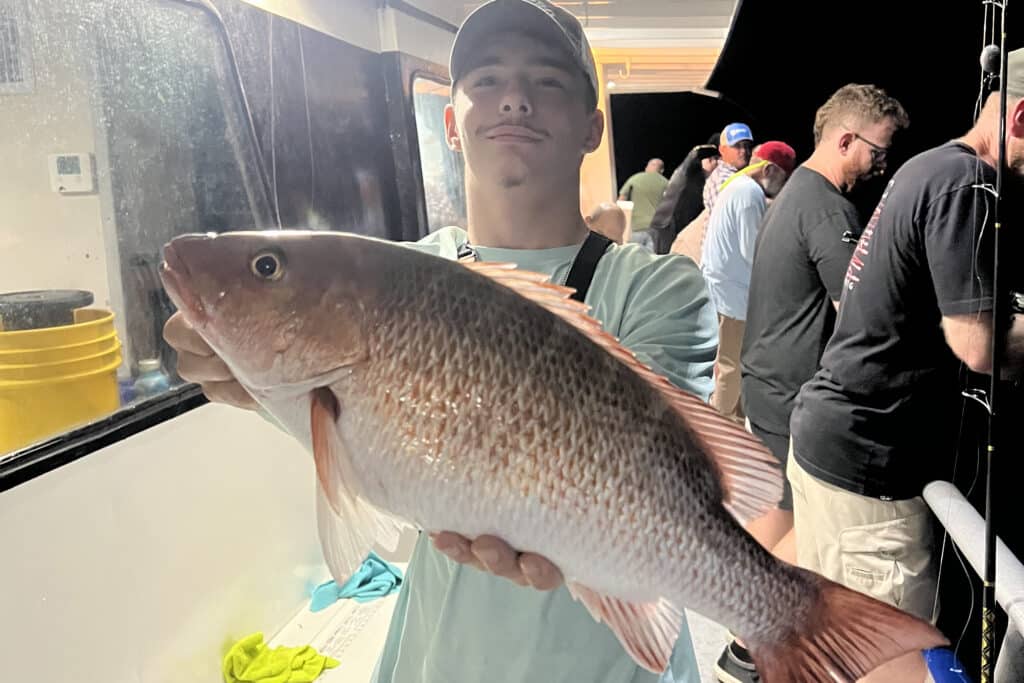
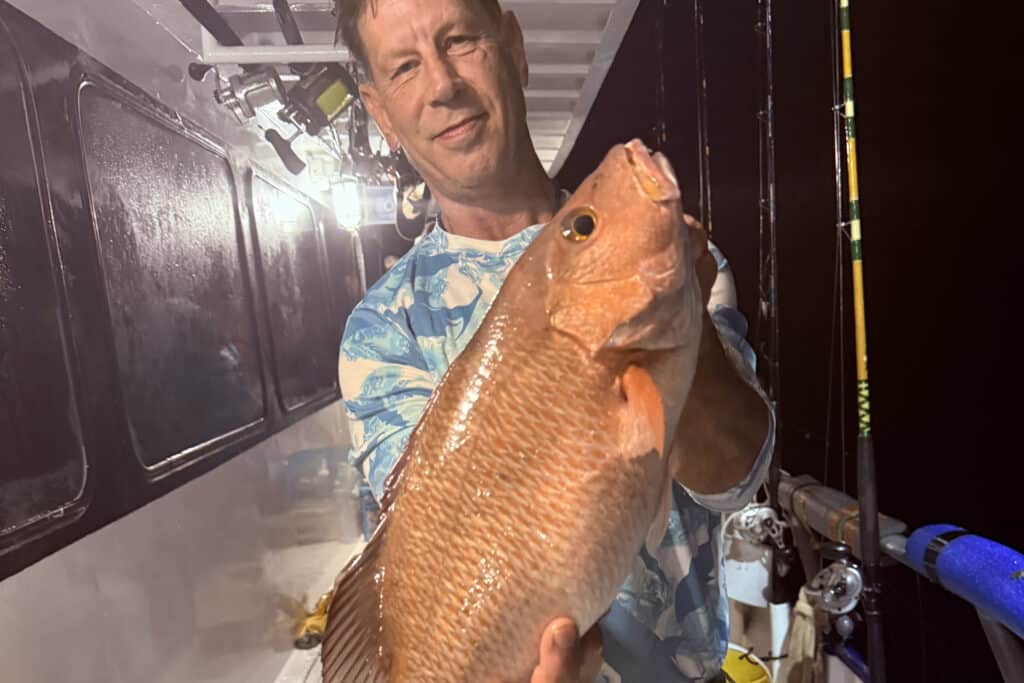
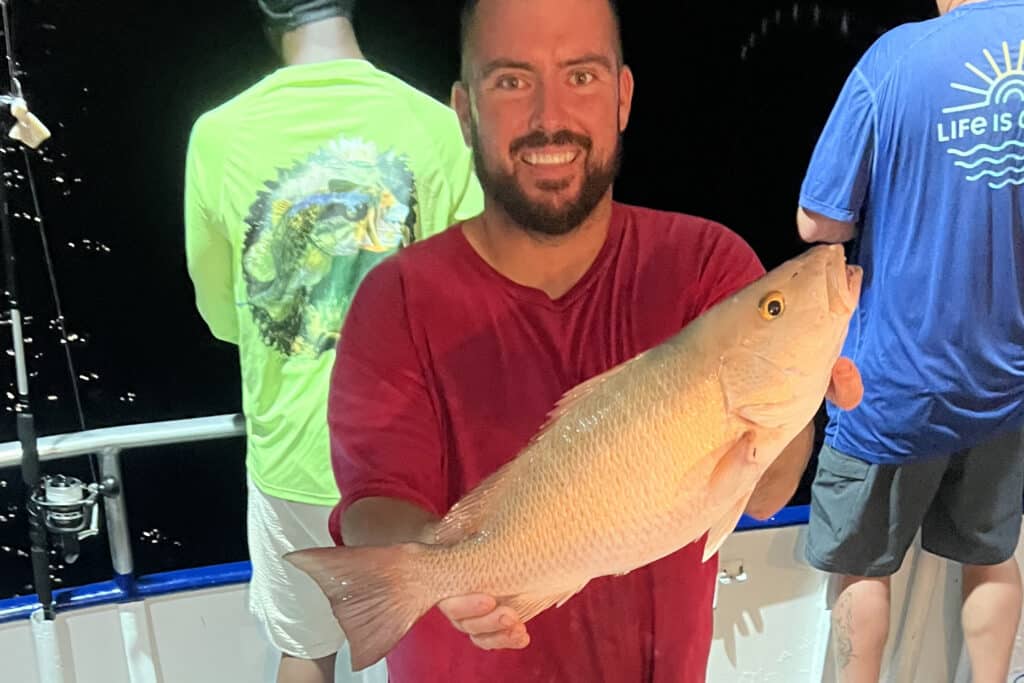
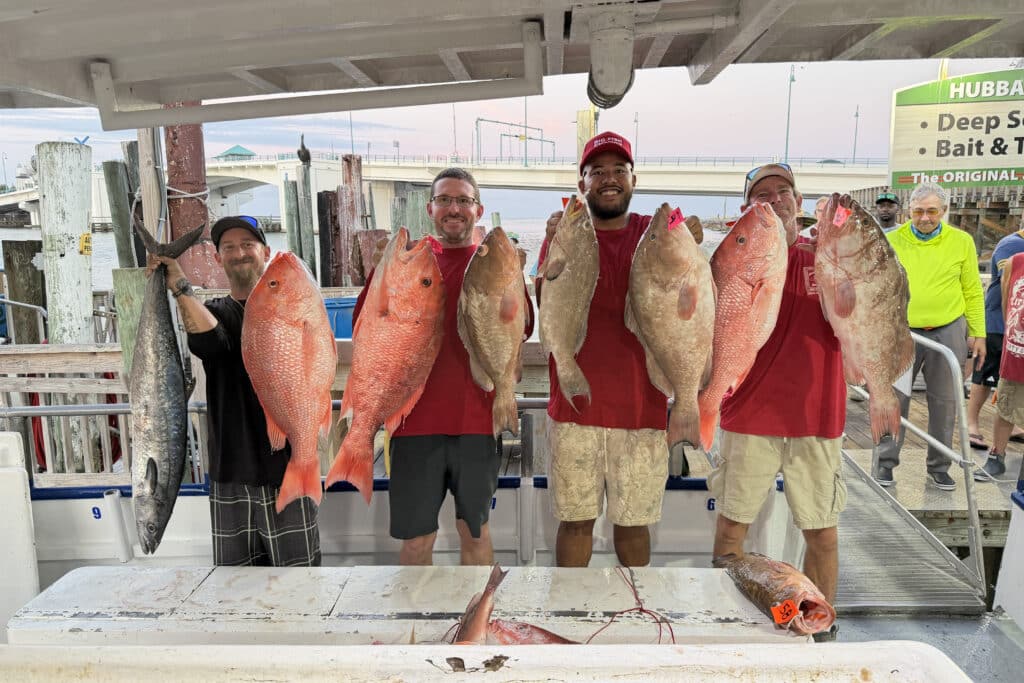
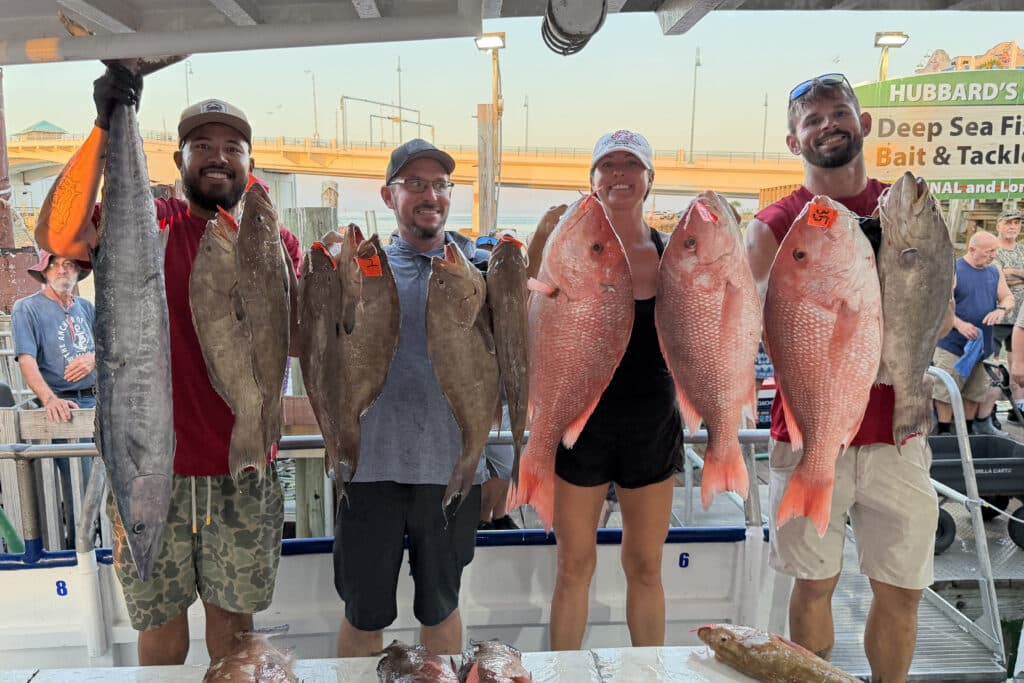
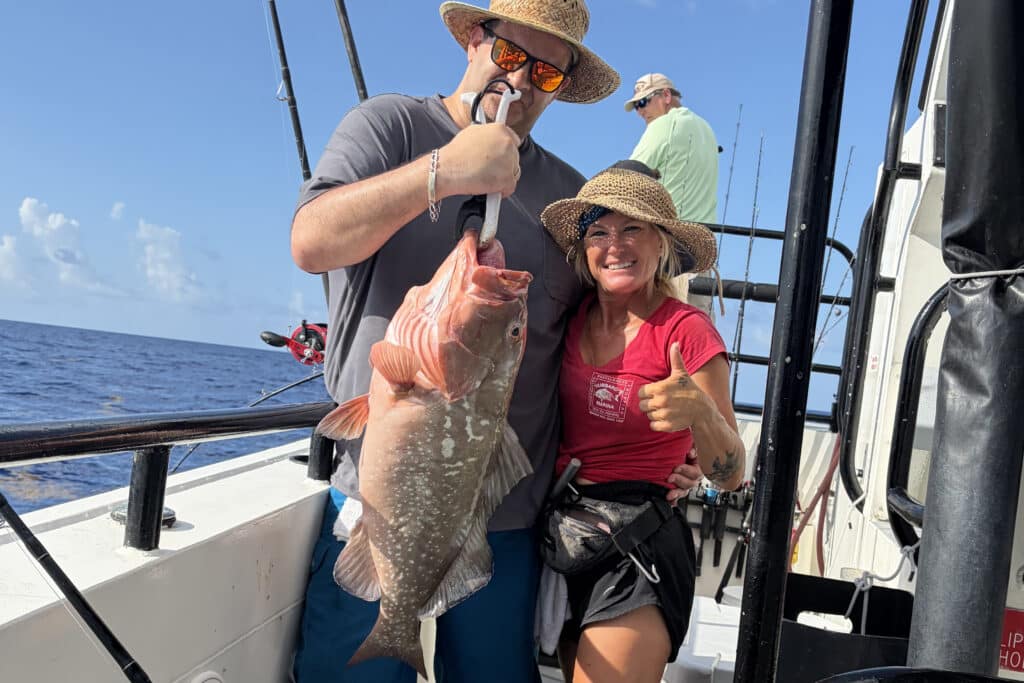
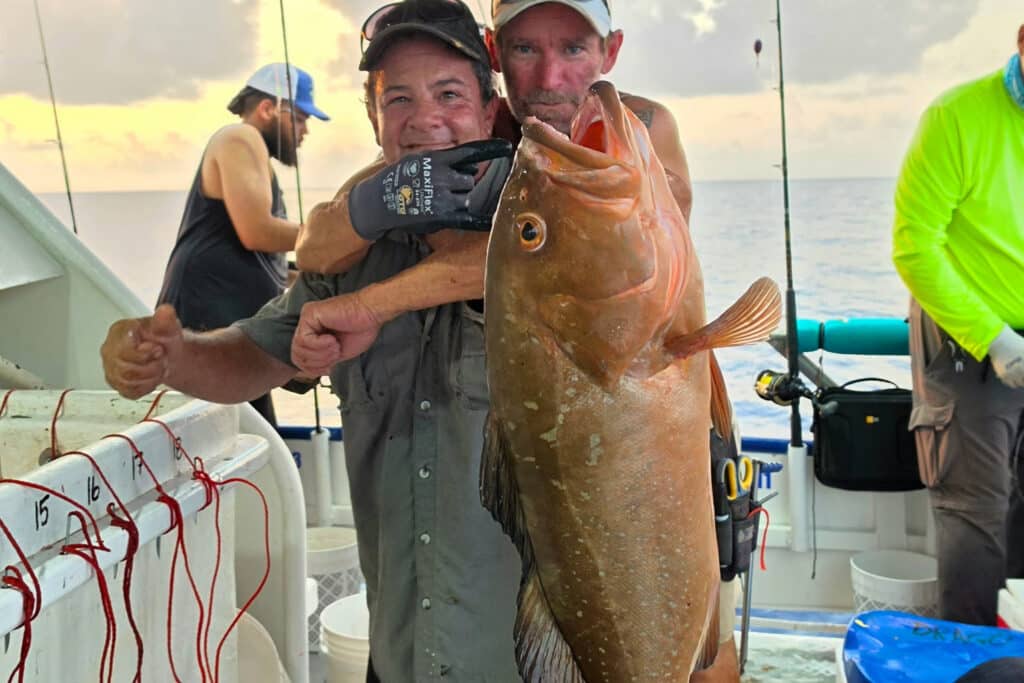
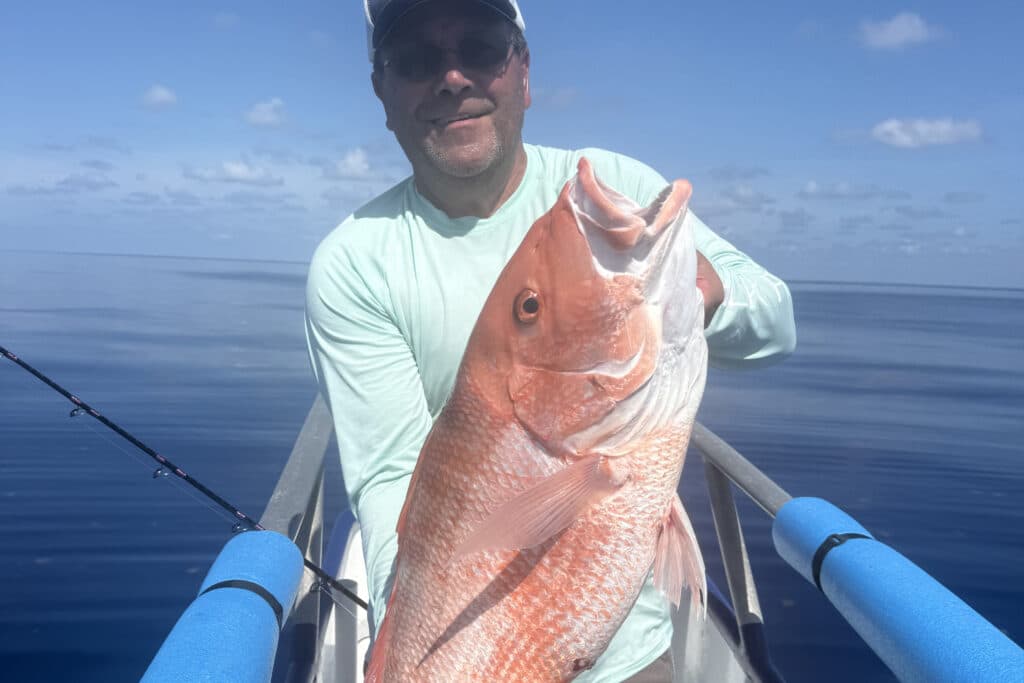
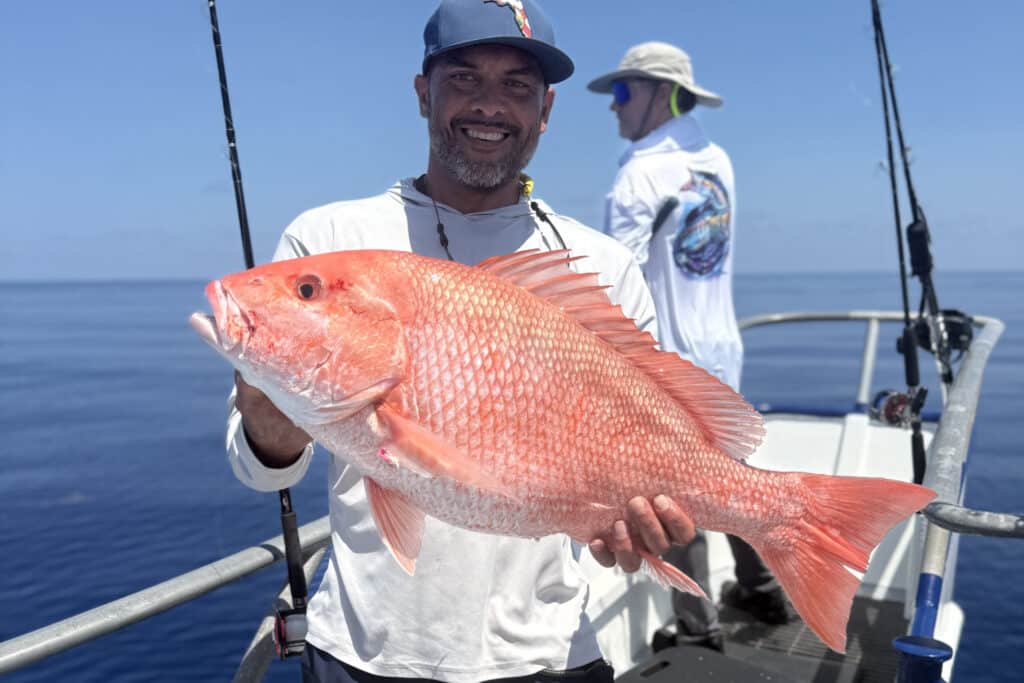
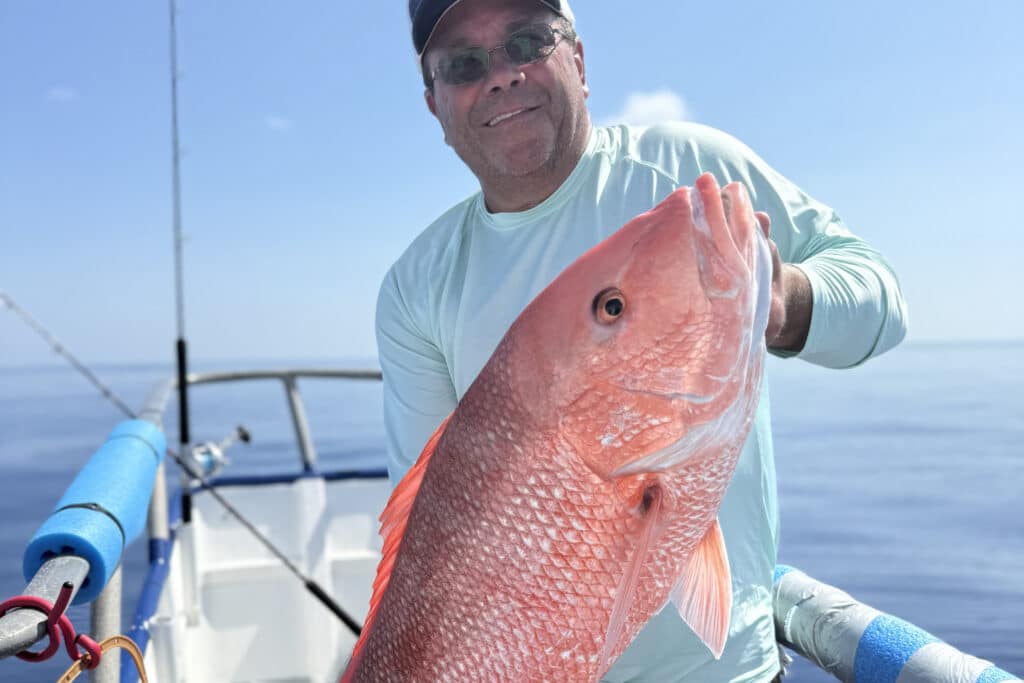
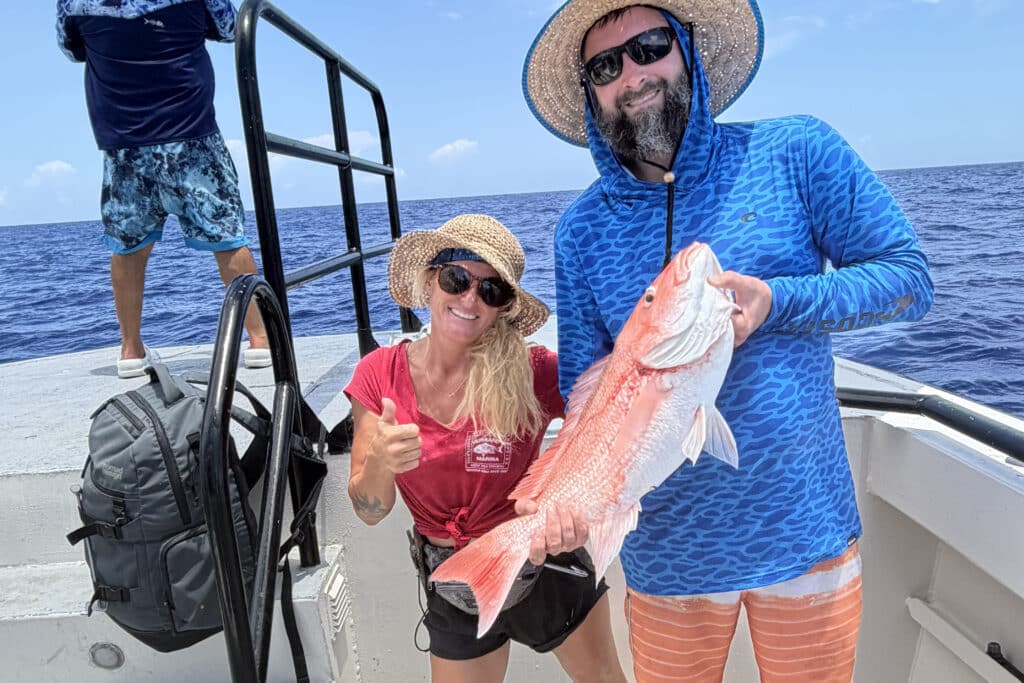
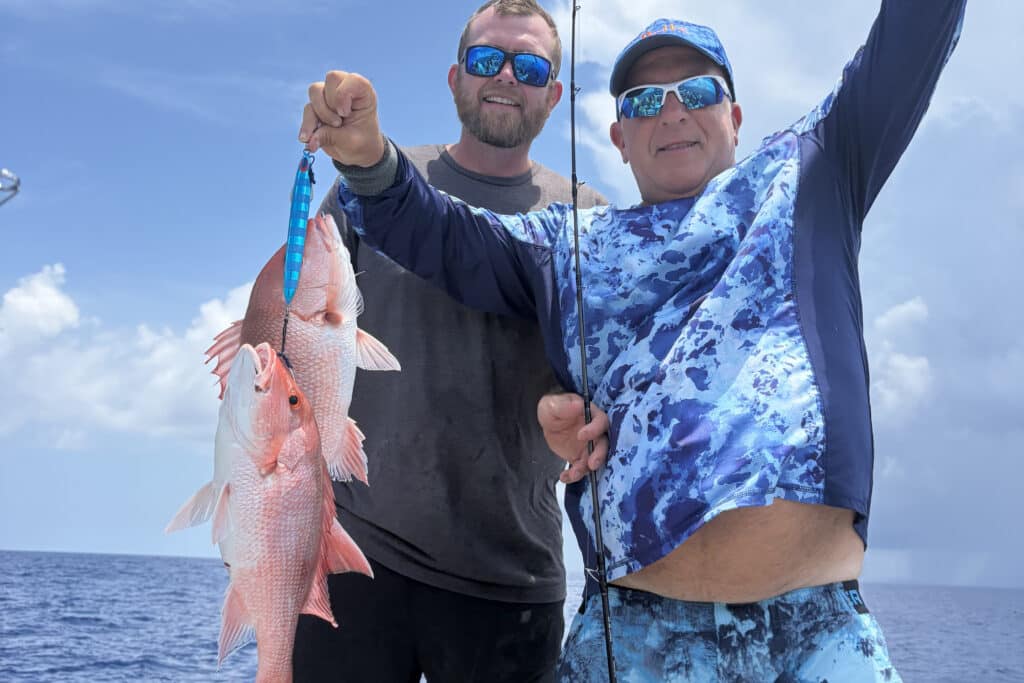
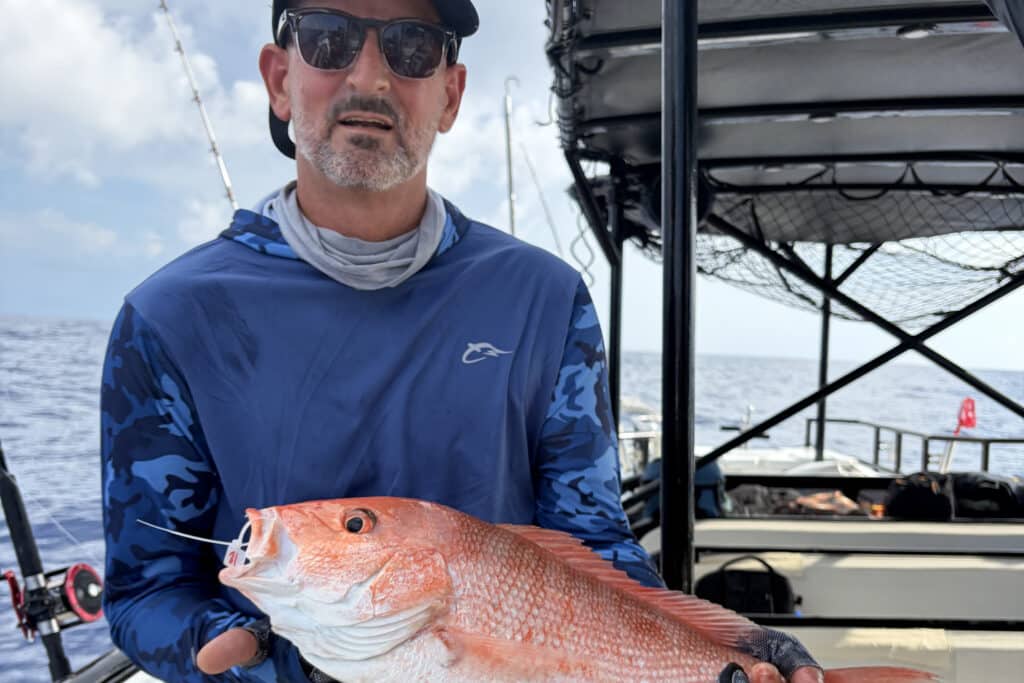
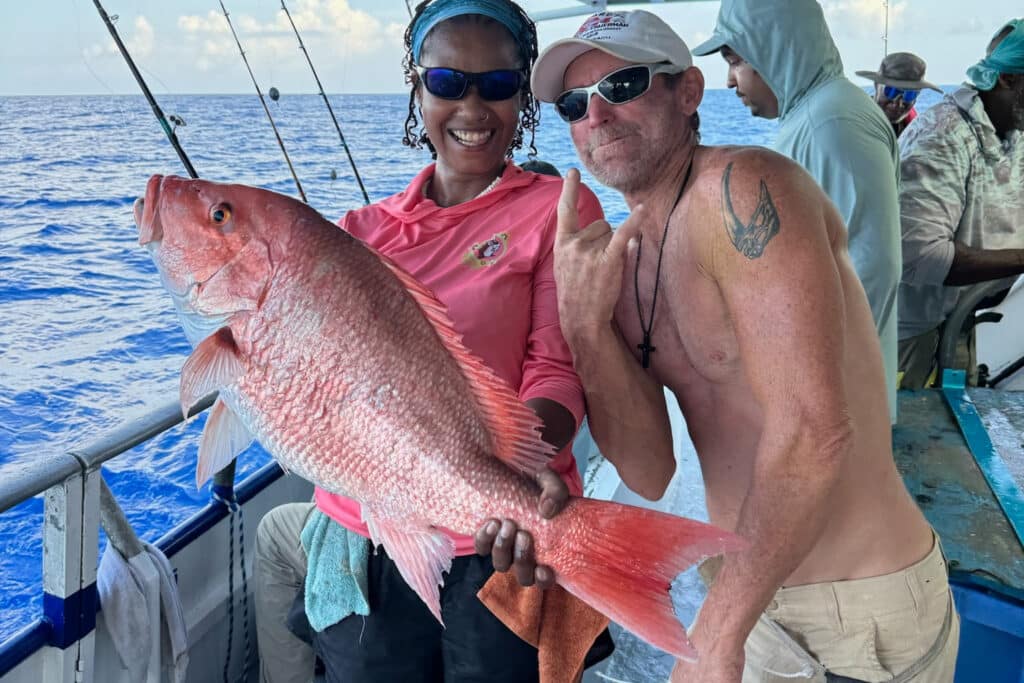
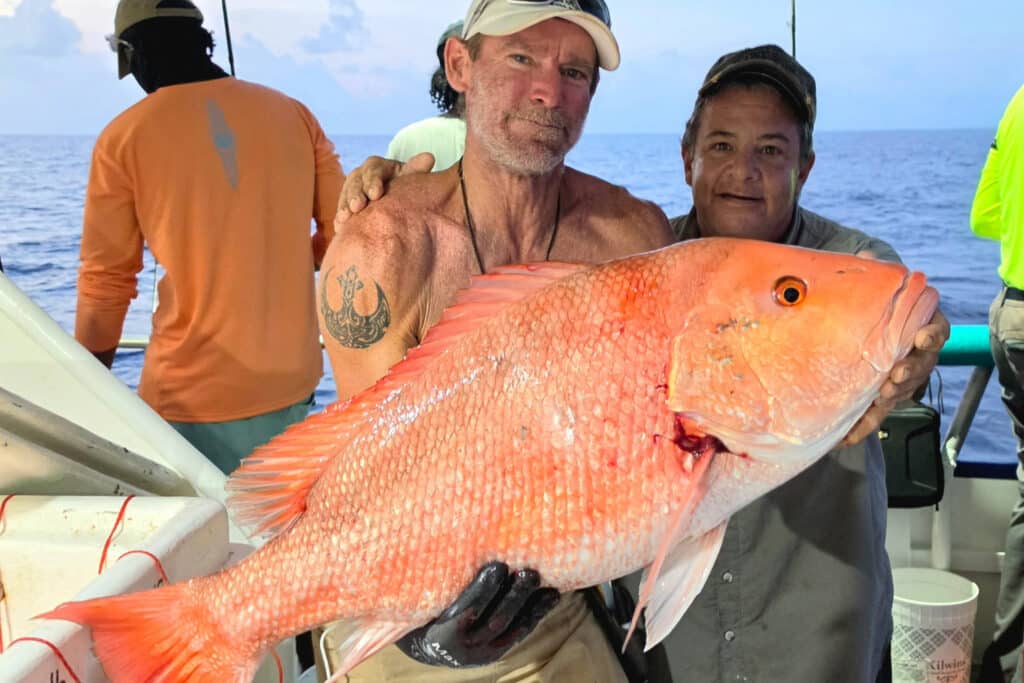
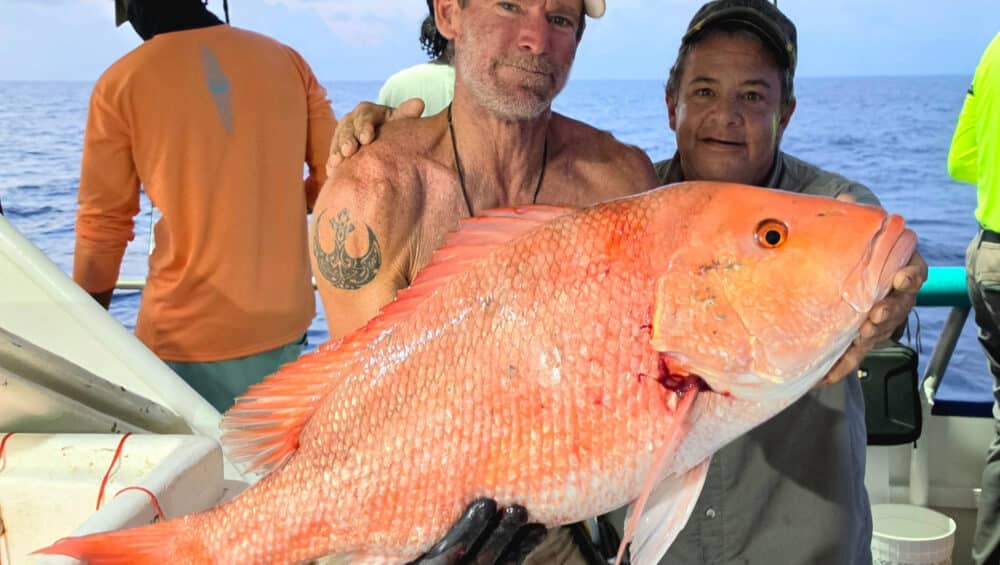
Offshore fishing is where the big fish headlines are right now. Red snapper season has our attention, and the fishing is going really well. We are seeing lots of good numbers and some big fish overall. If you want a strong chance at red snapper, the 12 hour extreme, 39 hour, 44 hour, and long-range private fishing charters aboard the Flying Hub 2 are the trips to look at. Those trips give us the range, time, depth, and flexibility to get out to the zones where the better red snapper are holding.
Most of our red snapper action is focused in about 160 to 180 feet of water and beyond. We are seeing a few fish a little shallower, but the more consistent bite and better opportunities have been deeper. Red snapper are holding around deeper potholes, ledges, structure, and bait concentrations. As the season progresses, range becomes more important. The longer trips allow us to get farther offshore, fish less pressured areas, and spend more time working the depths and structures where the bigger fish live.
For red snapper, big baits for big fish remains the rule. Focus on using northern mackerel aka boston mackerel, bontina strips, squid strips, whole squid or big live baits. Heavier tackle is important because these fish are powerful and often hooked around structure. A 60 pound leader is a good minimum starting point, while 80 to 100 pound leader is common when targeting larger fish. Big circle hooks in the 8/0 to 10/0 range are often used with larger baits. The goal is to present a substantial bait that attracts the better class of fish. Match your hook to your bait size.
Red grouper action has also been very consistent. We are seeing red grouper biting best in about 120 to 160 feet of water. This has been a dependable zone for fat red grouper lately, and the bite has leveled out nicely. Red grouper are often found on hard bottom, swiss cheese bottom, potholes, low ledges, cracks, and areas with scattered life. They are not always on the tallest showiest structure.
Often, the best red grouper bottom is subtle and spread out.
Whole squid, octopus, bonita strips, threadfin chunks, large cut baits, and live pinfish are all excellent red grouper baits. If you are getting lots of smaller fish, step up bait size or move to slightly different bottom. Red grouper fishing rewards patience and mobility. Sometimes we need to bounce around and dial in the productive pieces. Once we find the right bottom and the right bite window, the action can be very dependable.
Mangrove snapper are also a big part of the offshore catch, though they have been a little trickier than past summers. We are still seeing good mangrove snapper action consistently, but it is not that crazy wide-open mangrove bite every trip. Some trips produce better than others depending on current, moon phase, water clarity, pressure, and timing. We are hoping the stronger moon phase coming soon helps shake things up and gets those mangroves chewing even better.
When targeting offshore mangrove snapper, presentation is everything. Cut threadfin on a double-snell rig remains one of the best setups. Making sure you have a good presentation is paramount, if your bait spins, drags, or looks unnatural, the larger fish often will not eat. Small live pinfish are excellent for targeting bigger mangroves. Leader size should be adjusted based on conditions. If the fish are chewing, heavier leader is fine. If the bite is slow, lighten up, use smaller bait, and focus on holding bottom with line just tight enough to feel the bait while not disturbing it on the bottom.
Vermillion snapper, porgies, and almaco jacks have been steady in the offshore mix as well. We are seeing some big vermillions, consistent porgies, and some nice almacos. These heads and tails species are a huge part of what makes offshore fishing so productive and enjoyable because they keep rods bent, add variety, and fill coolers with quality eating fish. Vermillions often respond well to squid and smaller cut bait on multi-hook rigs. Porgies will eat a wide range of baits. Almaco jacks can show up around higher relief structure and can be targeted with bait or jigs.
The offshore pelagic action has been one of the most exciting stories lately. We have a lot of sargassum weed offshore, a lot of bait on the surface, and a lot of blackfin tuna. The blackfin tuna have been super prolific and really consistent. We are seeing strong action by flatlining tail-hooked pinfish on about 40 to 50 pound leader, around five to six feet of leader, with about a 3/0 circle hook. A tail-hooked pinfish is a great way to go because it stays lively and swims naturally in the spread. Pigfish have also been working very well and have seemed almost like an instant bite at times.
Blackfin tuna are fast, powerful, and one of the most exciting pelagic bonuses we can catch offshore. They can show up behind the boat, around sargassum, near bait schools, around current edges, and while trolling or drifting between spots. Keeping a flat line out while bottom fishing can be a game changer. The anglers who are ready with a live bait, jig, small tuna plug, or feather are often the ones who connect when the tuna show up.
We are also seeing a couple mahi mahi here and there, which is always a great bonus. With sargassum weed and bait on the surface, mahi are definitely a possibility. They may show around weed lines, floating debris, current edges, and anything that holds bait. Keep a pitch rod ready with a small jig, bucktail, soft plastic, or live bait. A quick cast when mahi show up can turn a good offshore trip into a great one.
Wahoo have been showing from time to time as well, and that always keeps things exciting. Wahoo are fast, powerful, and often show around clean water, edges, bait, and temperature changes. Trolling between spots, watching color changes, and keeping an eye on surface life can produce bonus opportunities. We also caught a kingfish this past week on one of our 39 hour adventures, and kings remain possible around bait and structure offshore.
The progression of trips at Hubbard’s Marina is important for guests to understand. The 5 hour half day is a great starting point for families and beginners. The 10 hour all day gives anglers a chance to fish deeper and target more variety, including lanes, mangroves, and possible red grouper. The 12 hour night snapper trip is a nice bridge between the day trips and the more advanced offshore trips.
From there, the 12 hour extreme, 39 hour, 44 hour, and long-range private charters are where we really start focusing on bigger fish, deeper water, and more advanced opportunities like red snapper, big grouper, mangroves, pelagics, and trophy fish.
We always recommend building up slowly if you are newer to offshore fishing. Do a couple half days, then a couple 10 hour trips, then try a 12 hour night snapper trip before jumping into the extreme and long-range advanced trips. That helps build confidence, reduce the learning curve, and create a better experience when you step into those more demanding trips. We want guests to have fun, learn, catch fish, and come back excited for the next adventure.
Overall, offshore fishing is excellent right now. Red snapper are the main event, red grouper are consistent, mangrove snapper are steady but a little technical, vermillions, porgies, and almacos are adding great variety, and blackfin tuna are stealing the show on the pelagic side. Add in chances for mahi, wahoo, and kingfish, and there is a lot to be excited about offshore from Johns Pass.
Final Thoughts
This week is another great example of summer fishing around central west Florida. We have hot weather, a quarter moon weekend, slower tides, and plenty of opportunities to catch great eating fish. Inshore, the focus is snook and mangrove snapper, with redfish, trout, mackerel, tarpon, and sharks all in the mix. Near shore, lane snapper are the highlight, with mangroves, red grouper, heads and tails, and a few pelagic chances adding variety. Offshore, red snapper, red grouper, mangrove snapper, vermillions, porgies, almacos, blackfin tuna, mahi, wahoo, and kingfish are all part of the excitement.
Don’t forget, that we have some great videos on our fishing tips and tricks page here to show you how to target and rig for almost any species-> https://www.hubbardsmarina.com/fishing-tips/
Remember that when fishing in deeper nearshore and offshore federal waters, the Descend Act requires you to have a descending device or venting tool “rigged and ready.” If you know how to use a venting tool, keep it prepared. If not, here’s some helpful advice: https://bit.ly/3L5HTnv. Using a descending device is straightforward and doesn’t require as much precision or practice as venting. Return em’ Right has a training course only takes about 10-15 minutes, and you can learn valuable techniques to protect our offshore fishery. Spread the word by visiting: https://returnemright.org/.
TERMS OF REFERENCE-
Inshore: This covers the areas from the inner bays, through the bridges, and right up to the beaches.
Near Shore: This includes the coastal waters from the beaches up to twenty miles offshore, or up to a depth of 100 feet.
Offshore: This extends from twenty miles offshore or from a depth of 100 feet and beyond.
For more fishing reports, photos, videos, and other content, check out Hubbard’s Marina on Facebook, Instagram, YouTube, TikTok, Twitter, Pinterest, or Snapchat by searching for @HubbardsMarina. Remember our family motto: “If you’re too busy to go fishing, you’re just too busy!” Thank you for reading our report.
Capt. Dylan Hubbard, Hubbard’s Marina
Phone or text: (727) 393-1947
Website: Hubbard’s Marina
If you’re not seeing the latest article, try clearing your browser cache.
You can search “how to clear browser cache” on Google for quick steps.