Inshore Fishing Report
Mangrove snapper are virtually all over the inshore water ways right now on literally any hard structure, and most anything they can hide around or in and ambush passing prey items. They are extremely aggressive and now with the murkier waters event a bit more active since they are less likely to be leader shy with the stirred up conditions. Lighter tackle still is key, but small pieces of shrimp or greenbacks remain the great options for targeting mangroves around the rock piles, piers or bridges around tampa bay.
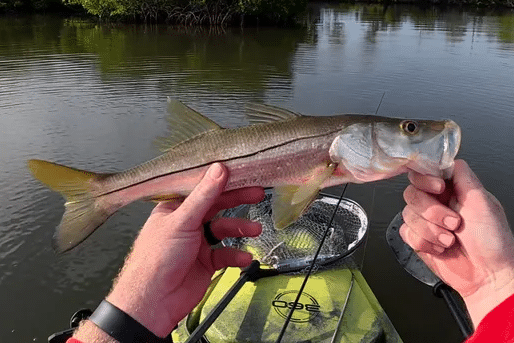
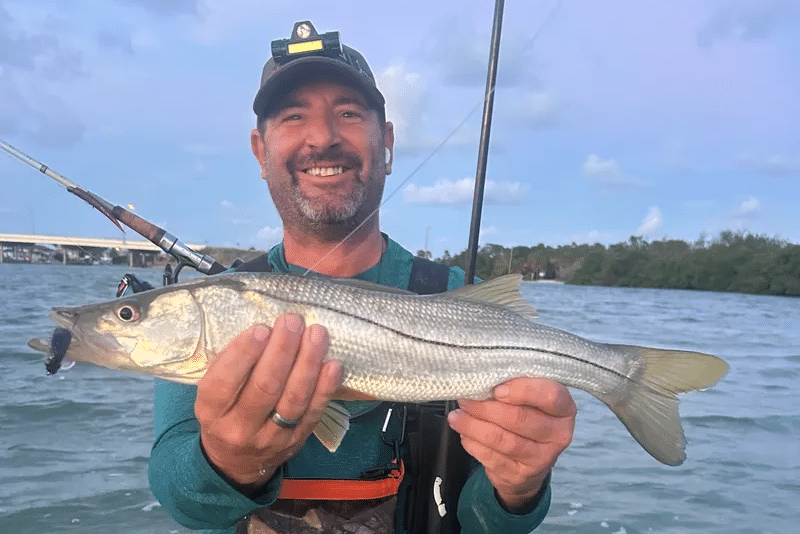
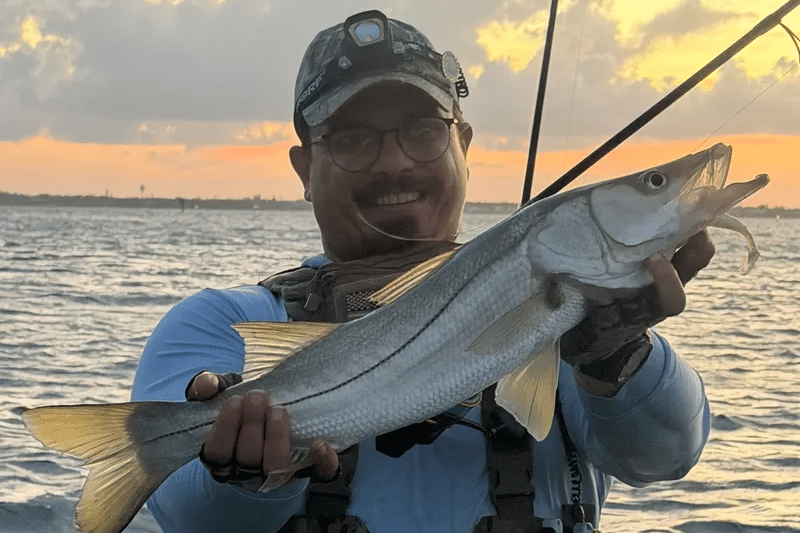
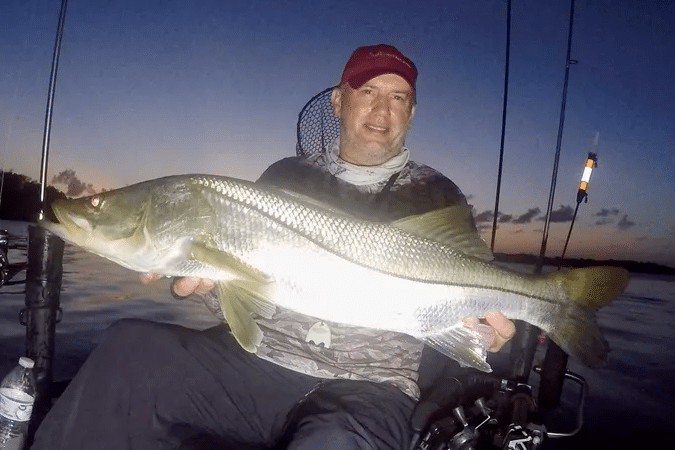
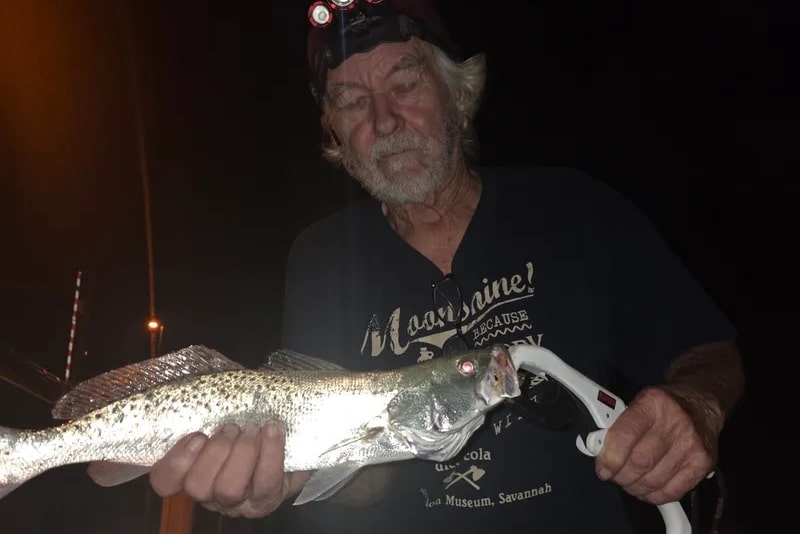
Snook action is solid around the beaches and in the passes lately. They are really active in the wee hours of the morning around dock lights and bridge lights and around sunrise at the passes as they transition to the beaches for their day time haunt. During the day, fishing the beaches around the trough is the best option. Typically sight fishing early morning before beach goers is most successful or finding those more secluded areas around the region. Rember to fish along the beach, not perpendicular to the beach. Also, the lighter the tackle the better as on the beach you don’t have to horse them off structure so lighten up and be patient and be ready to finesse them if you hook up. Around the passes and bridges, obviously its heavier gear and harder fights. However, if you can fish lighter you’ll get faster bites just a challenge to land em if your fishing structure with lighter gear.
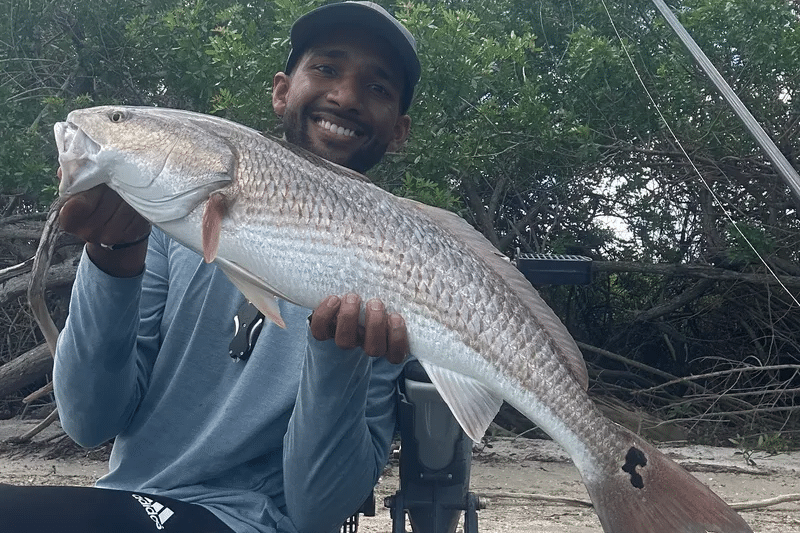
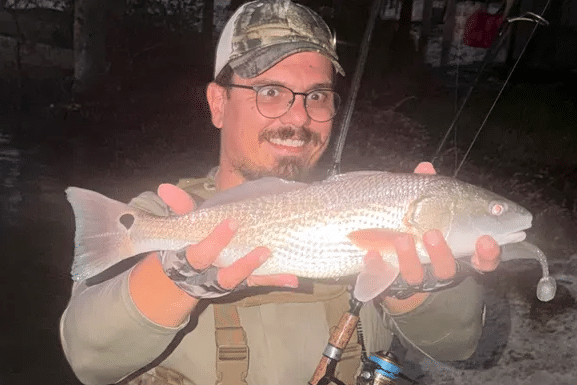
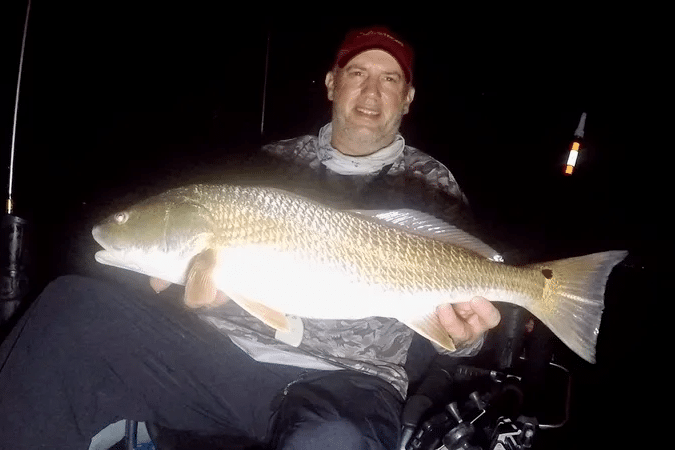
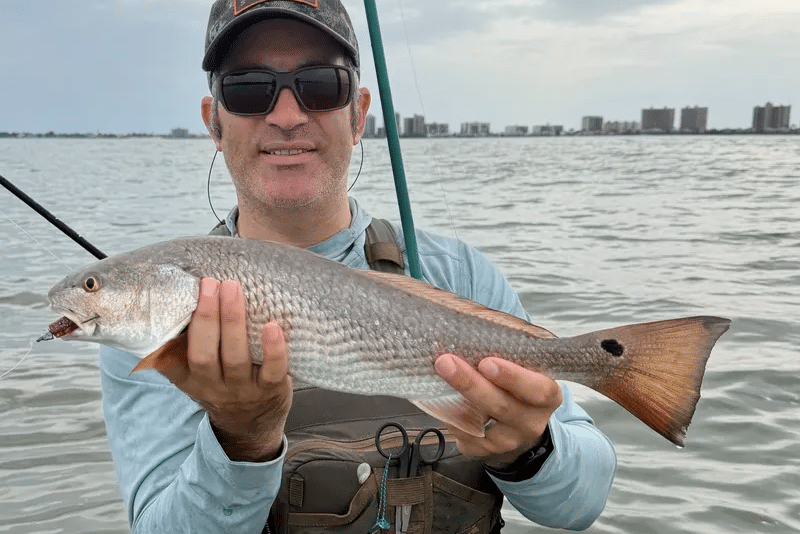
Redfish action around the area is spread out and they are likely going to be pushing up the bay and back further. They love to put their noses into that fresh water and swim up the bay when we get big rains to go collect the flushing crustaceans like shrimp and crabs. They should be schooling back up more in another 3-6 weeks as we get late august or early September.
Tarpon still around some of our bigger bay area bridges up the bay, but not quite as many out on the beaches or around the passes. Its late in the season for the tarpon but still action around if your willing to look a little harder for them and chase them to the bridges like the skyway.
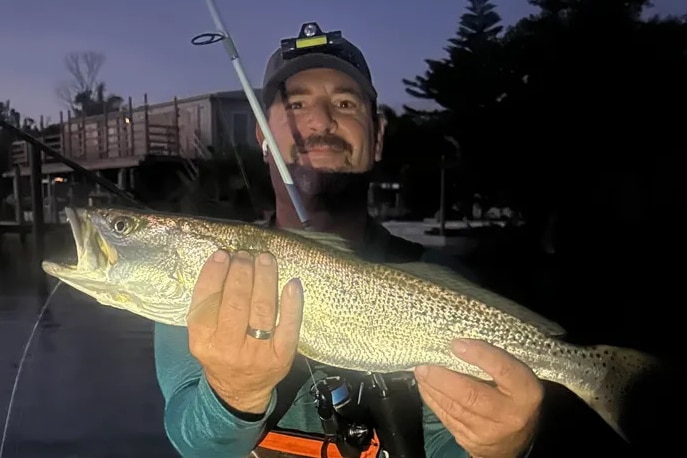
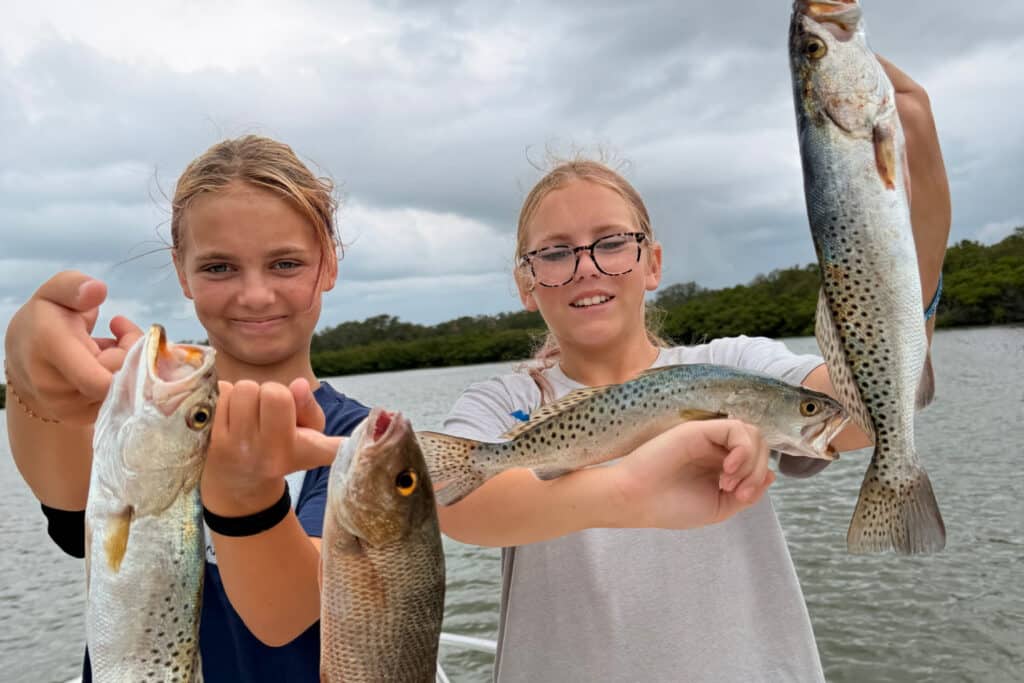
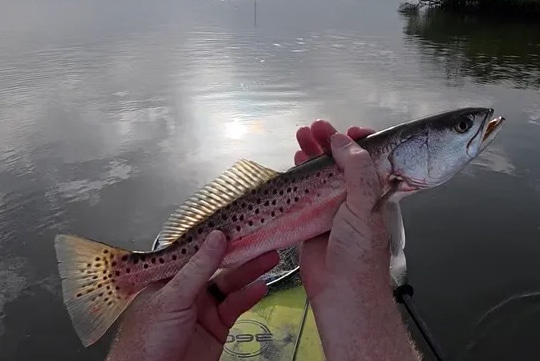
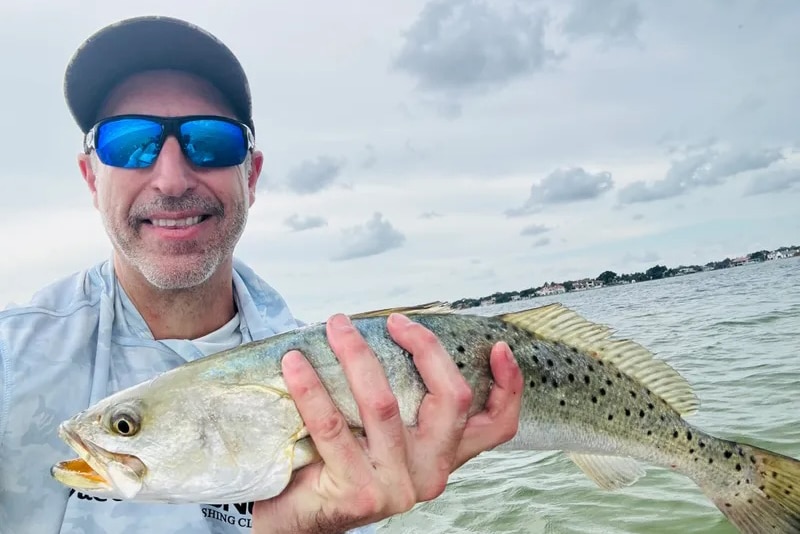
Trout action was a little soft and mostly in deeper water, but with all this rain and big stirring of the inshore waters with the moon. I would bet that we should see the trout get a bit more active this coming week and potentially see them a bit stronger around the flats.
Fishing Tips
- Snook: Use live baits like greenbacks, threadfins, and shrimp, or try flair hawks and soft plastics at night.
- Redfish: Look for them around mangroves, oyster bars, and flats, and use dead baits during higher tides.
- Trout: Target them with soft plastics, white bait, and shrimp around deeper flats and potholes.
- Tarpon: Target them during the full moon with crab flushes, making it an ideal time to target them.
- Flounder: Find them near sandy bottoms and structures, biting on bottom baits.
- Pompano: Be prepared to move frequently to stay on their bite.
- Sharks: Use big dead baits in areas with moving water.
Help spread the word about what to do if you hook or entangle a bird. Never cut the line; instead, reel in the bird carefully to dehook and release it. If you accidentally hook a dock, break the line at the hook to avoid leaving any line in the water. Seabirds with fishing lines hanging from them are becoming more common, and this could lead to the closure of fishing areas.
Rising concerns about bird entanglements might result in closing fishing spots, impacting the few available locations around Tampa Bay from shorelines, docks, bridges, or piers. Learn more in our podcast with Salt Strong: https://www.saltstrong.com/articles/shutting-down-fishing-at-busy-pier/.
NEarshore Fishing Report
Lane snapper action has been steady in the deeper near shore waters, but we are seeing those numbers fluctuate a bit depending on the conditions. Mostly they are caught using squid but we get the big ones on cut threads or shrimp typically. They make a great addition to the box and are great eating too. We have even seen a few in the 18+ inch range this pass week too!
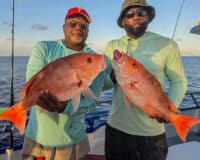
Mangrove snapper are around the deeper near shore waters once you get past around 60-70ft of water we see them best. Theya re really good eating and tons of fun to target near shore. Tihey are typically most frequently caught with live shrimp or cut thread fins. Just remember, threadfin near shroe you want to cut smaller and fish lighter than you would offshore. Typically like double snelled 3-4ot hooks and a threadfin chunk around 2-3 inches long and only an inch or so tall. So you’d want to make your double snell rigs with those hooks closer together.
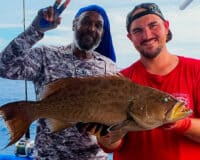
Red group action near shore is possible and probable deeper near shore, but it’s a tough game to consistently find good numbers of keeper sized fish unless your fishing close to that 80-100ft mark or more. Deeper you go the more common youll find substantial keeper sized fish. Shallower waters hold more numbers of those feisty by smaller red grouper.
Plus, near shore were always covered up in plentiful heads and tails like the grey snapper or white grunt, porgies, and many other good eating smaller fish. Have you ever tried eating a sand perch or squirrel fish? They are typically a bait fish, but if you get one of size I would HIGHLY recommend you try filleting it up and look at that white meat! We caught a handful and filleted them up next to some hogfish, mangroves, and grey snapper and you would be floored at how many preferred them! Also, once cut you’d struggle to tell the difference between the hogfish and sand perch fillets in the bags unless you saw the size of the fillets of course, but once bagged and all smooshed together they were nearly impossible to delineate.
Fishing Tips
- Red Grouper: Target the deepest near shore waters with big dead baits or solid live baits. Use 60 lb test and 7/0 hooks for best results.
- Red Snapper: Use big dead baits like whole squid and bonita strips with heavy tackle to focus on larger fish. Prime trips include the 12-hour extreme, 39-hour, and 44-hour trips.
- Scamp Grouper: Use small to medium pinfish and cut threadfin, especially while targeting mangrove snapper.
- Mangrove Snapper: Near shore, use live shrimp and small chunks of threadfin on 30-40 lb test with 3-4/0 hooks. Offshore, use bigger chunks of cut threadfin or medium pinfish on 40-60 lb test with 5-7/0 hooks.
- Vermillion Snapper: Start around 100 feet of water using cut squid or threadfin. These fish are aggressive and not leader-shy.
- Yellowtail Snapper: Use shrimp, cut squid, and threadfin.
- Pelagic Species: Keep flat lines and pitch rods ready for sailfish, kingfish, wahoo, tuna, and mahi mahi.
Offshore Fishing Report
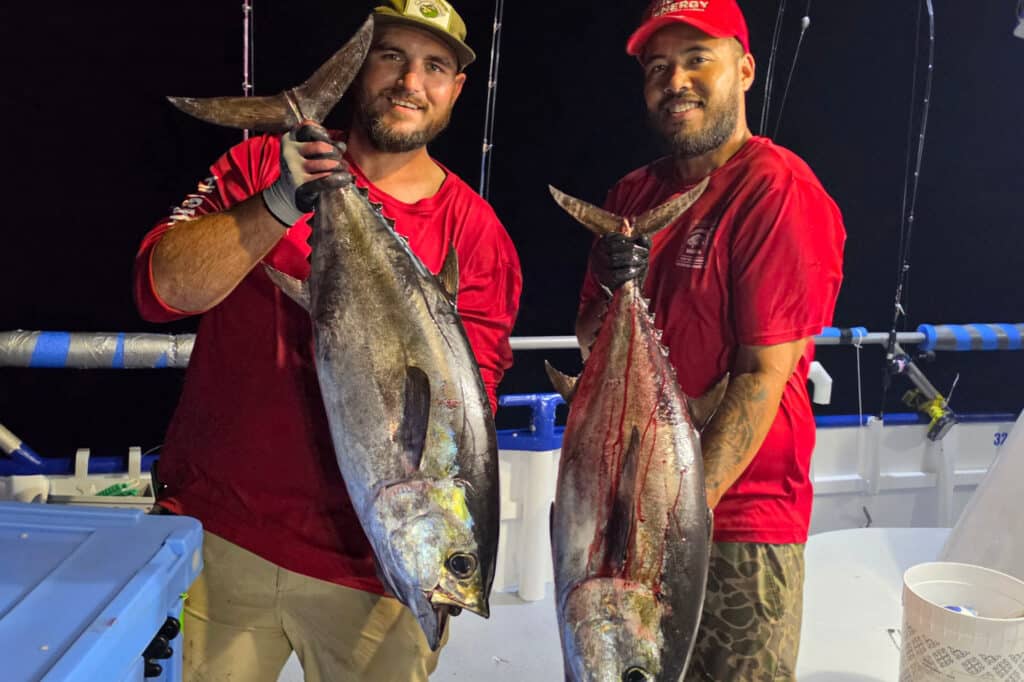
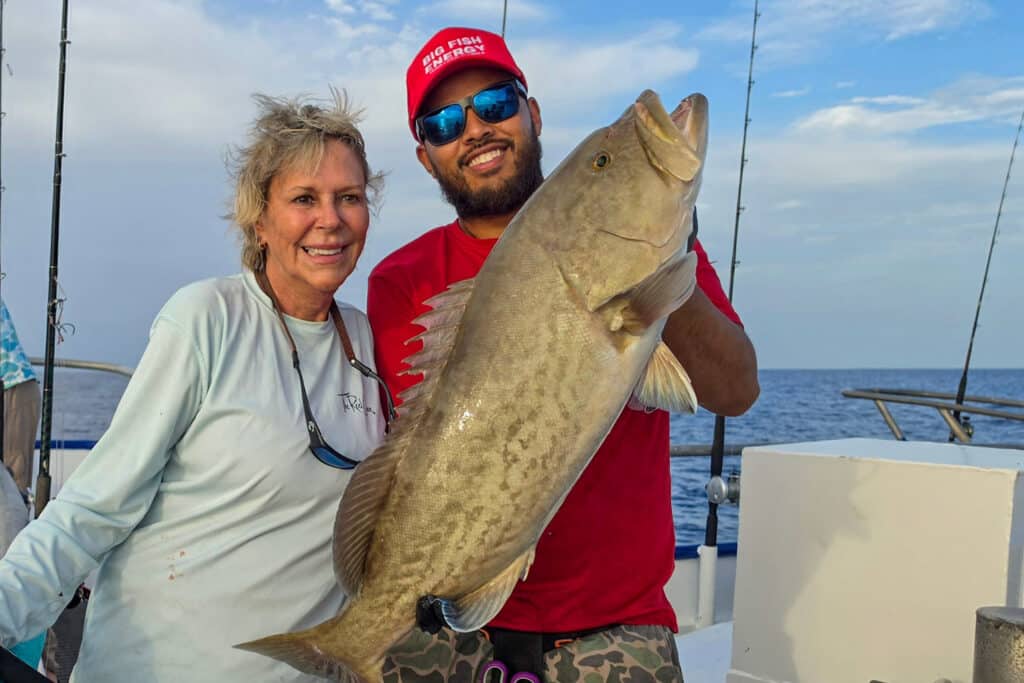
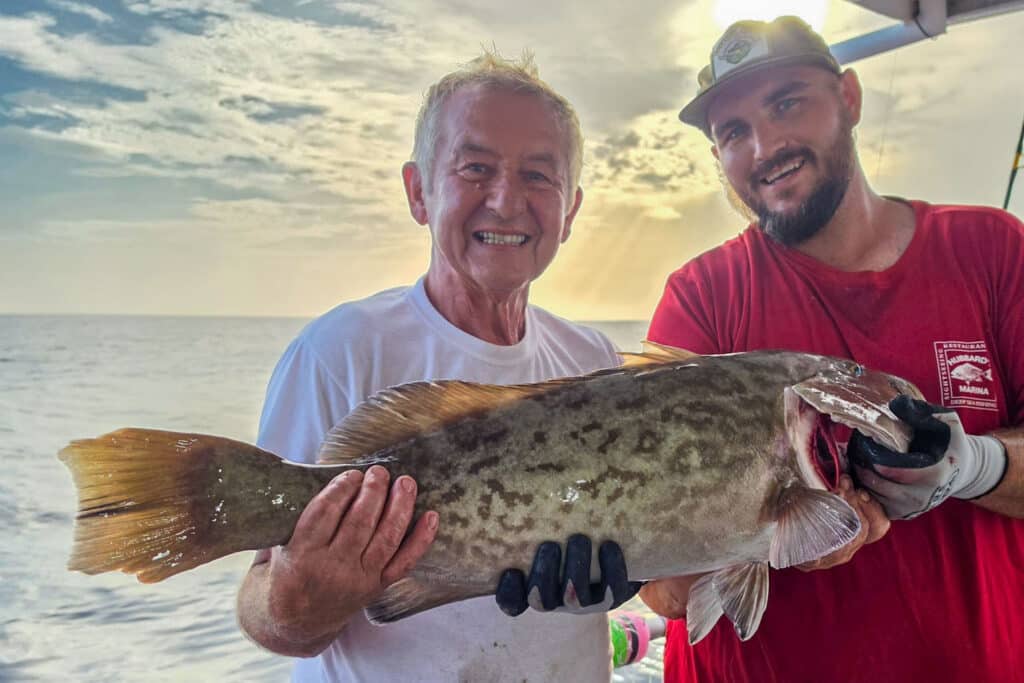
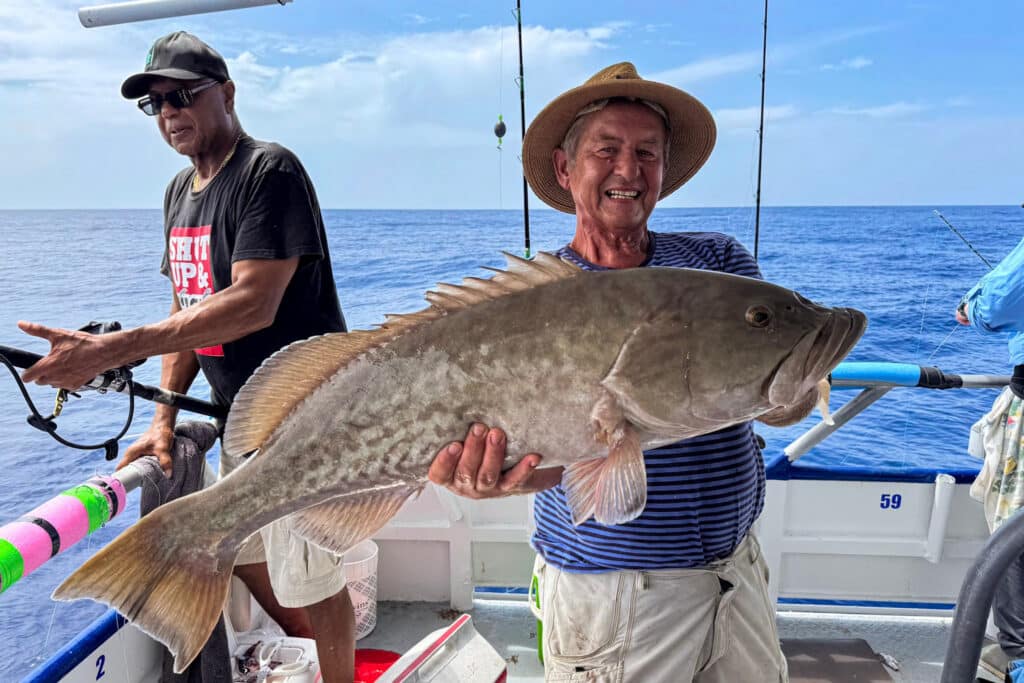
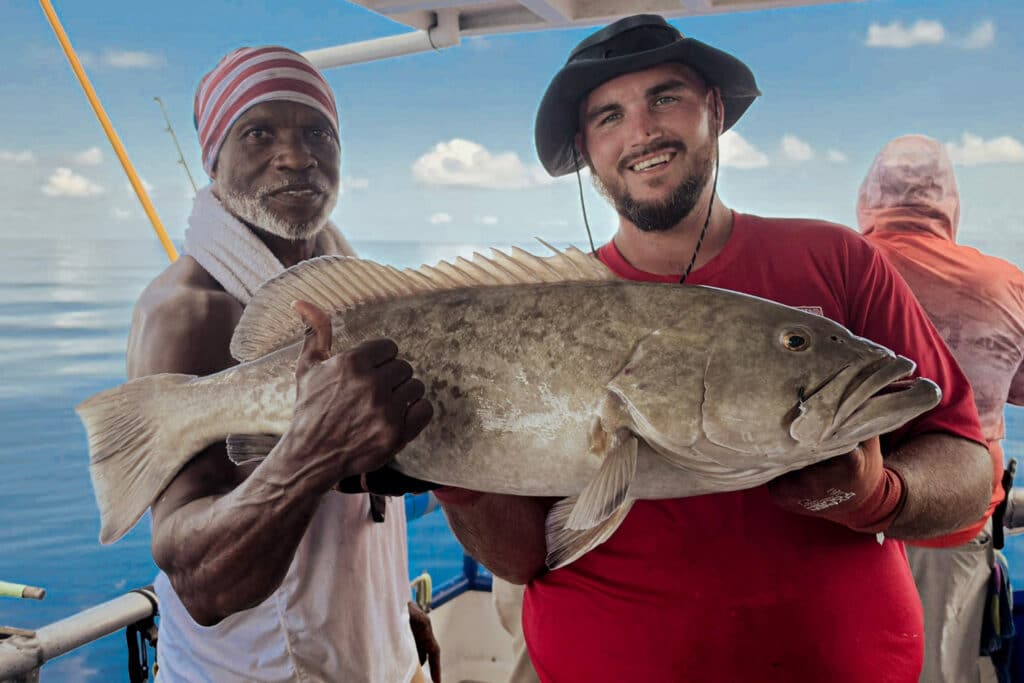
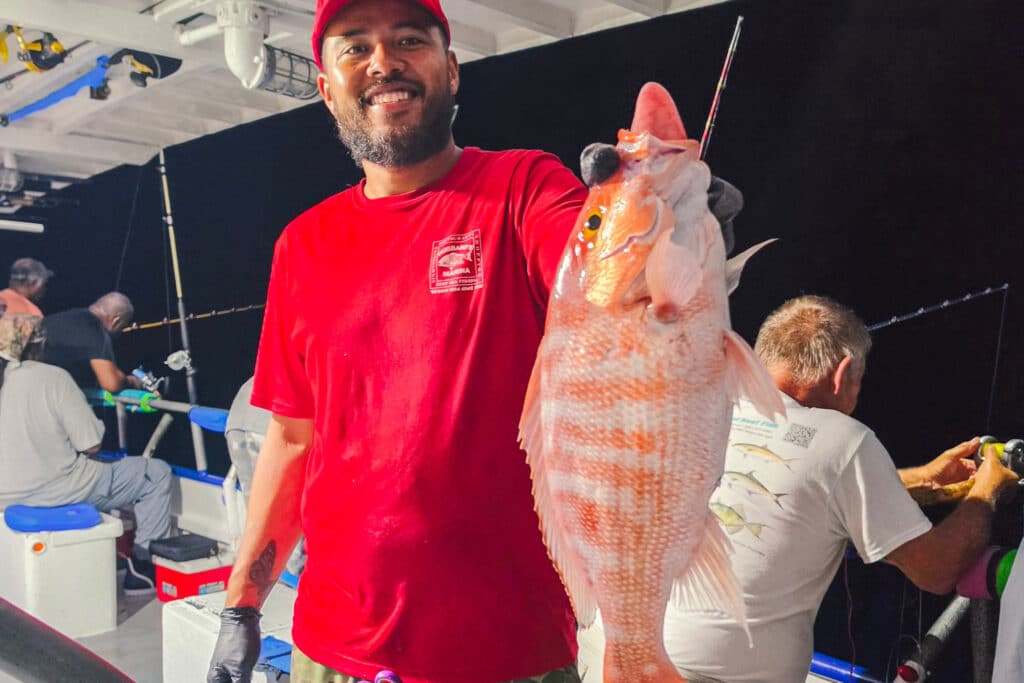
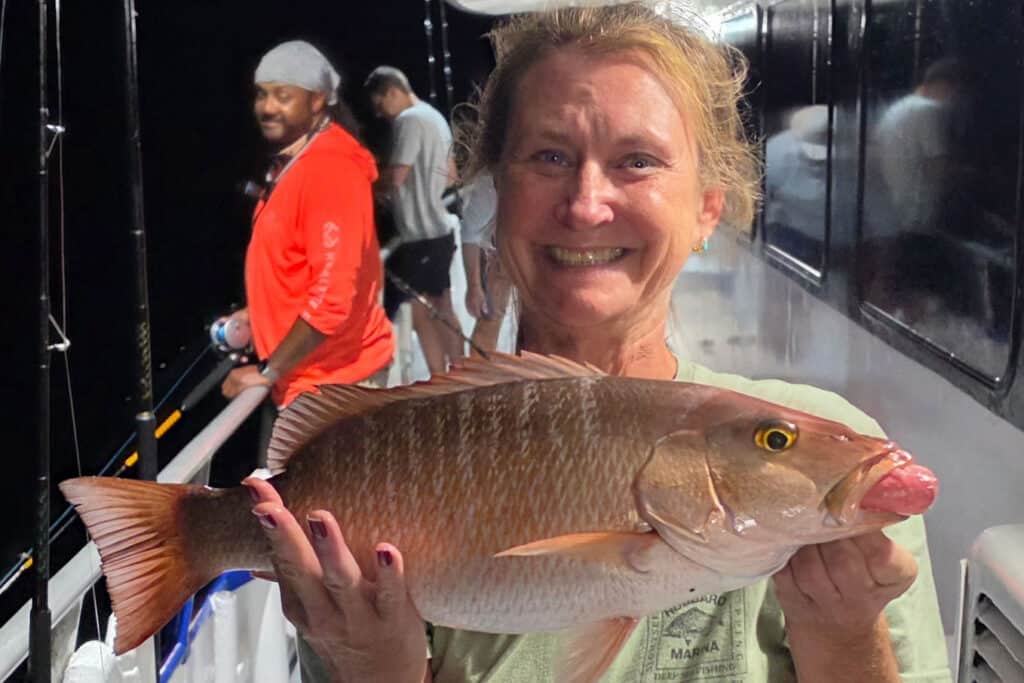
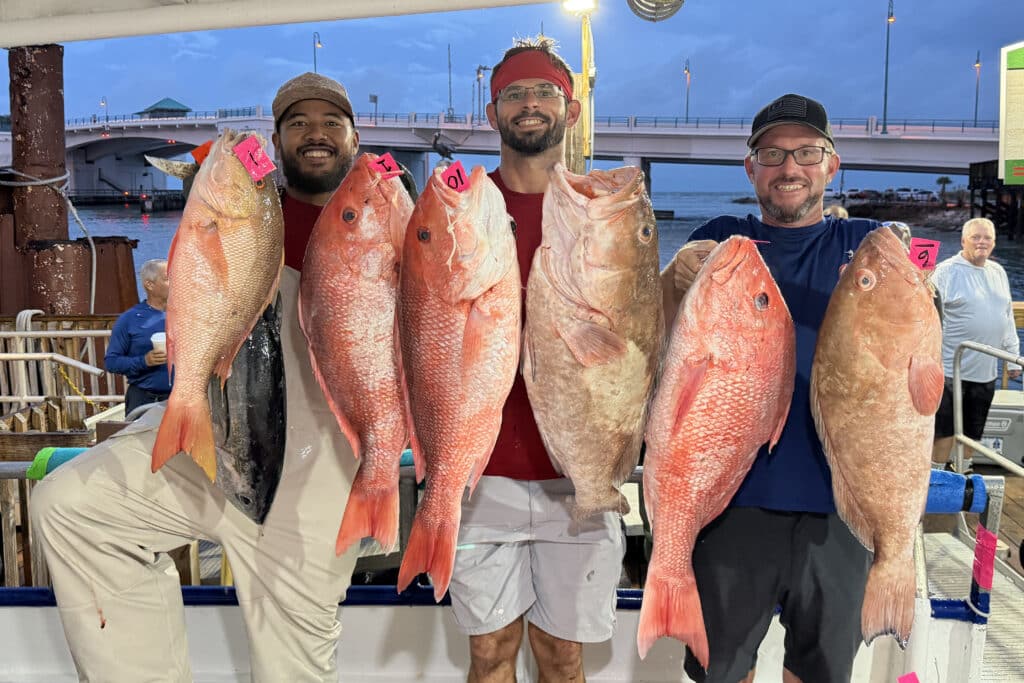
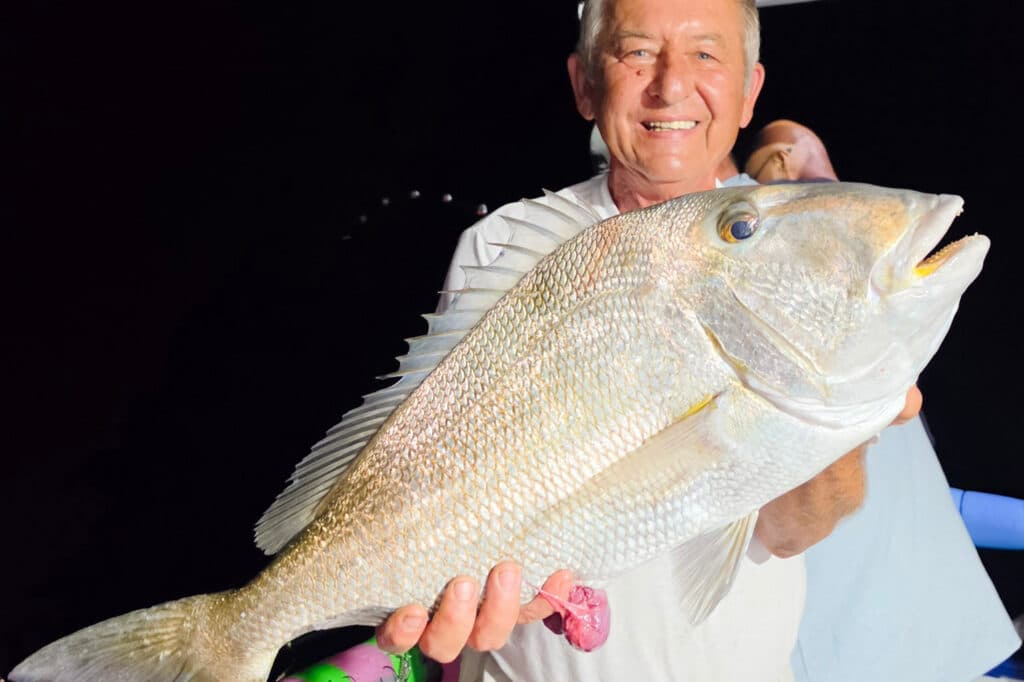
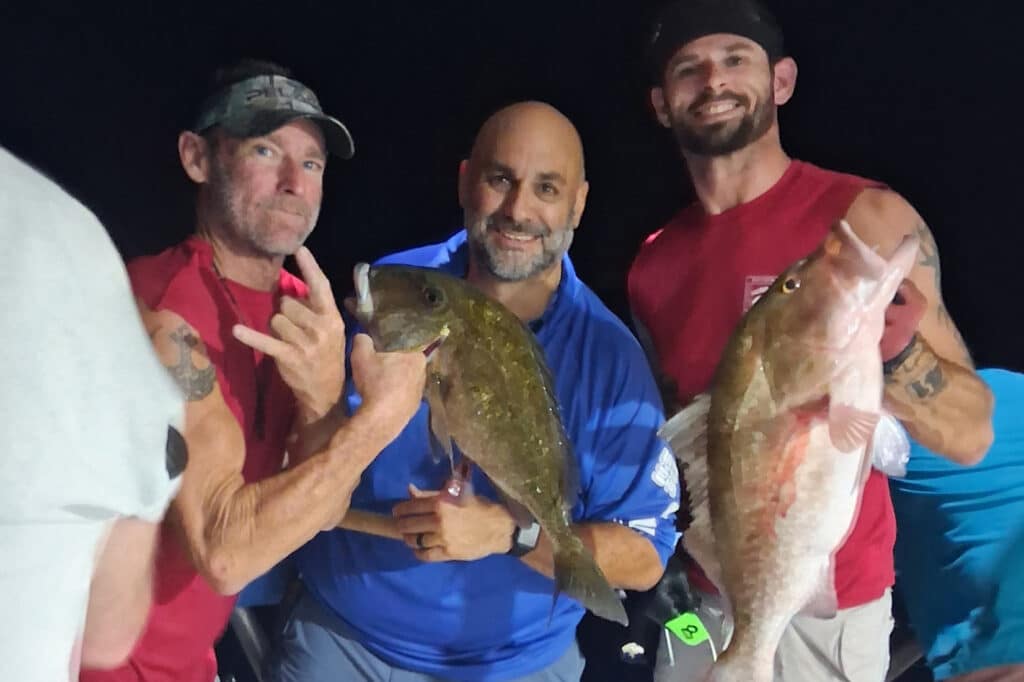
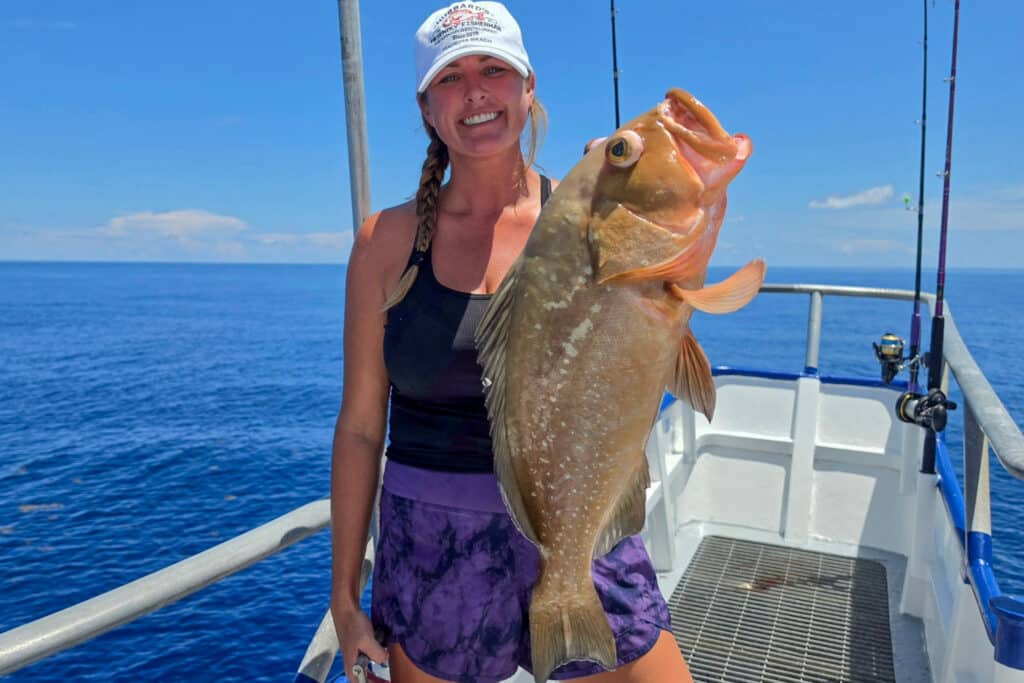
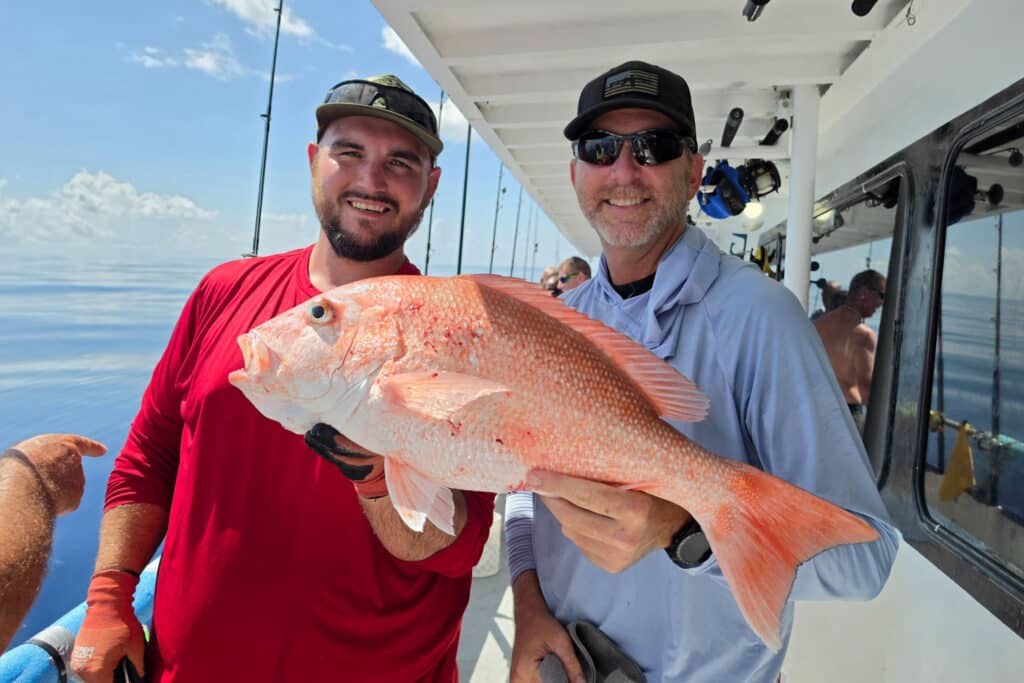
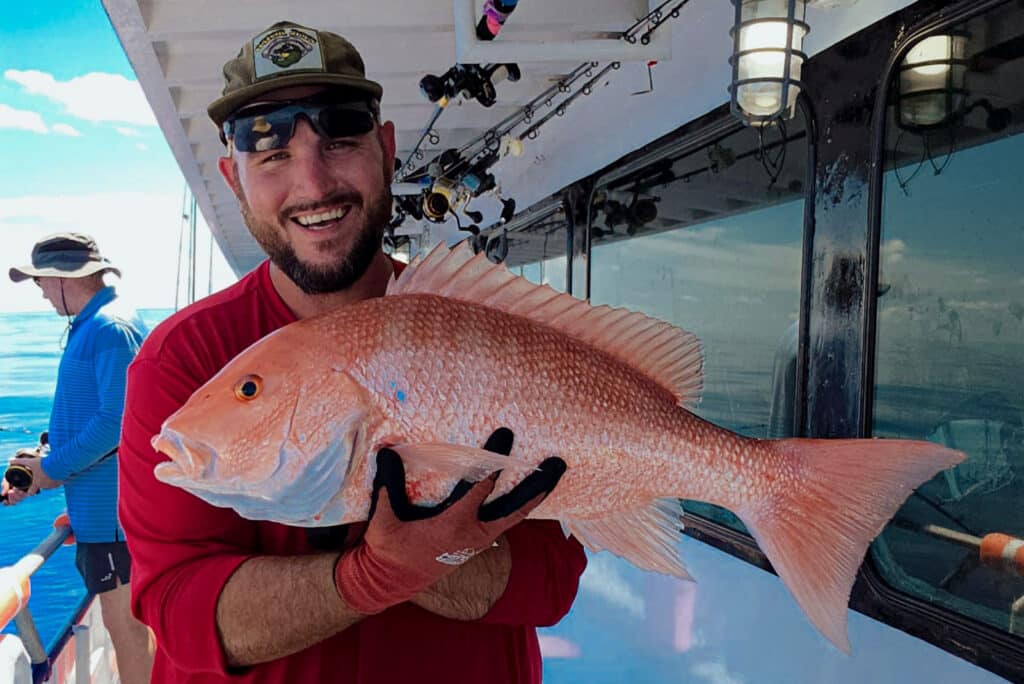
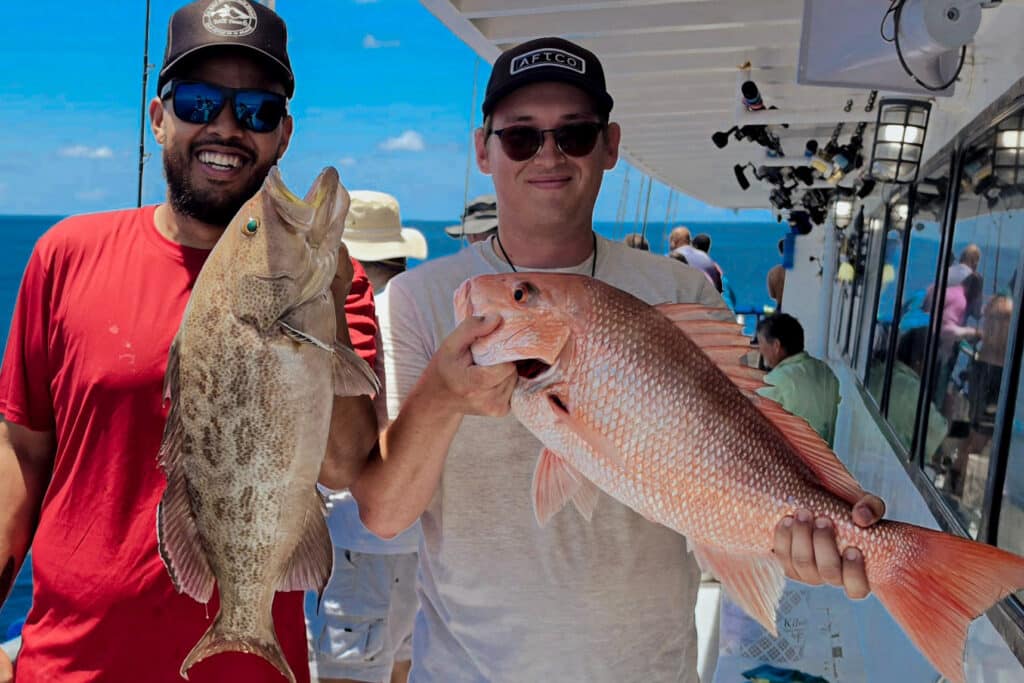
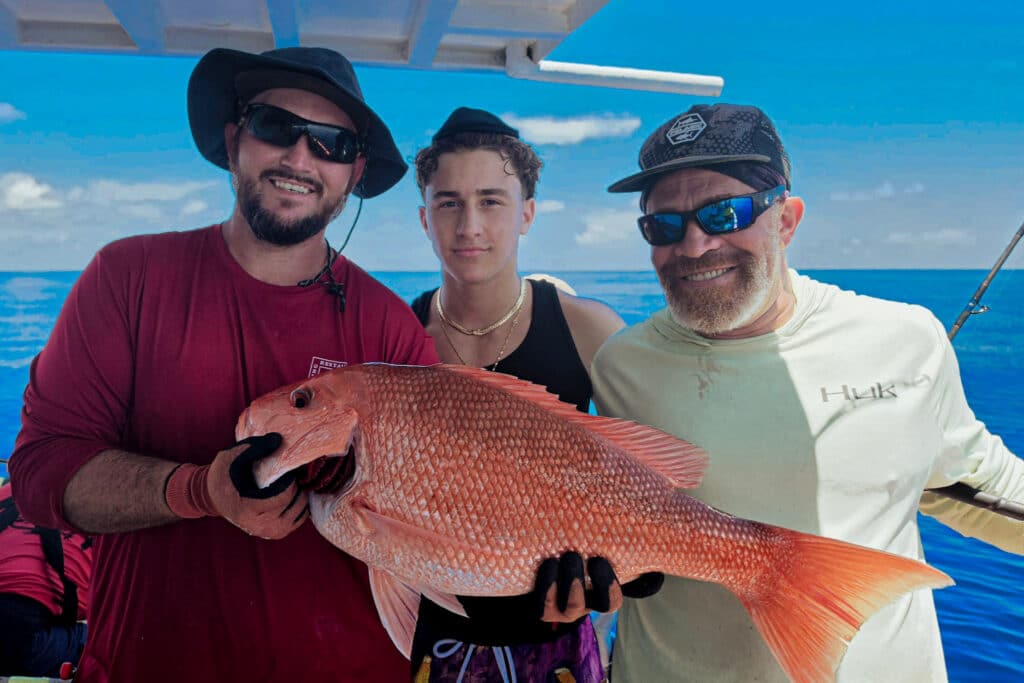
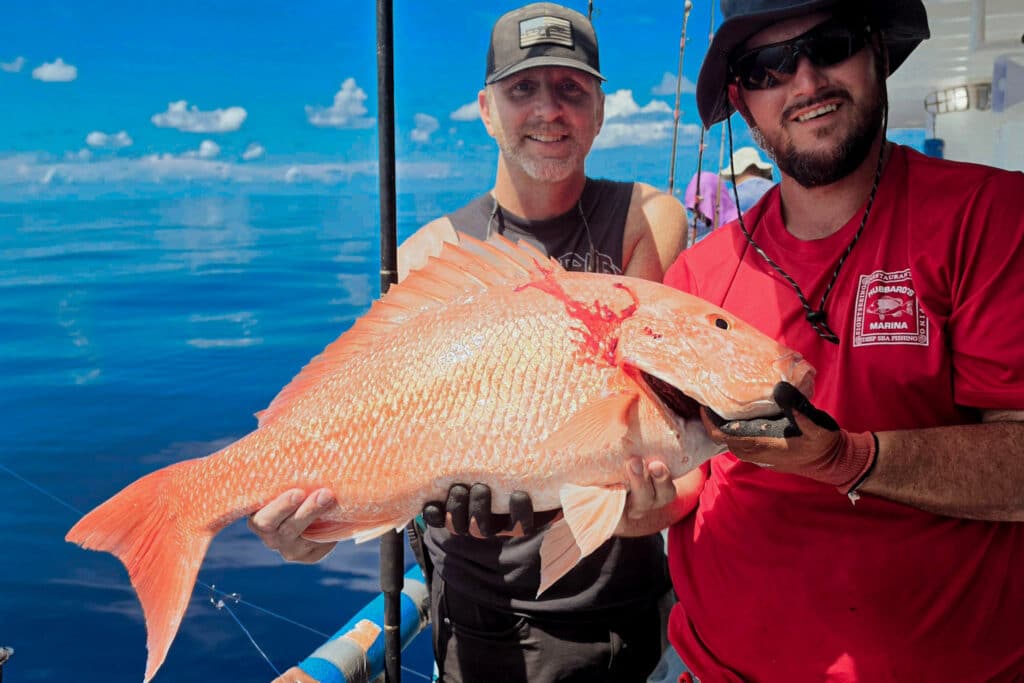
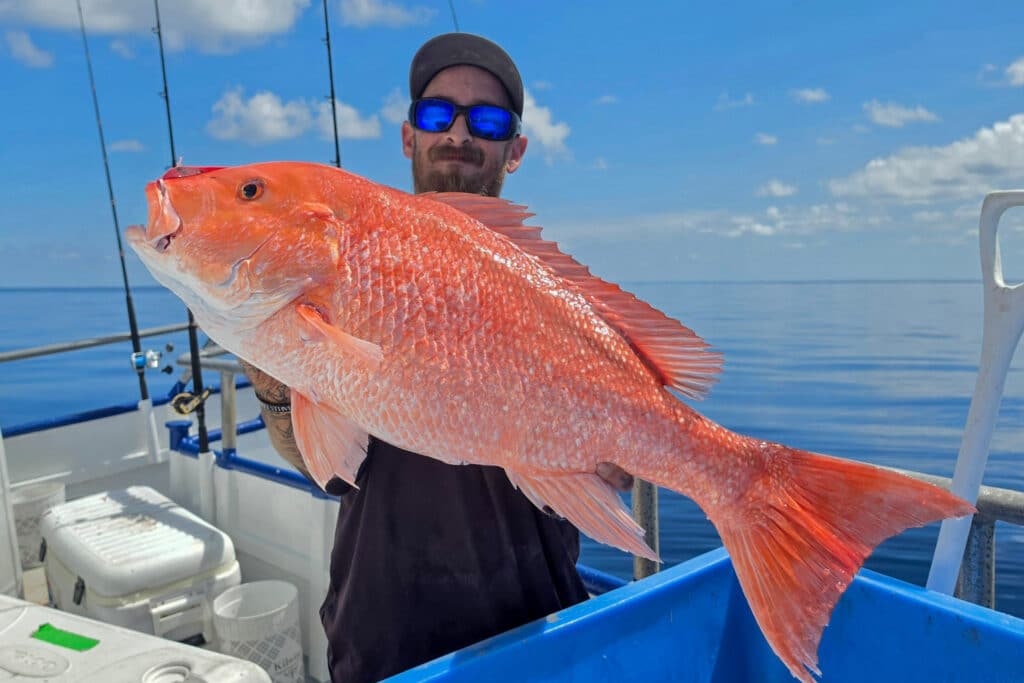
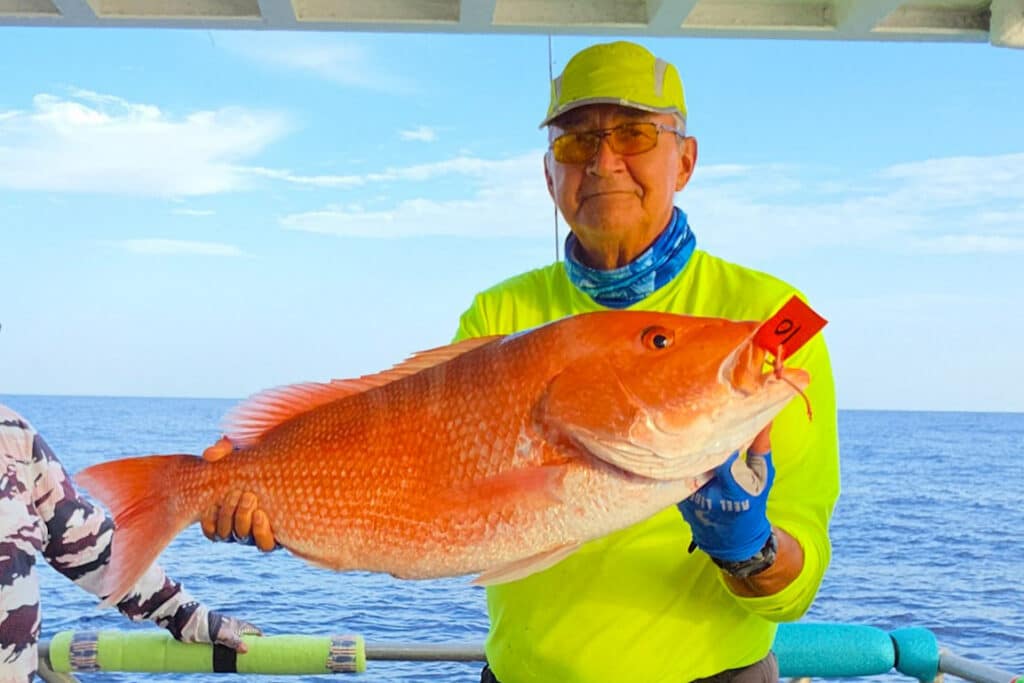
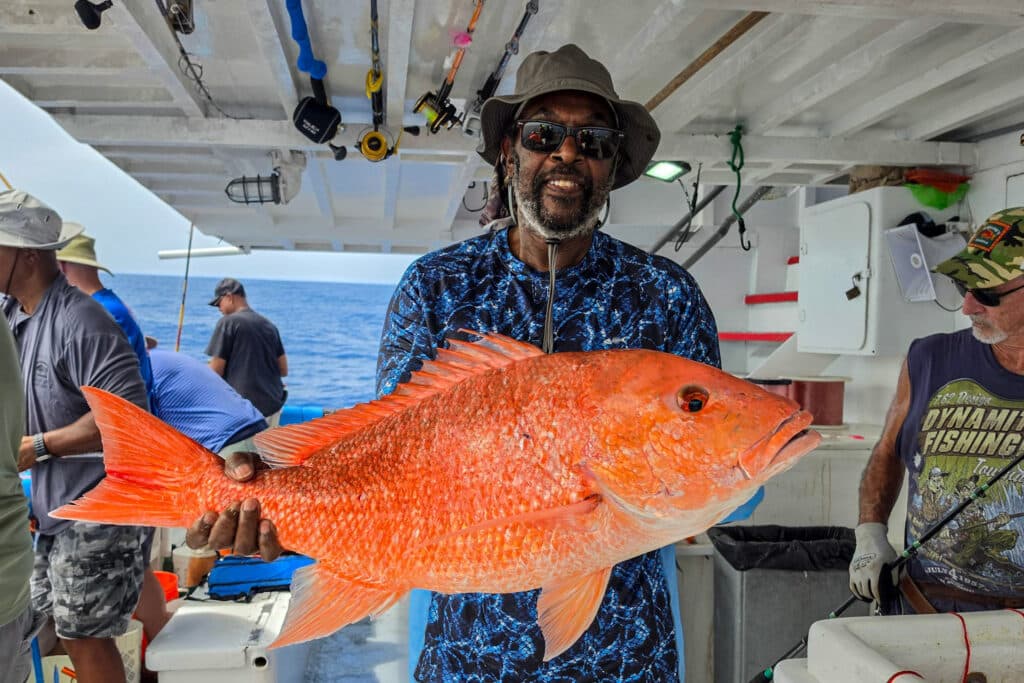
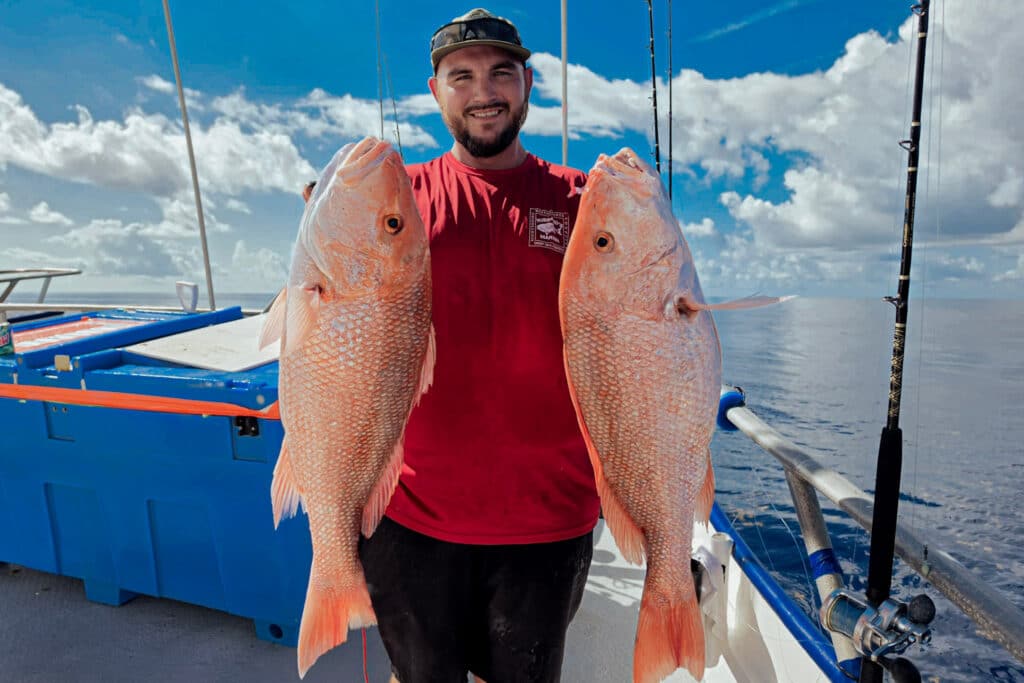
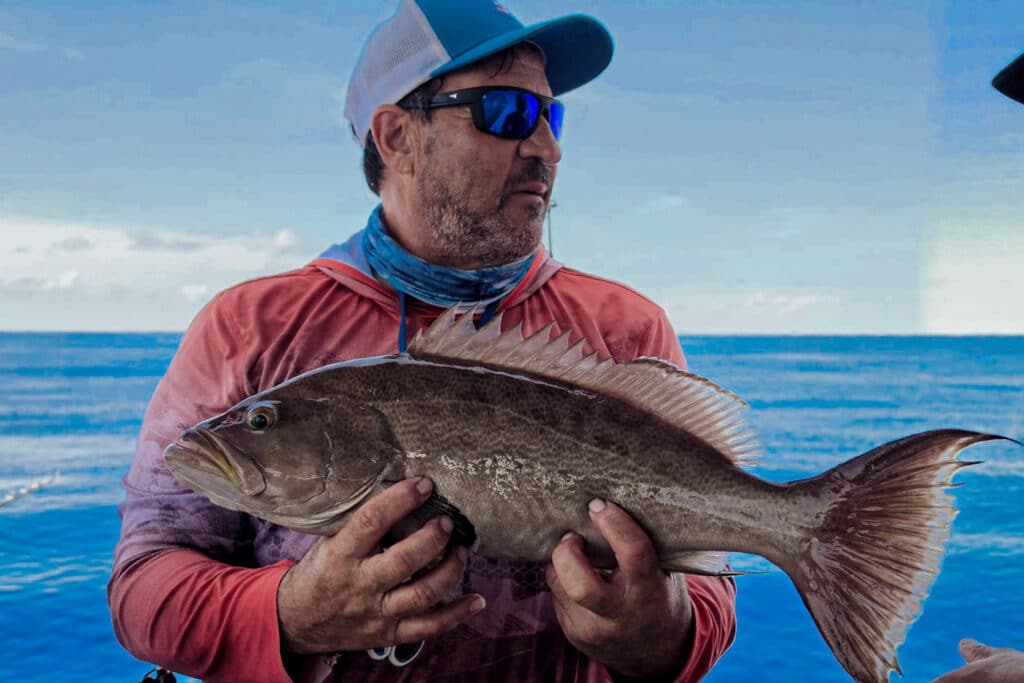
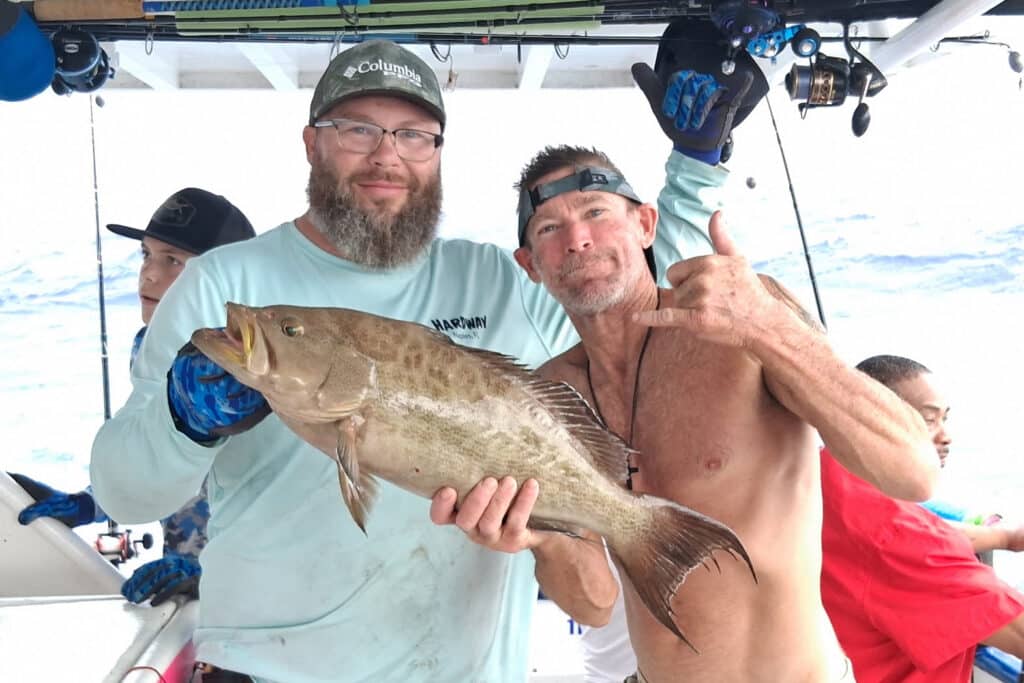
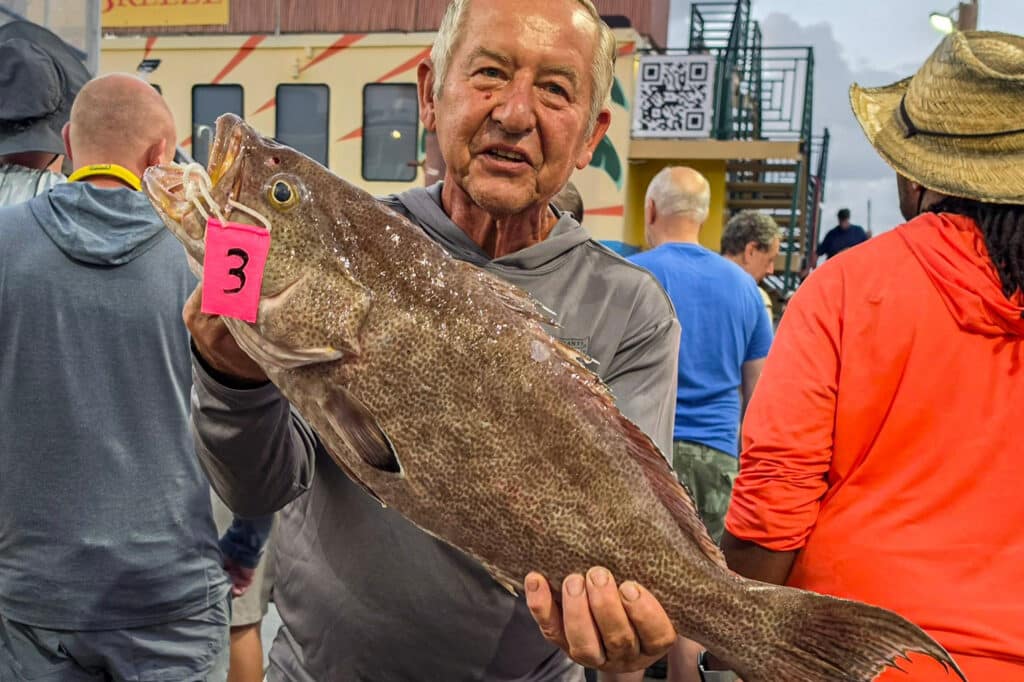
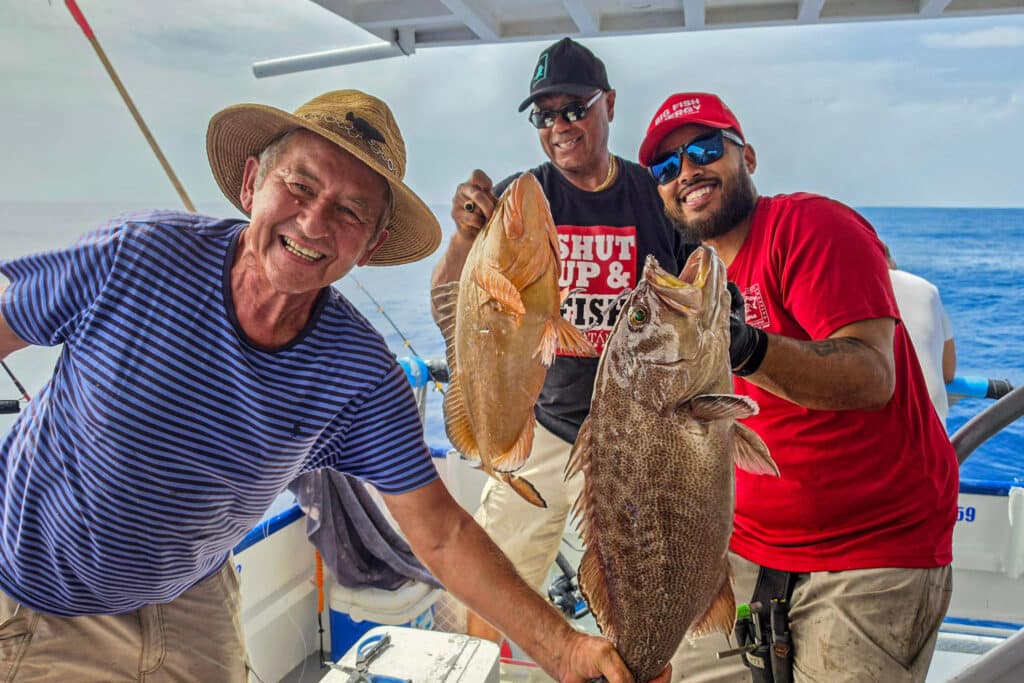
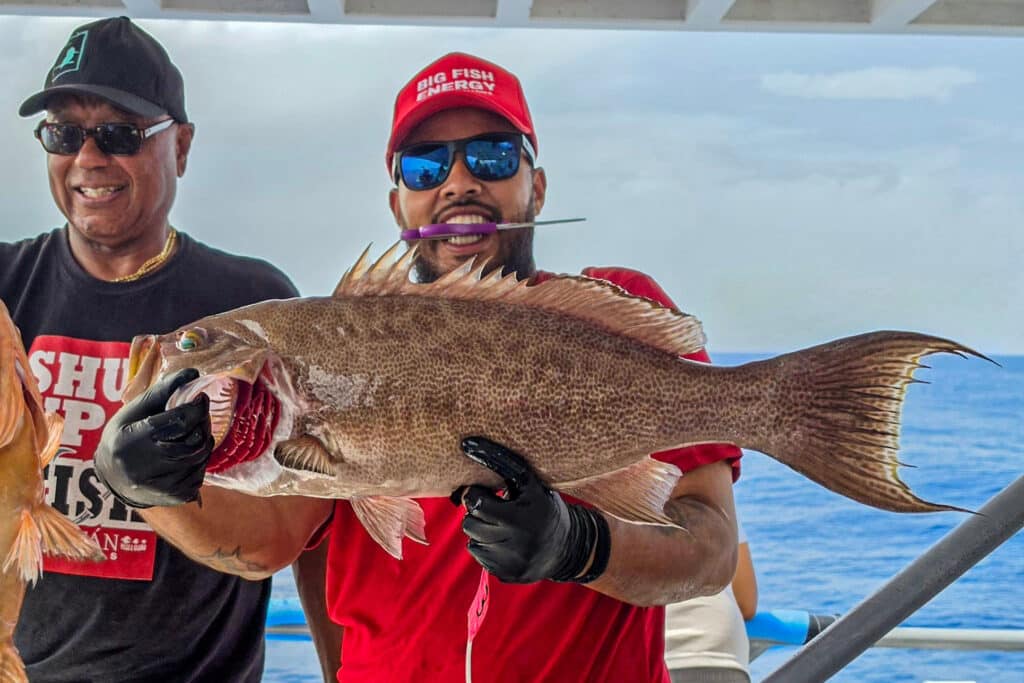
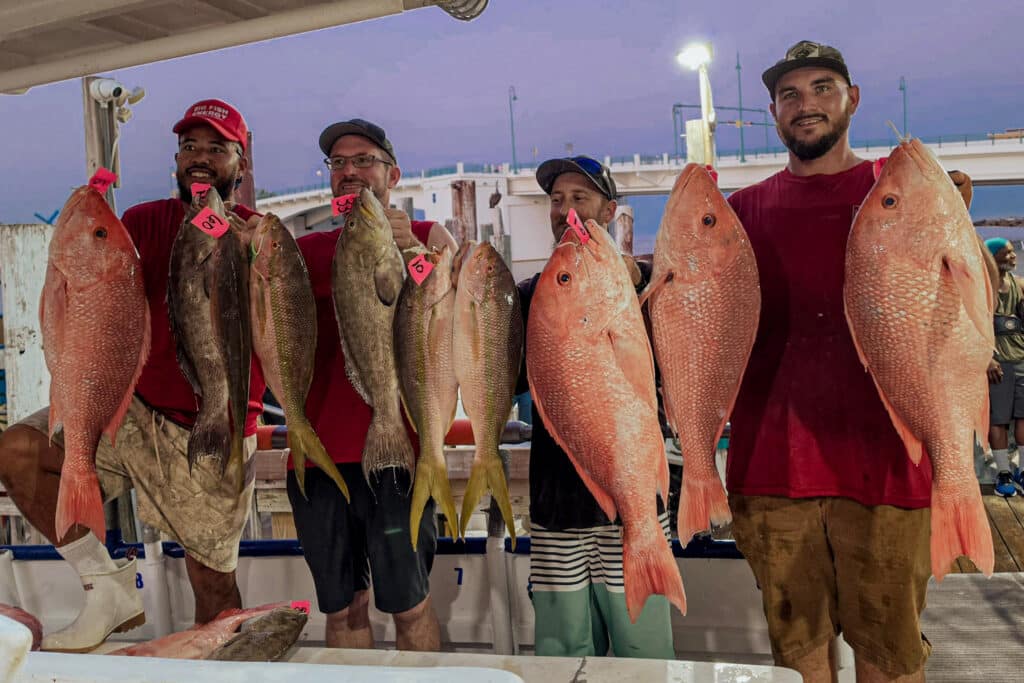
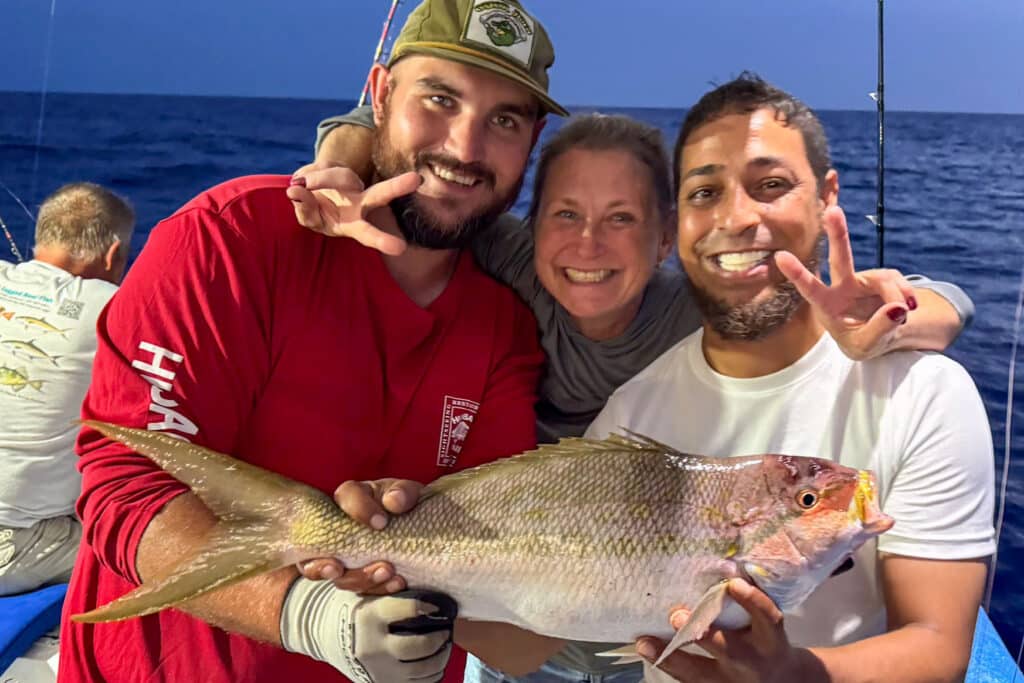
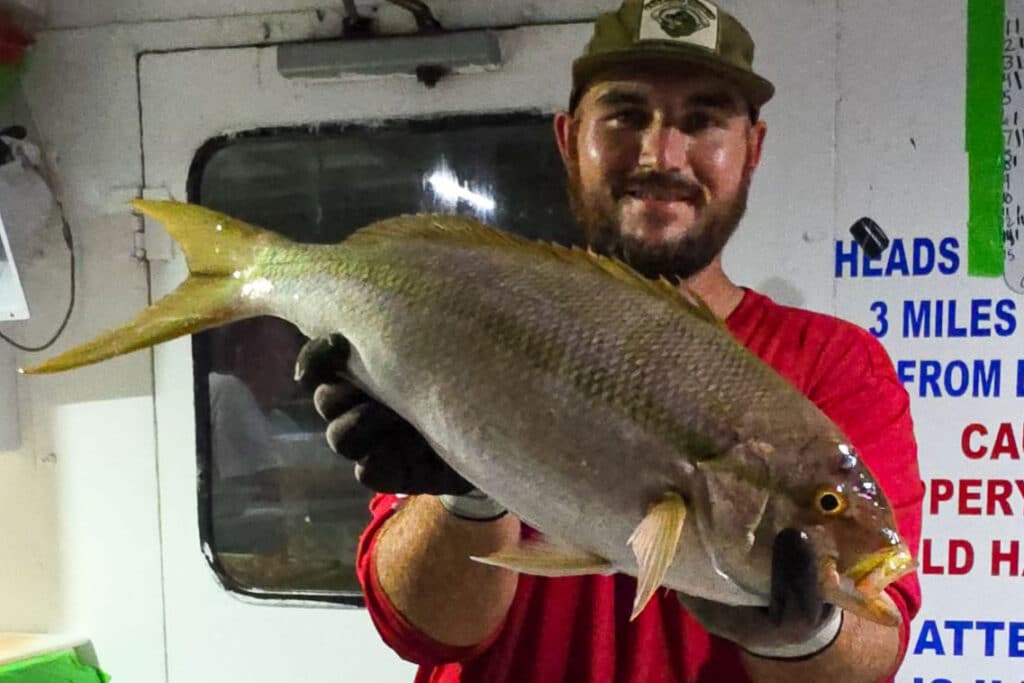
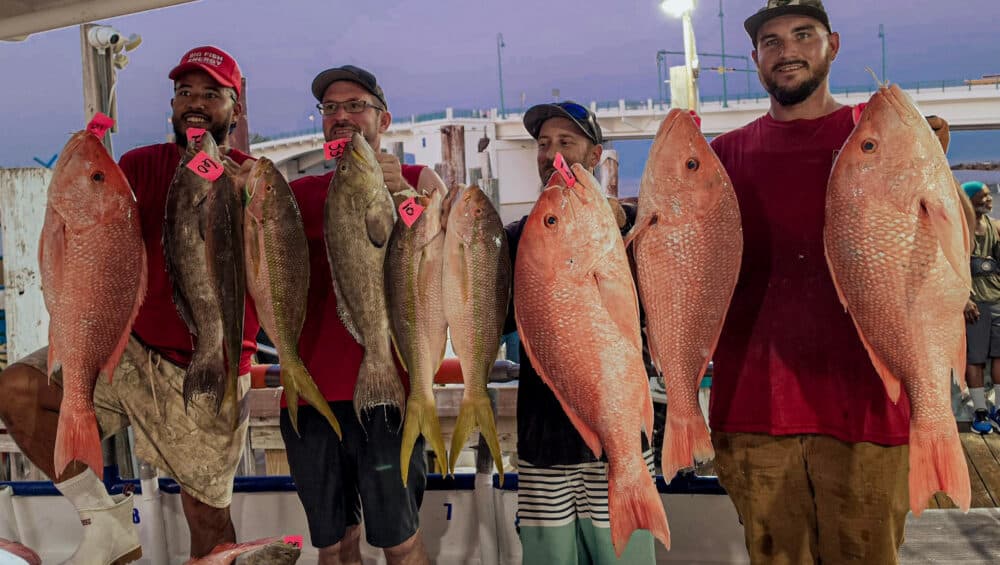
Red snapper is the main focus offshore still but we are seeing some really good red grouper action, consistent mangroves and a few yellowtail with tons of heads and tails and good pelagic action too.
Red snapper lately have been coming up well on large live baits and bigger cut dead bait. The biggest fish are caught using bigger baits, bigger tackle, and bigger set ups. The big dead baits lately are cut bonita, boston mackerel or whole squid which we have in our shop prior to loading the boats. The big live baits lately are the ones folks are catching on the 5hr prior to the 39 hour trips, or fishing the local bridges around the area prior to loading. If you order pinfish from us, we will have em at the dock for you but we wont have the massive ones that are 5-6 plus inches. Most of the bulk pinfish are caught using traps so they don’t see the massive pinfish that you can catch with a hook and line.
Red grouper lately are like the red snapper focusing on bigger baits like the frisky live baits or the quality dead baits. The last trip the biggest red grouper was caught using a squid strip. Fishing that heavier tackle and bigger bait is a great way to be selective and target those bigger fish.
Scamp grouper have been in the mix, some trips we see more than others, often kinda hit or miss. They are often caught while targeting mangroves using cut threads or on the medium sized pinfish. If I wanted to target a scamp I would be dropping around a 4 inch pinfish down on 60lb test and around a 6-7ot hook with a longer 5-6ft leader and minimal weight.
Mangroves have been steady offshore and still as always are normally caught fishing that 40-50lb leader and that 5-7ot double snell set up and cut threadfin chunks. They are quick biting and fun to target. Using the right rod for the job helps a lot if you got something with a sensitive tip and a good back bone.
Yellowtail action has been solid overall, like scamp some trips are better than others but overall we are seeing them consistently. Typically smaller hooks, lighter tackle, and smaller strips of something chewy like bonita or squid works best. Think about their small mouths, so nothing huge like 1.5-2 inches long and maybe only a quarter inch tall and thick, small little strip to get their attention. Like a sour gummy worm size essentially.
Pelagic wise we are seeing some nice numbers of blackfin tuna while trolling, flat line fishing, jigging and often just dropping or reeling in live pinfish.
We are also seeing mahi mahi from time to time and the occasional wahoo too! Great time to keep that pitch rod ready and that flat line out. If you don’t have a big run between spots go slower and drop back that trolling rod or three!
Don’t forget, that we have some great videos on our fishing tips and tricks page here to show you how to target and rig for almost any species-> https://www.hubbardsmarina.com/fishing-tips/
Remember that when fishing in deeper nearshore and offshore federal waters, the Descend Act requires you to have a descending device or venting tool “rigged and ready.” If you know how to use a venting tool, keep it prepared. If not, here’s some helpful advice: https://bit.ly/3L5HTnv. Using a descending device is straightforward and doesn’t require as much precision or practice as venting. Return em’ Right has a training course only takes about 10-15 minutes, and you can learn valuable techniques to protect our offshore fishery. Spread the word by visiting: https://returnemright.org/.
TERMS OF REFERENCE-
Inshore: This covers the areas from the inner bays, through the bridges, and right up to the beaches.
Near Shore: This includes the coastal waters from the beaches up to twenty miles offshore, or up to a depth of 100 feet.
Offshore: This extends from twenty miles offshore or from a depth of 100 feet and beyond.
For more fishing reports, photos, videos, and other content, check out Hubbard’s Marina on Facebook, Instagram, YouTube, TikTok, Twitter, Pinterest, or Snapchat by searching for @HubbardsMarina. Remember our family motto: “If you’re too busy to go fishing, you’re just too busy!” Thank you for reading our report.
Capt. Dylan Hubbard, Hubbard’s Marina
Phone or text: (727) 393-1947
Website: Hubbard’s Marina
If you’re not seeing the latest article, try clearing your browser cache.
You can search “how to clear browser cache” on Google for quick steps.